'Stop shooting': Trump demands as Iran, Israel resume strikes for first time post-ceasefire
'Stop shooting': Trump demands as Iran, Israel resume strikes 1st time post ceasefire
The fragile calm in the Middle East has shattered as Tehran and Tel Aviv trade fire, pushing regional diplomacy to the brink.
The silence that held the Middle East together since April has been broken by the sound of sirens and anti-aircraft fire. After months of relative restraint, Israel and Iran have returned to direct hostilities, exchanging waves of missile strikes that have left global observers—and Washington—scrambling to contain a spiraling regional conflagration.
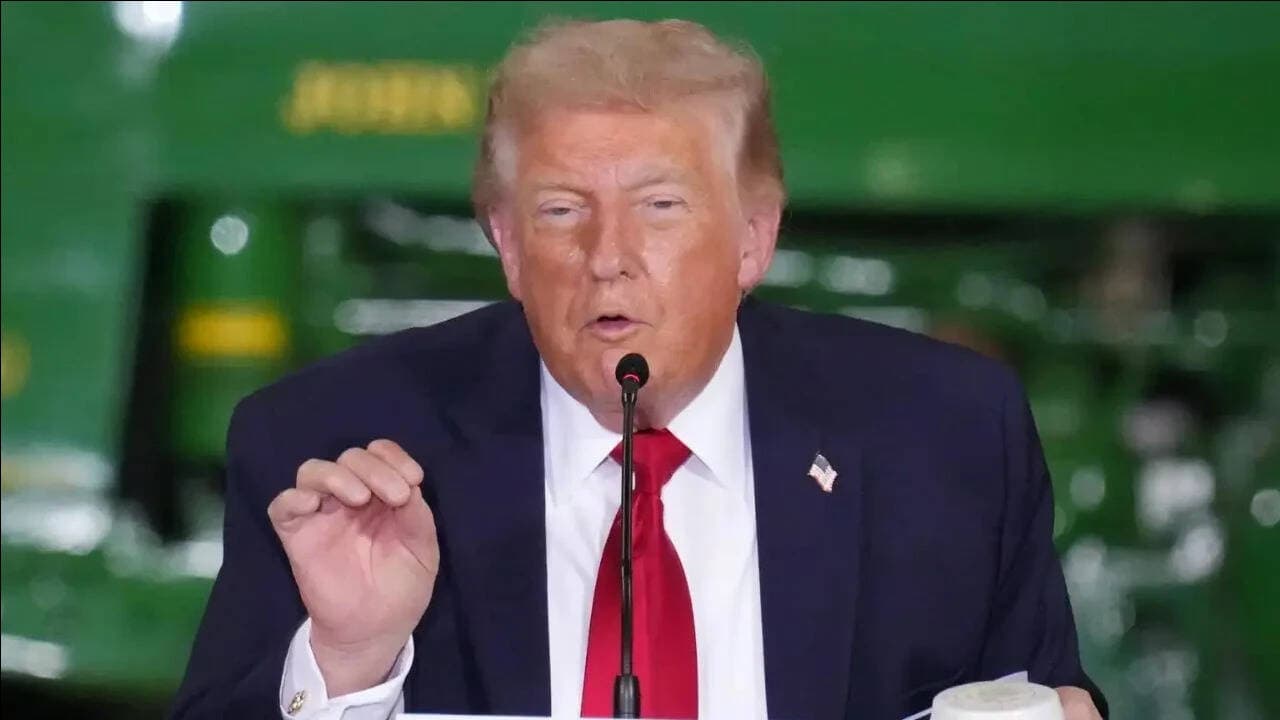
US President Donald Trump, who has been aggressively brokering peace talks, took to Truth Social on Monday with a blunt directive: “Israel and Iran must immediately stop ‘shooting’.” The presidential appeal came as the Israeli military launched strikes on central and western Iran, hitting what it described as truck-mounted surface-to-air missile launchers and a petrochemical facility. Tehran responded by launching multiple waves of projectiles, with the Revolutionary Guard claiming they successfully targeted two major Israeli air bases under the banner of "Operation Nasr."
A fragile peace unravels
The escalation serves as a violent reality check for negotiators who, only days ago, suggested that a broader deal was within reach. The current round of violence was ignited when Israel struck Beirut’s southern suburbs on Sunday, a move that prompted Tehran to vow retaliation. Despite reports that Trump had personally advised Prime Minister Benjamin Netanyahu to refrain from a military response, the Israeli cabinet pushed forward, effectively defying the US administration’s strategy of de-escalation.
The situation remains fluid and increasingly volatile. Beyond the direct exchange between the two primary powers, the conflict is widening. Yemen’s Houthi rebels have claimed their own missile attacks on Israel, threatening to resume their campaign against shipping in the Red Sea. Regional security has been thrown into disarray, with Iraq closing its airspace for 72 hours and Syria restricting traffic at Damascus International Airport.
Why it matters
For New Delhi, the renewed instability is a cause for profound concern. Beyond the immediate threat to the global energy supply chain and the welfare of the Indian diaspora in the region, this flare-up highlights the limitations of the current US-led mediation efforts. When regional actors choose to prioritize domestic political survival—often driven by hardline elements within fragile coalitions—over international pressure, the leverage of global powers is significantly blunted. The "ceasefire" was always a thin veneer; this latest cycle proves that without a sustainable political framework, the Middle East remains a hair-trigger environment where a single strike can unravel months of careful diplomacy.
As the US continues to push for a resolution, the rhetoric from Tehran remains defiant. Iranian officials have accused Washington of being complicit in the Israeli actions, suggesting that the path to a lasting peace is further away than it has been in months. With both sides preparing for what could be a prolonged period of tit-for-tat engagement, the "stop shooting" demand from the White House may be less of a command and more of a desperate plea to prevent a full-scale regional war.
World Desk at PoliticalPedia covers global affairs for an Indian audience in English and Hindi.