Smoke Over St Petersburg: Ukraine’s Long-Range Drones Breach Russia’s Energy Heart
Ukraine hits Russian oil terminal; smoke rises over St Petersburg facility - watch
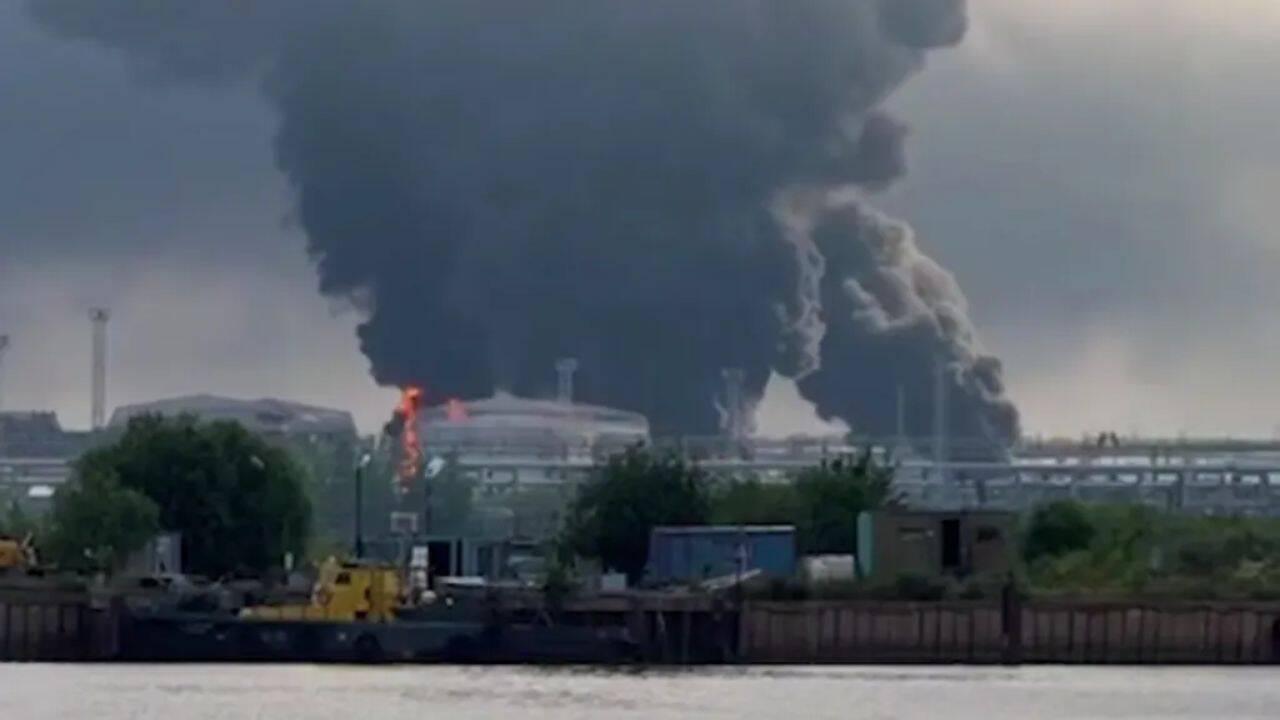
As Kyiv ramps up its campaign against critical infrastructure, residents in the Leningrad region face mounting fuel shortages while the drone war deepens.
The morning calm in St Petersburg was shattered this weekend as a large-scale Ukrainian drone attack struck a key oil terminal in the city’s Kirovsky district. For a city of six million, the visceral sight of smoke rising from industrial facilities marked a chilling shift in the ongoing conflict. While local officials, including Governor Alexander Beglov, reported no casualties and claimed the situation was under control, the scale of the incursion—reaching as far as the Vysotsk port on the Baltic Sea—suggests that Russia’s defensive perimeter is under unprecedented pressure.
The Geography of the Strikes
The reach of these Ukrainian drones is no longer confined to the borderlands. Kyiv’s forces struck targets more than 850 km from their own territory, hitting the oil infrastructure that powers the Russian state’s war machine. Beyond the terminal in St Petersburg, secondary strikes were reported in the surrounding Leningrad and Pskov regions. While Russian air defences claimed to have intercepted over 100 drones across the two regions, the tactical intent is clear: Ukraine is prioritising the economic arteries of its adversary.
A Growing Fuel Crisis
The impact on the ground is becoming impossible to ignore. In areas like Gatchina, south of St Petersburg, the economic friction of the war has manifested in long queues at petrol stations. Many outlets are reportedly running dry, leaving locals to grapple with the reality that the fuel supply chain is becoming a primary target. One resident, Gennadiy, summed up the frustration of ordinary citizens: "Standing in queues after work isn't exactly fun," he said, noting the cycle of waiting only to face the same shortage days later. The Kremlin is clearly feeling the heat, as President Vladimir Putin has already moved to sign tax code amendments aimed at incentivising the production of high-octane fuel to steady the domestic market.
Why It Matters
This is not merely a tactical exchange; it is a calculated effort to bring the war home to the Russian public. By systematically targeting refineries and oil depots, Ukraine is attempting to disrupt the logistical backbone of the Russian military while simultaneously destabilising the domestic economy. As the Kremlin faces pressure to bolster its defences—ranging from Moscow to the Baltic coast—the conflict is evolving into a war of attrition where energy security has become the new frontline. Whether these strikes force a shift in Russian military posturing or simply harden the domestic divide remains the most critical question as the fighting intensifies.
Priya Nair covers parties, elections and the business of power for PoliticalPedia.