Sharad Pawar Warns of 'Political Price' as Opposition Targets BJP Over LPG Hikes
LPG price hikes: Government will pay 'political price', says Sharad Pawar; Congress's Wadettiwar slams BJP
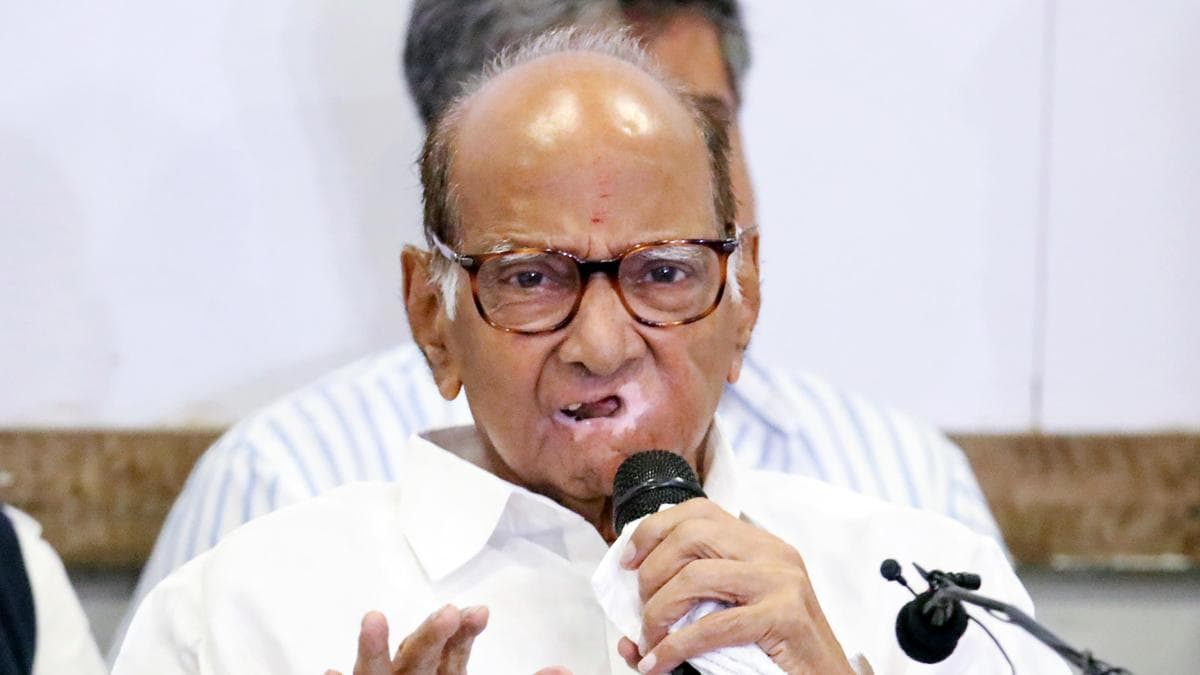
As domestic cooking gas prices climb, opposition leaders Sharad Pawar and Vijay Wadettiwar have launched a scathing critique of the central government’s economic management.
The political temperature in India is rising alongside the cost of kitchen essentials. NCP (SP) chief Sharad Pawar has warned the central government that it will face a significant "political price" for the persistent inflation burdening common citizens. His comments follow a recent notification that domestic LPG prices have been raised by ₹29 per cylinder, marking the second such hike in just three months.
A Growing Financial Burden
Mr. Pawar, a former Union Minister, expressed skepticism regarding the government’s claims that inflation remains under control. He pointed out that while individual price adjustments might seem incremental—starting at as little as two rupees—the cumulative effect over time has severely strained household finances. "The government's idea of 'control' appears to be delivering these price shocks step by step," the NCP (SP) leader said, noting that the public is increasingly struggling to manage daily expenses.
The latest adjustment follows a ₹60-per-cylinder increase implemented on March 7. State-owned fuel retailers have attributed these successive price hikes to the volatility in global energy markets, citing supply disruptions caused by the ongoing conflict in West Asia. Despite these global pressures, the Union Government maintains that Indian households still benefit from some of the lowest cooking gas prices available globally.
Opposition Accuses BJP of Double Standards
The criticism has not been limited to the NCP. Maharashtra Congress leader Vijay Wadettiwar joined the chorus of dissent, accusing the BJP of hypocrisy. Mr. Wadettiwar alleged that the ruling party has abandoned the very concerns it championed while in the opposition. He recalled that during the UPA era, BJP leaders frequently staged protests against cooking gas price hikes, a stance they have conspicuously dropped since assuming power.
"The BJP is no longer showing the same concern for issues affecting ordinary people as it once did," Mr. Wadettiwar stated. He highlighted that the inflationary pressure is not restricted to domestic LPG, pointing to multiple recent revisions in the prices of petrol, diesel, and CNG. He argued that these cumulative costs are placing an unsustainable burden on middle-class and economically weaker families.
The Broader Economic Context
The timing of these protests is critical, as the political landscape remains competitive with various state-level electoral developments currently unfolding. While the government defends its fiscal position by highlighting international energy costs, the opposition is clearly aiming to leverage voter dissatisfaction over inflation. As the debate intensifies, the disconnect between the government's global supply-chain explanations and the direct impact on the kitchen budget is becoming a central fault line in national discourse.
The PoliticalPedia Editorial Desk brings verified, sourced political news and analysis from across India.