Puducherry Sets Sights on Economic Growth as L-G, CM Finalize Budget Roadmap
L-G, CM hold pre-budget consultative meeting with officials in Puducherry
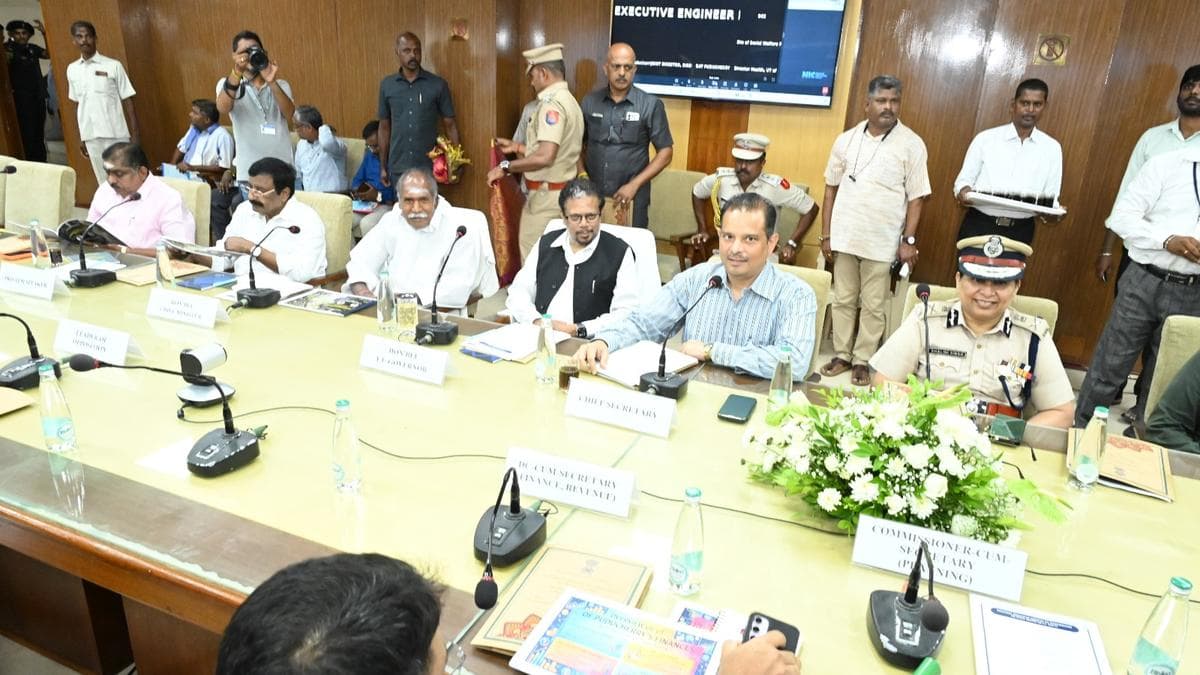
With an eye on job creation and infrastructure development, the Puducherry administration has kickstarted the planning process for the 2026-27 fiscal year.
The Puducherry government took a decisive step toward finalizing its financial roadmap for the 2026-27 year during a high-level consultative meeting at the Chief Secretariat on Friday. Lieutenant Governor K. Kailashnathan and Chief Minister N. Rangasamy spearheaded the session, which centered on balancing the territory's fiscal health with ambitious developmental goals. With the current vote on account—sanctioned for ₹5,396 crore in February—set to expire in August, the administration is under pressure to finalize and present a comprehensive annual budget to ensure the continuity of governance and public works.
Prioritizing Infrastructure and Employment
During the deliberations, L-G Kailashnathan underscored a shift in strategy, advocating for an increased emphasis on job creation and the active promotion of Public-Private Partnership (PPP) models. The administration is looking to streamline the ease of doing business to attract investment, with a particular focus on the hospitality sector, which remains a cornerstone of the local economy. Finance Secretary Krishna Mohan Uppu and Planning Secretary A. Muthamma provided detailed presentations to the leadership, mapping out the territory’s current expenditure commitments against the backdrop of its evolving financial needs.
Fiscal Performance and Revenue Streams
The meeting offered a window into the territory's recent financial performance. A reliable government source indicated that the previous financial year concluded on a positive note, with overall receipts recording a growth of approximately 8.36%. For the 2025-26 period, the annual budget grew to ₹14,100 crore, up from ₹13,235 crore the previous year, reflecting a 6.54% increase. Revenue inflows during the same period reached nearly ₹13,397 crore, with tax receipts serving as the primary financial engine, contributing around ₹4,617 crore to the exchequer.
Balancing Growth and Borrowing
Beyond tax revenue, the territory’s financial health is bolstered by non-tax receipts of around ₹3,013 crore, Central assistance of ₹3,737 crore, and borrowings totaling ₹2,028 crore. Analysts suggest that given the current fiscal position and the necessity to fund major infrastructure projects, the total outlay for the upcoming financial year is expected to rise substantially. As the government works to finalize the draft outlay for submission to the Finance and Home Ministries, the administration faces the delicate task of balancing development spending with prudent fiscal management.
The consultative session was attended by a broad cross-section of officials and political representatives, including Pro-tem Speaker A. Anbalagan, Ministers A. Namassivayam and Malladi Krishna Rao, and DMK leader A.M.H Nazeem. Chief Secretary Sharat Chauhan and Director General of Police B. Srinivas were also present to provide administrative and security perspectives on the proposed budgetary allocations. The focus now shifts to the technical fine-tuning of the draft, which remains the final hurdle before the budget is presented to the Assembly.
The PoliticalPedia Editorial Desk brings verified, sourced political news and analysis from across India.