Tensions Simmer in Amritsar as Akal Takht Jathedar Challenges Punjab Government Over Religious Legislation
Operation Bluestar anniversary: Akal Takht chief flays AAP govt. in Punjab over anti-sacrilege law
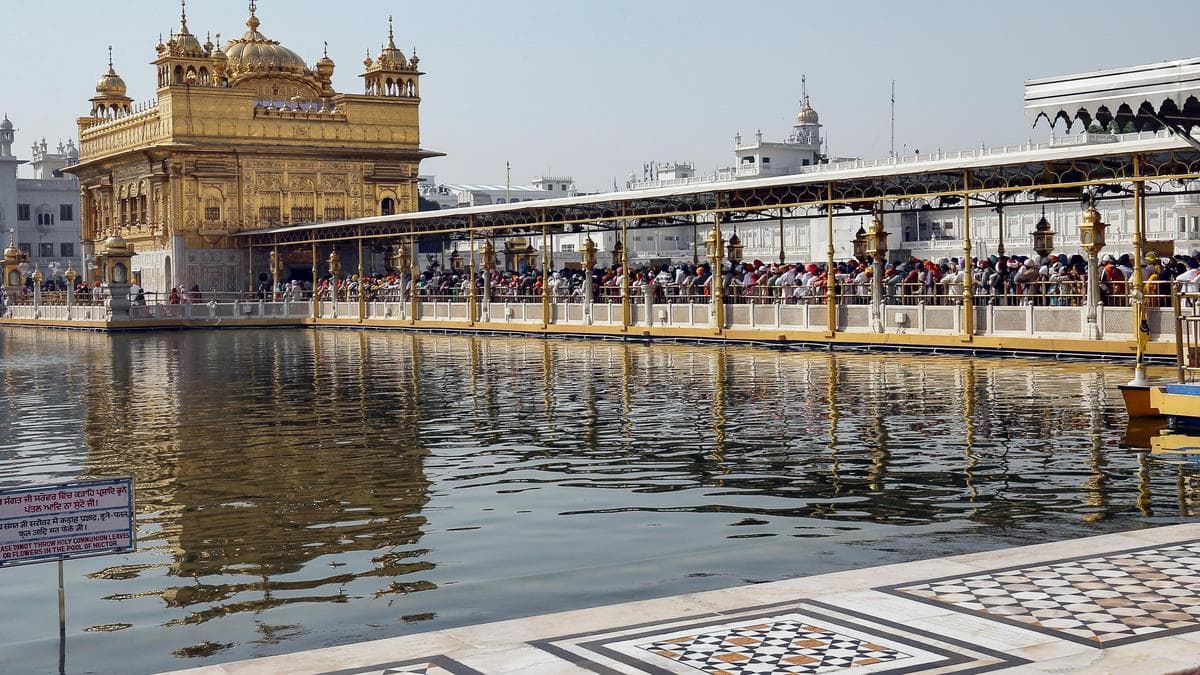
On the 42nd anniversary of Operation Bluestar, the Golden Temple complex saw pro-Khalistan sloganeering while the Akal Takht leadership voiced sharp opposition to state-led interference in Sikh religious affairs.
The 42nd anniversary of Operation Bluestar transformed Amritsar into a fortress of security and political rhetoric this Saturday. As the city observed a shutdown in response to calls from hardline Sikh organizations, the Golden Temple complex became the focal point for both solemn remembrance and strident political demands. Inside the shrine, groups owing allegiance to the Shiromani Akali Dal (Amritsar) and the radical outfit Dal Khasth raised slogans in support of a separate Sikh homeland, Khalistan, while distributing posters of Jarnail Singh Bhindranwale.
The day serves as a stark reminder of the June 1984 military operation, when the Army stormed the Harmandir Sahib complex to remove armed extremists. Over four decades later, the event continues to shape the political discourse in Punjab, bridging historical trauma with contemporary legislative friction between the Sikh clergy and the ruling Aam Aadmi Party (AAP) government.
Friction over religious legislation
During the congregation, the officiating Jathedar of the Akal Takht, Kuldip Singh Gargajj, utilized the platform to launch a pointed critique of the AAP administration. Central to his address was the recent Jaagat Jot Sri Guru Granth Sahib Satkar (Amendment) Act, 2026. The Jathedar asserted that the state government’s push for such legislation constitutes an overreach, declaring that no laws concerning Sikh religious affairs should be enacted without the direct consensus of the Sikh Panth.
Gargajj further warned against what he termed a “deep-rooted conspiracy” targeting Sikh identity and religious symbols on a global scale. Beyond legislative grievances, the Akal Takht leadership renewed its pressure on the state and central governments regarding the release of ‘Bandi Sikhs’—prisoners who have completed their judicial terms but remain incarcerated.
A city under observation
The atmosphere in Amritsar was defined by the dual presence of radical activism and heightened security. While commercial establishments and educational institutions remained largely shuttered in compliance with the ‘Amritsar shutdown’ call, a ‘remembrance march’ held on the eve of the anniversary underscored the intensity of the sentiment. Young activists were seen wearing outfits adorned with the image of Bhindranwale, emphasizing that the campaign for a separate state remains a core objective for these groups.
For the observers of Punjab’s political landscape, these developments highlight the fragile balance between the state government’s mandate to maintain law and order and the historical autonomy demanded by the Sikh temporal seats. As the 42nd anniversary of Operation Bluestar concludes, the divide over the state's role in regulating religious institutions appears to be deepening, signaling potential future clashes between the AAP government and the Akal Takht.
The PoliticalPedia Editorial Desk brings verified, sourced political news and analysis from across India.