Political Row Erupts as Mehbooba Mufti Conducts Unofficial Review of AIIMS Project in Kashmir
In Kashmir, a stir over Mehbooba’s ‘review’ of AIIMS
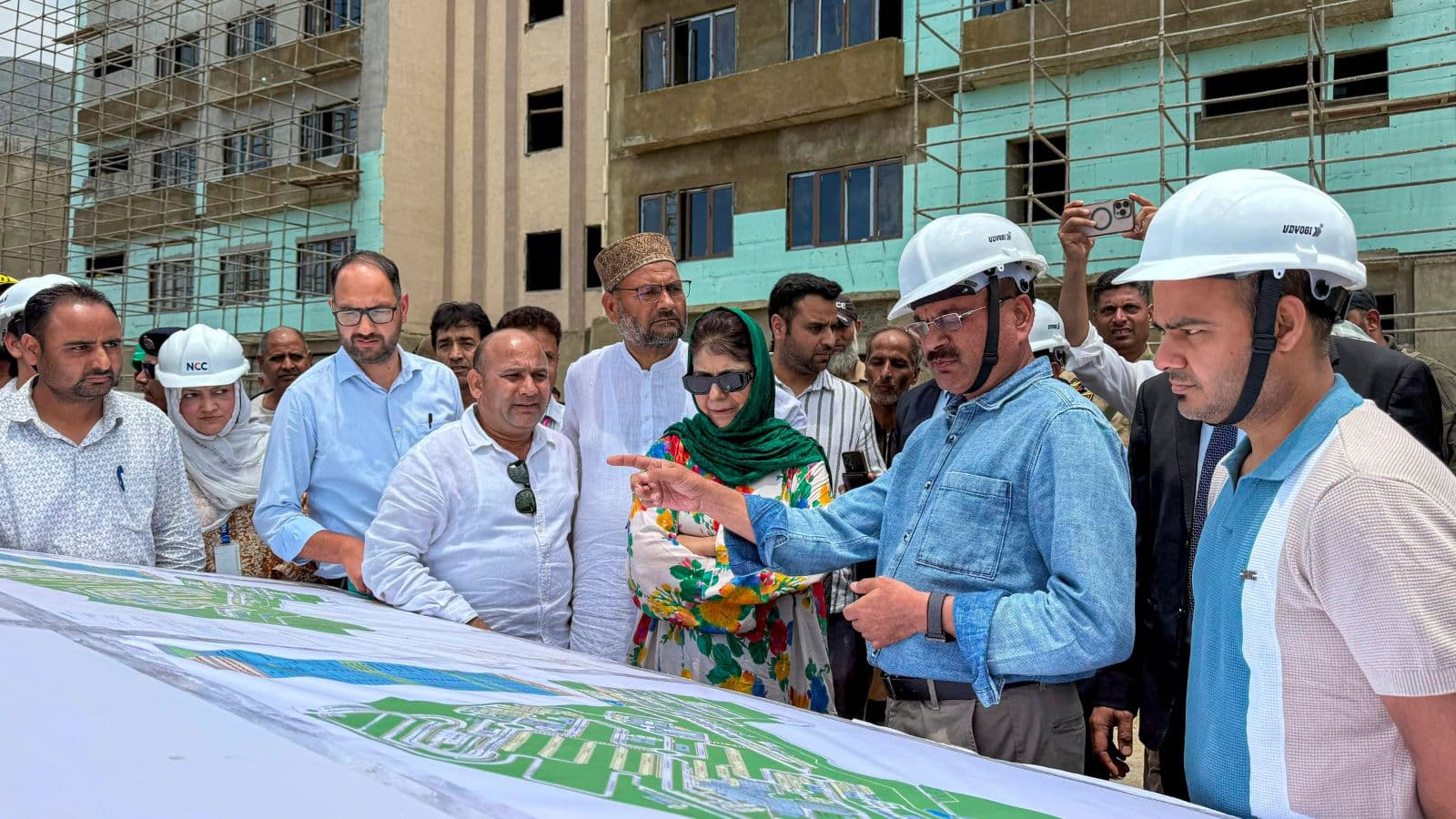
The former Chief Minister’s surprise inspection of the Awantipora site has sparked a sharp constitutional debate between the PDP and the ruling National Conference.
The under-construction AIIMS project in Awantipora has become the latest flashpoint in Jammu and Kashmir’s volatile political landscape. PDP president Mehbooba Mufti triggered a significant stir this week after she held an impromptu review meeting with officials at the project site. Images of the former Chief Minister examining blueprints and discussing the operational status of the institute were widely circulated on social media, drawing immediate and stinging rebukes from her political rivals.
A Question of Protocol
The visit has raised eyebrows across the political spectrum, primarily because Mufti currently holds no elected position in either the Union Territory legislature or the Parliament. The ruling National Conference (NC) was quick to label the move an "unconstitutional step" and an "unhealthy precedent." Party spokesperson Tanvir Sadiq questioned the authority under which a non-legislator could chair an official review of a government project, suggesting the move was a calculated effort to remain relevant as the PDP seeks to counter the NC’s current administrative standing.
The criticism extended beyond the ruling party. People’s Conference president Sajad Lone was particularly scathing, describing the event as a moment where "irony died a thousand deaths." Lone characterized the meeting as a potential constitutional crisis and expressed surprise that the current administration had not intervened to protect the established power structure. For many observers, the incident underscores the fragility of institutional boundaries in the region, where the lines between political activism and governance remain heavily blurred.
Differing Perspectives on Progress
In contrast, the PDP has framed the visit as an act of public service and emotional accountability. Mufti, who shared images of the visit on her official party handles, stated that the AIIMS project was a "dream" of her late father, Mufti Mohammad Sayeed. By focusing on the project's delays, the party aimed to shift the narrative back to the tangible needs of the public rather than the procedural optics of the meeting.
Waheed ur Rehman Para, the PDP MLA from Pulwama, defended the visit by challenging the government's priorities. He argued that a ruling party backed by 50 MLAs should not feel intimidated by a site visit. Para instead turned the spotlight on the current leadership, particularly Chief Minister Omar Abdullah, accusing the administration of failing to address the healthcare crisis while residents wait for world-class facilities to finally become operational.
Why It Matters
The controversy highlights the deep-seated friction between the region’s established political players. As the National Conference prepares to lobby New Delhi for the restoration of statehood and the preservation of constitutional guarantees, the PDP is clearly attempting to reassert its influence. For the people of Kashmir, however, the squabble over who has the right to review the AIIMS project is secondary to the reality of the delay. The unfinished site remains a symbol of both the region’s developmental aspirations and the persistent political gridlock that has long hindered its progress.
The PoliticalPedia Editorial Desk brings verified, sourced political news and analysis from across India.