PM Modi Chairs High-Level EAC Meeting to Navigate Global Economic Headwinds
PM Modi chairs EAC meeting, discusses measures to boost India’s economic growth
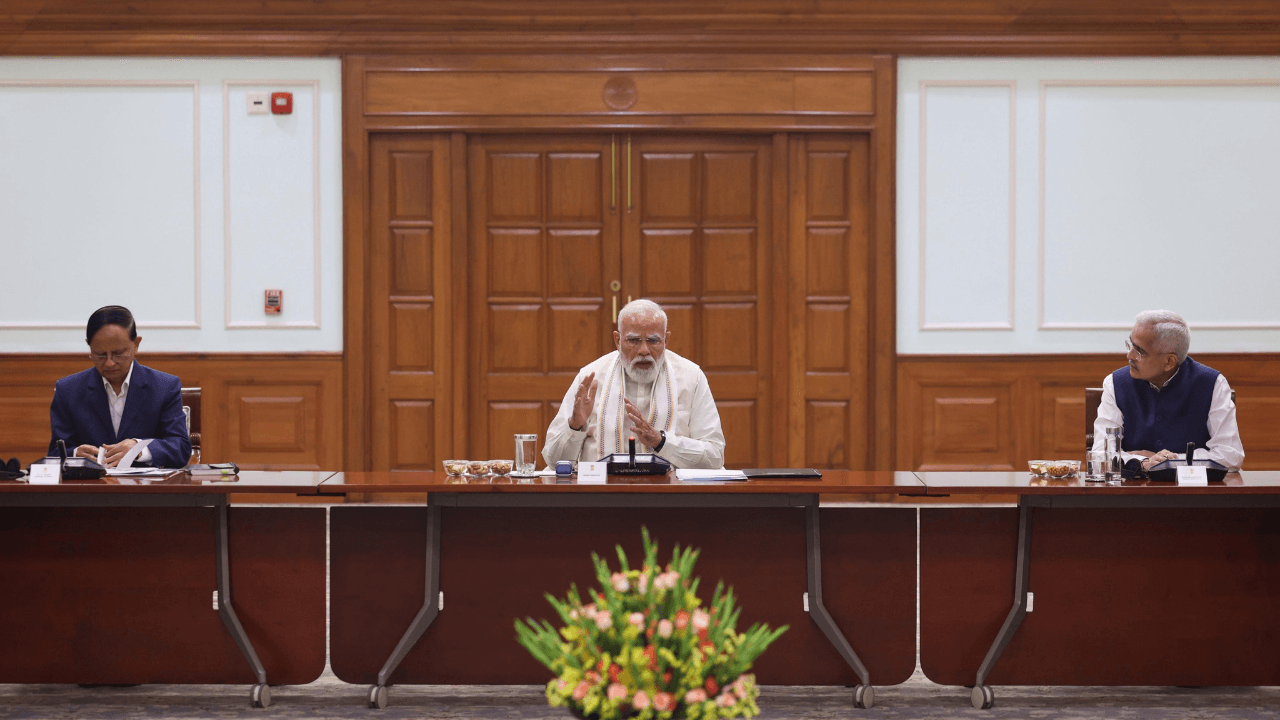
As geopolitical tensions escalate in West Asia, the Prime Minister and his top economic advisors met to deliberate on growth strategies and structural reforms.
Prime Minister Narendra Modi chaired a pivotal meeting with the Economic Advisory Council (EAC) on Saturday, focusing on strategies to sustain India’s economic momentum in an increasingly volatile global landscape. The session served as a strategic brainstorming platform to evaluate how India can insulate its domestic growth story from the ripple effects of the ongoing conflict in West Asia, which has raised concerns regarding energy prices, supply chain reliability, and global trade flows.
Focusing on Resilience and Reform
Discussions during the council meeting went beyond short-term crisis management. The Prime Minister and the EAC members examined a suite of policy initiatives designed to strengthen the nation's economic resilience. Central to the agenda were structural reforms aimed at improving the ease of doing business and enhancing the ease of living for citizens. By reducing compliance burdens and optimizing service delivery, the council aims to create a more robust environment for domestic investment and productivity even as international markets face cautious sentiment.
The urgency of these deliberations follows a sobering assessment of the global climate. In recent public remarks, the Prime Minister has characterized the current decade as one defined by "unprecedented challenges," citing a confluence of crises ranging from energy market disruptions to the lingering effects of global armed conflicts.
Contextualizing the Monetary Policy Stance
The EAC meeting took place just one day after the Reserve Bank of India’s (RBI) Monetary Policy Committee (MPC) opted to hold the repo rate steady at 5.25%. The central bank’s decision to maintain a neutral stance underscores the delicate balancing act required to curb inflation while supporting growth. RBI Governor Sanjay Malhotra highlighted that while India enters this period of turbulence with stronger economic fundamentals than in past global downturns, the risks posed by soaring energy prices and trade route disruptions remain significant.
The central bank has already adjusted its outlook for the 2026-27 fiscal year, revising GDP growth projections downward to 6.6%—from a previous estimate of 6.9%—and signaling an uptick in inflation expectations to 5.1%. These revisions reflect the reality of a world grappling with heightened volatility and shifting trade dynamics.
Navigating the Path Ahead
For policymakers, the current global uncertainty is viewed as a crucible for reform. The council emphasized that the existing disruptions should serve as an opportunity to accelerate initiatives that bolster domestic economic activity. As India navigates the fallout of the West Asia conflict, the government remains focused on maintaining macroeconomic stability. By aligning fiscal focus with structural improvements, the administration aims to ensure that India remains a resilient outlier in an otherwise fractured global economy.
The PoliticalPedia Editorial Desk brings verified, sourced political news and analysis from across India.