Nirmala Sitharaman Urges Citizens to Make Environmental Conservation a Daily Habit
Nirmala Sitharaman calls for people’s movement to protect environment
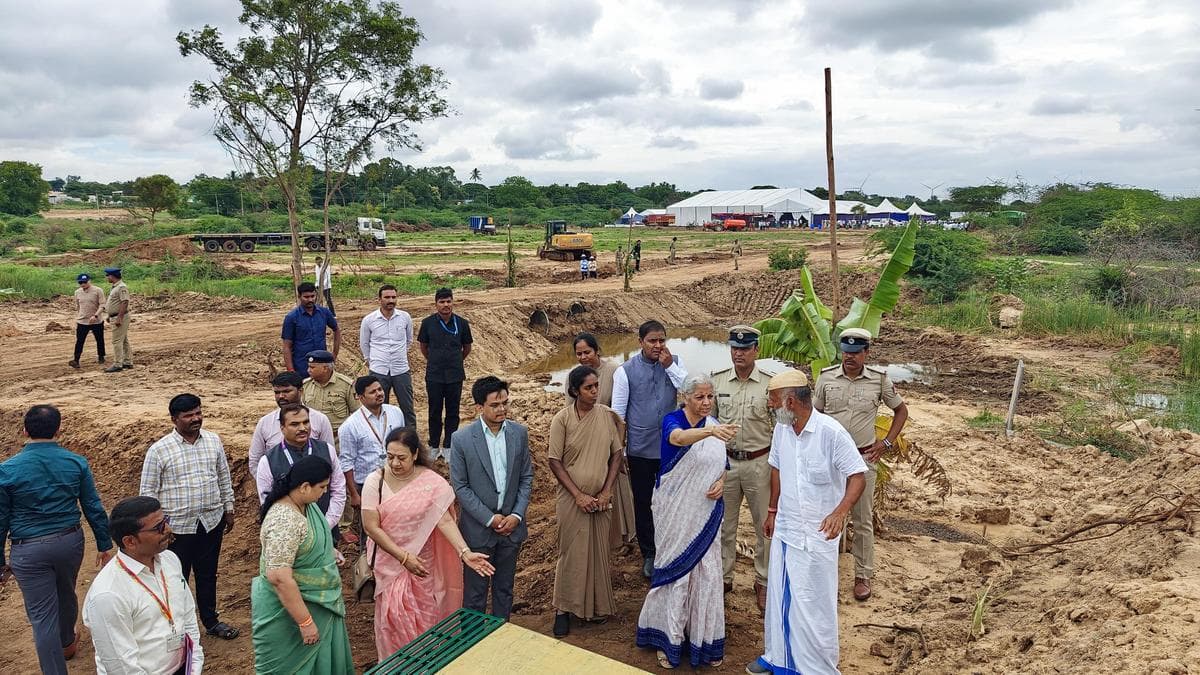
Stressing that unchecked ecological degradation threatens our survival, the Union Finance Minister launched a massive afforestation drive in Karnataka.
The vision of a greener India requires more than a symbolic one-day gesture; it demands a fundamental shift in how citizens interact with the natural world. On the occasion of World Environment Day, Union Finance Minister Nirmala Sitharaman visited Chikkajogihalli village in Karnataka’s Vijayanagara district to participate in the ‘Ek Ped Maa Ke Naam’ plantation program. During her visit, Sitharaman said that the prosperity of humanity is intrinsically linked to the health of our ecosystems, warning that if we fail to act, the earth could gradually turn into a desert.
Scaling Up Scientific Afforestation
The project in Chikkajogihalli marks a significant shift toward scientific land management. Drawing inspiration from the Miyawaki forest model—a technique often associated with rapid, dense growth—the initiative aims to transform local landscapes into robust, climate-resilient green zones. Sitharaman highlighted that the project utilizes climate-suitable species, ensuring these forests serve as a lasting tribute to mothers. Local officials, including MLA N.T. Srinivas, confirmed that while the initiative currently covers 300 acres, there is a roadmap to expand the project to 1,000 acres.
This effort comes at a time when the broader national discourse is increasingly focused on the carrying capacity of rural regions. While the Finance Minister championed tree planting as an essential daily practice, other policy experts and reports have echoed the urgent need for a more systemic approach to village planning. Whether through rejuvenating water bodies or improving groundwater levels in regions like Kudligi, the government is signalling that environmental resilience is now a prerequisite for economic stability.
Linking Agriculture to the Future
Beyond immediate conservation, Sitharaman emphasized the need to bridge the gap between traditional farming and modern technology. She noted that attracting the younger generation back to the fields requires the adoption of multi-cropping systems and tech-driven agriculture. By strengthening rural economies, the minister suggested that we can create a sustainable cycle where environmental stewardship and food security reinforce one another.
The initiative also seeks to create a permanent legacy. To keep future generations connected to the project, the district administration has been tasked with installing stone plaques bearing the names of the children who plant the saplings. As the nation observes environmental milestones, this focus on local, scientific intervention serves as a template for other districts to manage their resources, proving that meaningful environmental change begins at the grassroots level.
The PoliticalPedia Editorial Desk brings verified, sourced political news and analysis from across India.