Nepal Eyes Reset with 'Rising India' as Foreign Minister Shisir Khanal Calls to Revive Dormant Ties
'We're children of the same rivers': Nepal calls on India to 'discuss dormant ties'
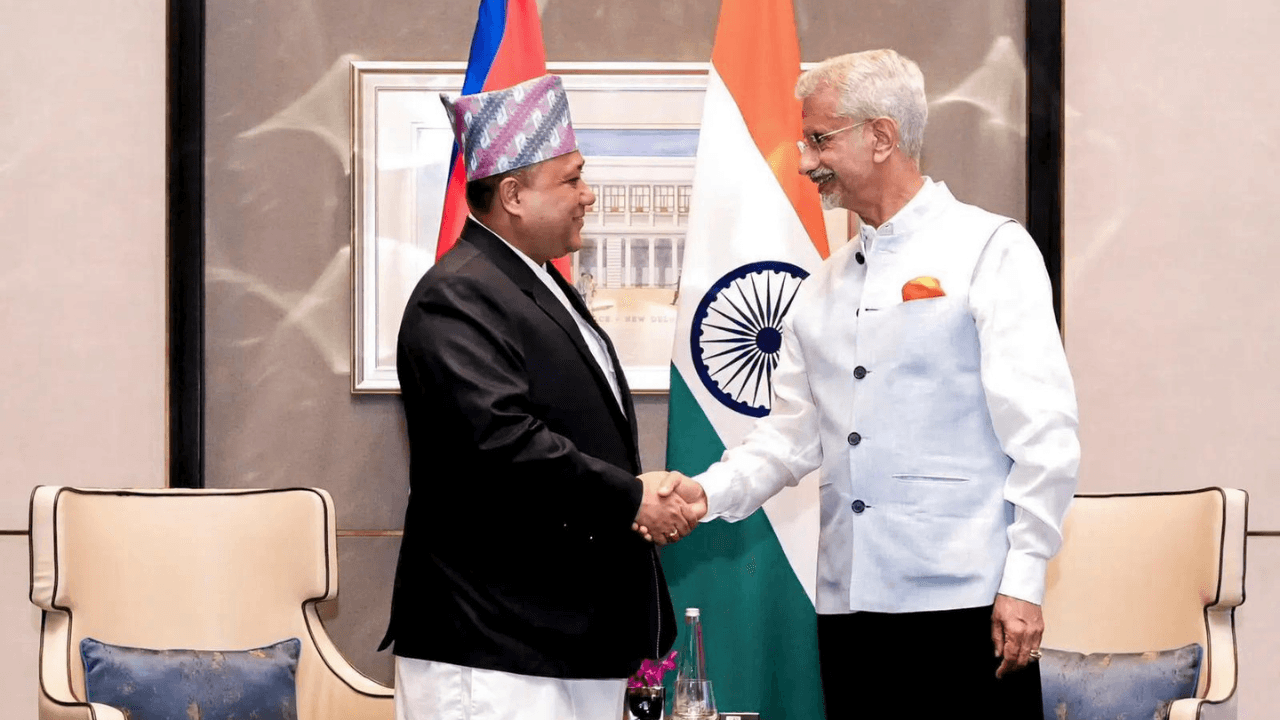
Foreign Minister Shisir Khanal’s high-level visit to New Delhi signals a shift toward economic pragmatism and the reactivation of stalled diplomatic mechanisms.
Kathmandu is charting a new course in its engagement with New Delhi, moving away from historical geopolitical friction toward a partnership defined by shared prosperity. During a three-day official visit to India that concluded this Sunday, Nepalese Foreign Minister Shisir Khanal framed the bilateral relationship not merely as a matter of geography, but as a deep-rooted civilizational bond. "We're not merely neighbours on the map; we're children of the same rivers," Khanal remarked during a media briefing, underscoring the cultural and historical ties that define the two nations.
A Focus on Economic Integration
The minister’s visit, which included extensive discussions with External Affairs Minister Dr. S. Jaishankar and National Security Advisor Ajit Doval, centered on a vision of "Rising India." Khanal expressed a keen desire for Nepal to align its development trajectory with India’s rapid advancement in technology and economic capacity. By moving past what he termed "hyper-nationalistic grandstanding," the minister emphasized a data-driven approach to cross-border issues, aiming to replace outdated rivalries with a collaborative focus on energy partnerships, connectivity, and trade.
A tangible milestone highlighted during the visit was the operationalization of cross-border digital payments. By linking Nepal’s National Clearing House Limited (NCHL) with India’s National Payments Corporation of India (NPCI), both nations have paved the way for UPI-style transactions. This development is expected to significantly ease remittances, benefit small-scale entrepreneurs, and provide a seamless financial experience for tourists crossing the border.
Navigating Outstanding Issues
While the tone of the visit was overtly positive, the minister acknowledged that long-standing boundary disputes remain a reality. Khanal stressed that rather than letting these issues fester, both countries should leverage existing institutional mechanisms that have remained largely dormant. "There is no harm in sitting at the table and discussing it," he noted, advocating for a return to formal dialogue to address pending concerns through diplomatic channels.
The emphasis on reviving these channels comes at a time when analysts suggest Nepal is keen to secure a more prominent space in its diplomatic outreach, particularly as the regional political landscape shifts. By prioritizing a development-oriented partnership, the current leadership in Kathmandu is attempting to insulate bilateral progress from the volatility that has occasionally marred ties in the past. As Khanal noted, in pluralistic democracies like India and Nepal, the media holds a critical role as the custodian of the narrative, and the current message from the leadership is one of aspiration, innovation, and execution.
The PoliticalPedia Editorial Desk brings verified, sourced political news and analysis from across India.