New Delhi and Jakarta Reset Ties: Jaishankar Outlines Strategic Roadmap for India-Indonesia Partnership
India-Indonesia ties deepen as EAM Jaishankar outlines blueprint for defence, trade cooperation
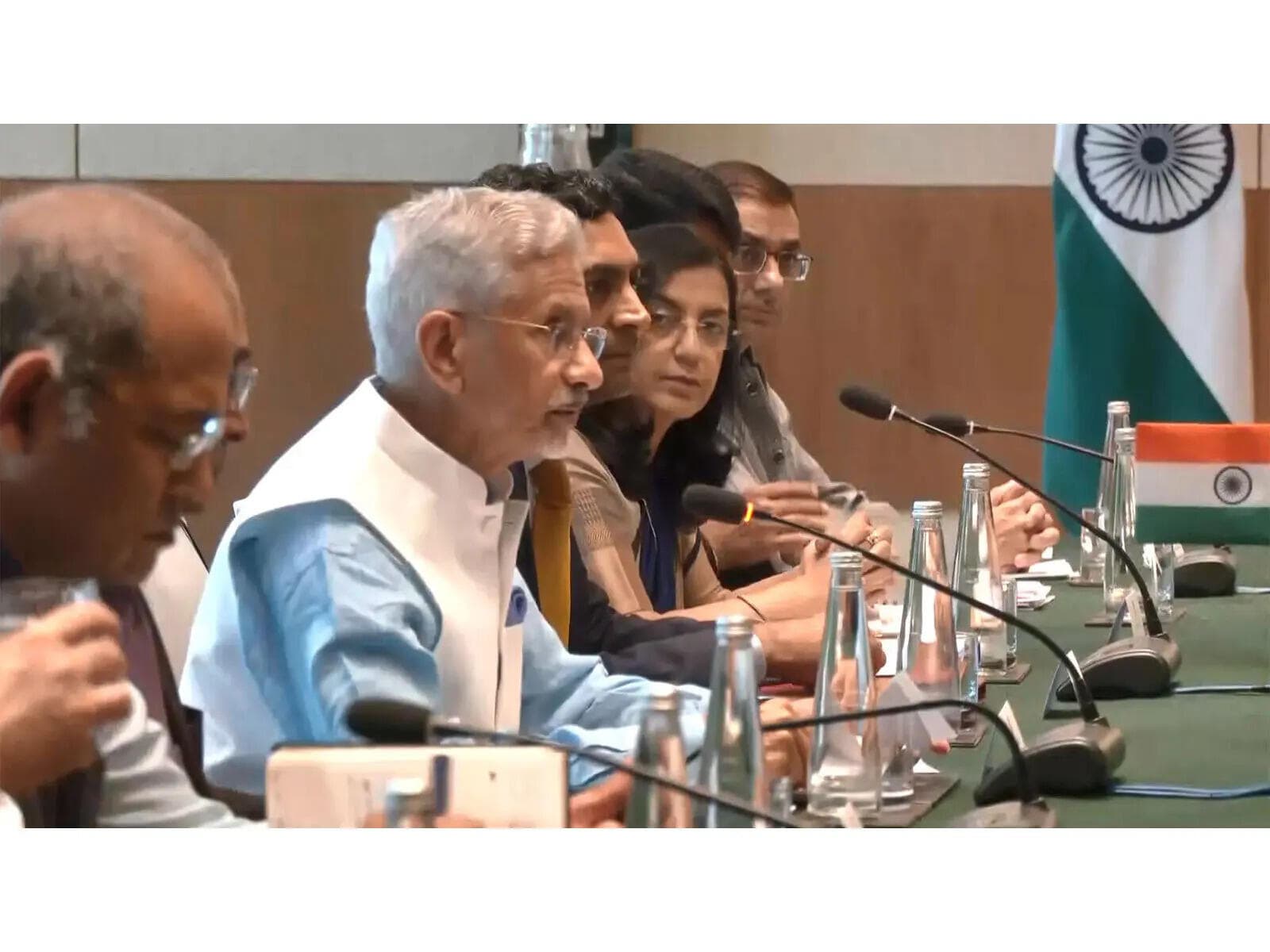
External Affairs Minister S. Jaishankar and his Indonesian counterpart, Sugiono, have convened the 8th Joint Commission Meeting to accelerate bilateral cooperation across defence, trade, and regional security.
New Delhi has become the focal point for a renewed diplomatic push between two of the Indo-Pacific’s largest democracies. Following the high-profile state visit of Indonesian President Prabowo Subianto, who served as the Chief Guest for India’s 76th Republic Day, External Affairs Minister S. Jaishankar is now steering the operational phase of this reinvigorated relationship. The 8th India-Indonesia Joint Commission Meeting (JCM), held after a four-year hiatus, marks a critical shift toward turning high-level political goodwill into tangible policy outcomes.
Building on Diplomatic Momentum
The partnership, which was elevated to a Comprehensive Strategic Partnership during Prime Minister Narendra Modi’s 2018 visit to Indonesia, has gained significant velocity in 2025. Minister Jaishankar, while hosting the Indonesian delegation, underscored that the recent Republic Day visit by President Prabowo acted as a catalyst for deeper integration. The current ministerial dialogue, co-chaired by Jaishankar and Indonesian Foreign Minister Sugiono, serves as the primary mechanism to track progress on commitments made during the President's stay, ensuring that the institutional machinery of both nations is aligned with their shared strategic vision.
A Broadened Strategic Horizon
The discussions in New Delhi reflect an expansive agenda that moves beyond traditional diplomatic pleasantries. The blueprint for cooperation covers a vast spectrum of sectors, including maritime security, pharmaceutical manufacturing, food security, and digital education. By focusing on both "hard" power—such as intensified defence and security dialogues—and "soft" power, including cultural and tourism exchanges, both nations are attempting to institutionalize a model of cooperation that serves their respective national interests while upholding an open, rules-based Indo-Pacific order.
Shared Interests in the Indo-Pacific
Observers note that this rapprochement is not merely bilateral but reflects a broader convergence on global governance. While Indonesia remains committed to ASEAN centrality, President Prabowo has signaled an interest in broadening Jakarta’s diplomatic reach by engaging with fellow middle powers like India. For its part, New Delhi continues to position itself as a vocal champion of the Global South. By sharing domestic resilience models—such as India's public food distribution and mid-day meal systems—the two nations are exploring how to replicate local successes at scale to address regional economic challenges.
Institutionalizing Security and Trade
The commitment to security is rooted in a long-standing foundation, dating back to a 2004 counter-terrorism memorandum. However, the current meetings aim to modernize this cooperation. The presence of a 352-member Indonesian military contingent at this year’s Republic Day parade served as a potent symbol of this deepening military camaraderie. As the JCM concludes, both sides are expected to formalize further memoranda of understanding, signaling that the India-Indonesia relationship has moved firmly past the "guidance" phase and into a period of active, multi-sectoral implementation.
The PoliticalPedia Editorial Desk brings verified, sourced political news and analysis from across India.