Monsoon Fury: Mumbai Under Red Alert as Connectivity Collapses and Death Toll Hits 10
Mumbai Rains Update: 10 Dead, Red Alert, Central Railway Running Late, Highway Shut
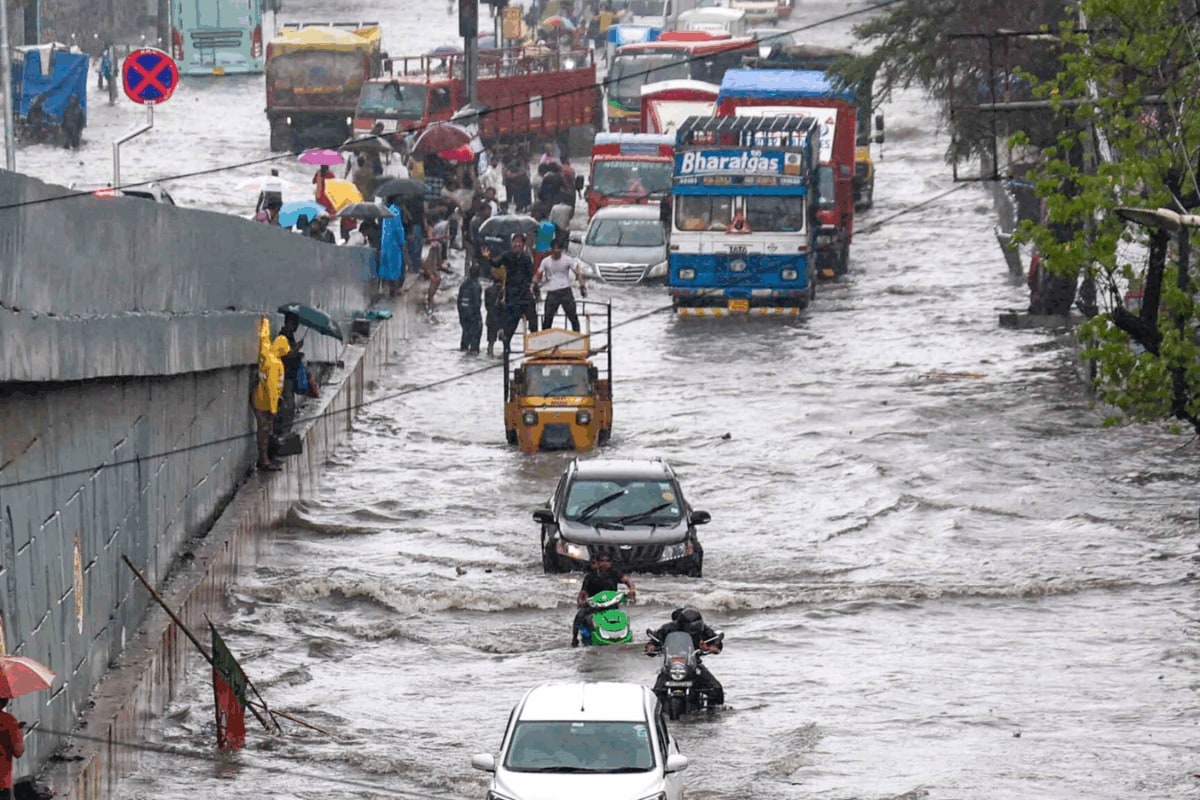
A relentless downpour has crippled India’s financial capital, forcing school closures, halting key transport arteries, and claiming at least 10 lives across the region.
The financial capital is struggling to keep its head above water today. With the IMD issuing a 'red alert' following an extraordinary 500mm of rainfall over 84 hours, the city’s infrastructure is under severe strain. From the suburbs of Chembur and Kurla to the outskirts of Kharghar, the human cost of this weather event has been grim, with the death toll reaching double digits. Casualties have been reported from a variety of rain-related tragedies, including tree collapses, drowning in flood-hidden manholes, and fatal accidents at restricted locations like the Pandavkada Waterfall.
Connectivity in Crisis
The transport network is arguably in its worst state this season. The mumbai pune expressway news has dominated the discourse for all the wrong reasons: a major landslide near Lohagad Fort has forced the complete closure of both the expressway and the old highway, leaving thousands of commuters stranded. Railway operations are equally fragile, with central railway running late and multiple services cancelled as tracks remain waterlogged. For the average Mumbaikar, the morning commute has been replaced by a chaotic scramble for alternate routes that are often just as flooded.
The institutional response has been swift but reactive. With the IMD’s 4 AM nowcast warning of sustained gusts between 50-60 kmph, authorities have shuttered schools and colleges across Mumbai, Thane, and Palghar. The University of Mumbai has deferred its July 6 examinations, acknowledging that for most students, reaching an exam centre is currently a physical impossibility.
Why it matters
Beyond the immediate disruption, this episode highlights the thinning margin of error in Mumbai’s urban planning. When a city’s drainage capacity is overwhelmed by concentrated rainfall, the economic impact is immediate—logistics chains break, retail footfall vanishes, and the city’s service-oriented workforce faces massive productivity losses. The recurring nature of these "monsoon shutdowns" suggests that the city’s aging infrastructure is struggling to keep pace with the increasing intensity of climate patterns. Until the city’s drainage and transport resilience are overhauled to handle these extreme weather spikes, the ‘red alert’ will remain a recurring nightmare for the economy.
With rescue operations currently underway to reach a family trapped by the landslide near Lohagad, the city remains on high alert. The Vihar Lake is overflowing, adding pressure to the peripheral drainage systems, and the police have issued repeated pleas for citizens to stay indoors. While the monsoon is a lifeblood for Maharashtra’s agriculture, the current urban paralysis is a stark reminder of the vulnerability of our high-density metropolitan hubs.
Rohan Gupta covers the economy, markets and companies for PoliticalPedia.