Behind the wheel of a borrowed car? Delhi HC ruling clarifies insurance liability
Borrowed a car and died in crash? Family can't seek owner's insurance claim, says Delhi HC
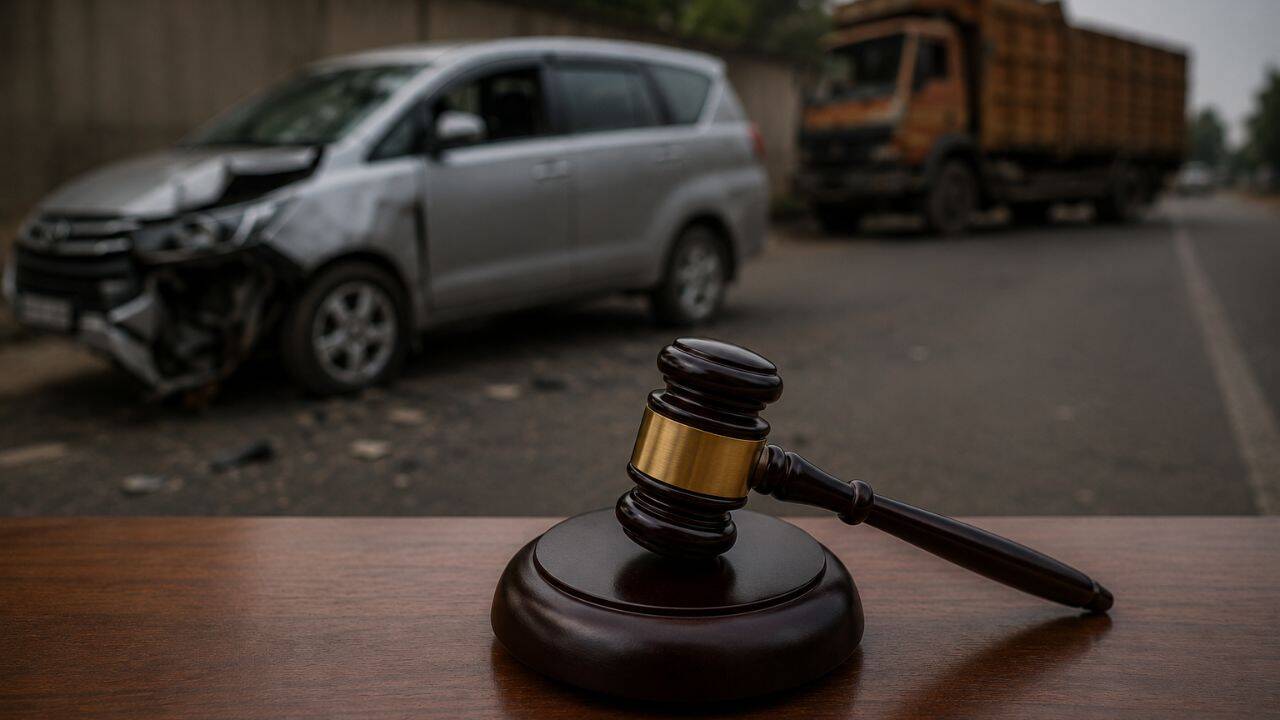
The high court has set a firm precedent, stating that families cannot leverage Section 166 of the Motor Vehicles Act to claim compensation for a deceased driver’s own negligence.
For many Indian households, the casual exchange of car keys between family members is a routine affair. Yet, a recent verdict from the Delhi HC serves as a stark reminder of the legal friction that arises when a tragic accident turns a simple favor into a complex courtroom battle. The case centered on the death of Udey Singh, who lost his life while driving his father’s Innova. When the car was struck by an unidentified truck and subsequently crashed, his mother, Simbal Singh, sought compensation by filing a claim under Section 166 of the Motor Vehicles Act, arguing that her son should be treated as a third party under the vehicle's comprehensive insurance policy.
The failure of the 'negligence' argument
The Motor Accident Claims Tribunal (MACT) initially dismissed the plea in April 2025, labeling it a contractual dispute rather than a motor accident liability case. When the family took the matter to the Delhi HC, the court drew a distinct line in the sand. Justice Anish Dayal pointed out the fundamental paradox in the family’s argument: a claim under Section 166 requires proving that someone else’s negligence caused the loss. Since the truck involved in the initial collision could not be traced, the only remaining "negligence" was that of the deceased driver himself.
The court did not mince words, noting that asking for compensation based on one's own negligence would be an "illogical absurdity." Legally, you cannot claim damages from an insurer by effectively arguing that the driver you represent was at fault. The ruling emphasizes that the Motor Vehicles Act is designed to protect third parties, not to serve as a blanket compensation mechanism for the owner or the person driving the vehicle at the time of an incident.
Contract vs. Statute
The broader takeaway here is the sharp divide between statutory duty and contractual agreement. While comprehensive or package policies often include personal accident cover for an owner-driver—usually for an additional premium—this is a private contract between the policyholder and the insurance company. It is not an automatic right guaranteed by the Motor Vehicles Act.
By pushing the claim into the MACT under Section 166, the family attempted to treat a private insurance benefit as a public liability claim. The court clarified that such matters reside in the realm of civil contract law. If a policy includes personal accident coverage, the beneficiary must pursue it through the specific terms of that contract, rather than by alleging negligence against the driver in a tribunal.
Why it matters
This verdict is a crucial guide for families and legal practitioners alike. It underscores that the MACT is not a universal solution for every road tragedy. The ruling effectively prevents the misuse of the Motor Vehicles Act to bypass specific insurance contract terms. For vehicle owners, the lesson is clear: don't rely solely on the assumption that a comprehensive policy will cover every eventuality in a tribunal. Understanding the fine print of a personal accident cover—which is a distinct contractual provision—is essential before assuming a claim will hold water if the worst happens.
Rohan Gupta covers the economy, markets and companies for PoliticalPedia.