MK Stalin Questions Stability of Vijay’s TVK Government, Doubts It Will Last Three Months
MK Stalin doubts TVK-led Tamil Nadu government may not last even three months
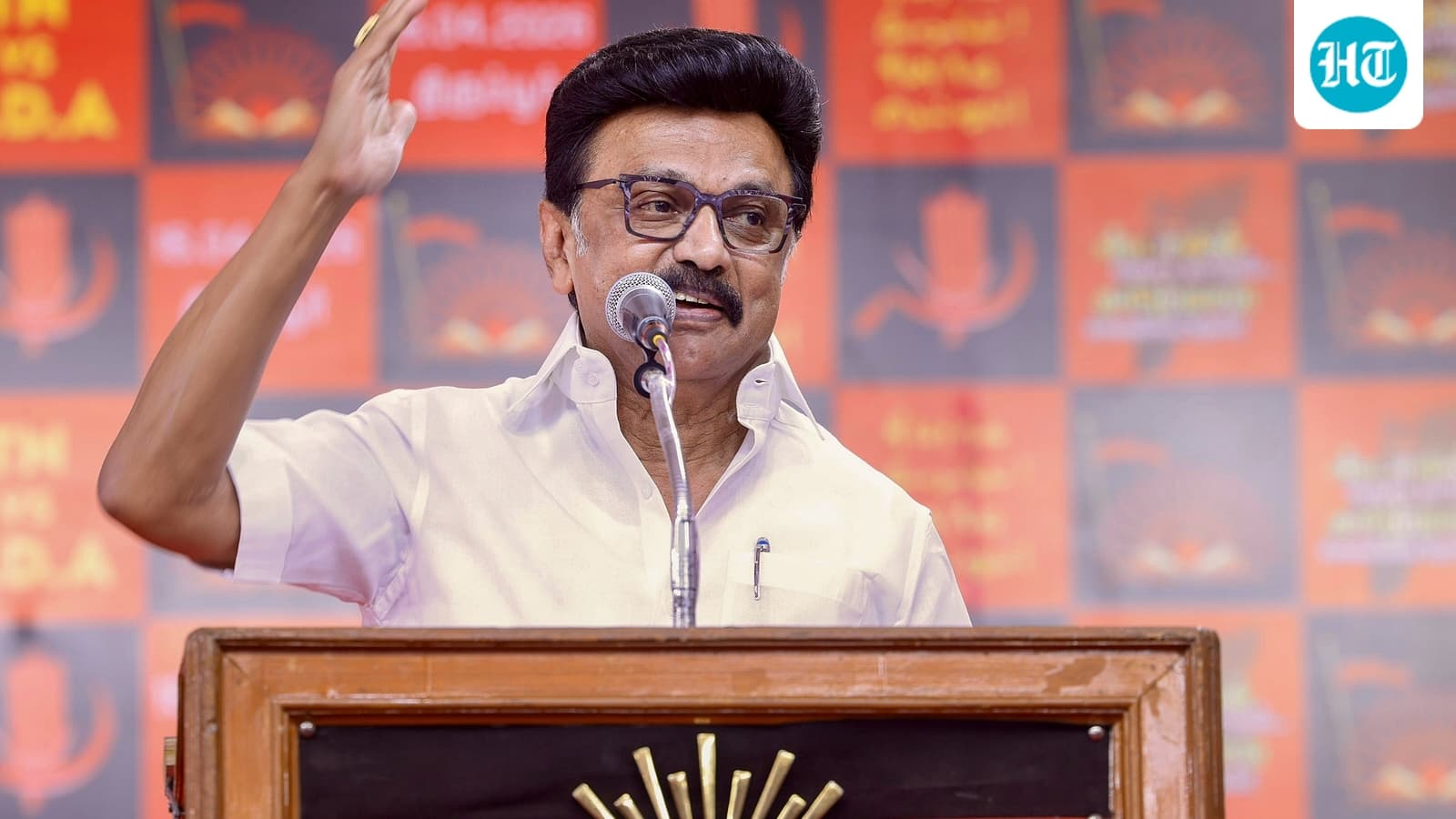
The DMK president has broken his initial pledge of a 'grace period' for the new administration, citing growing public uncertainty over the TVK’s governance.
The political honeymoon for Tamil Nadu’s new administration has effectively ended before it could even begin. DMK president and former Chief Minister MK Stalin has publicly cast doubt on the longevity of the TVK-led government, suggesting that the current regime may struggle to remain in power for even three months. While the DMK had initially resolved to grant Chief Minister Vijay’s government a six-month window of non-interference to settle into office, Stalin signaled that recent developments have made such restraint impossible.
A Growing Crisis of Confidence
Speaking at an event to welcome former VCK legislator Paniyur Babu into the DMK fold, Stalin noted that the prevailing public discourse has shifted from curiosity to skepticism. The DMK leader pointed out that while his party had intended to maintain a "no-criticism" policy for half a year, the internal and external pressures mounting on the TVK government have accelerated the timeline of instability. "The situation is such that many are wondering whether this government can last even three months, let alone five or six," Stalin remarked, reflecting a growing sentiment among opposition ranks that the state is facing a period of intense political fragility.
The Digital vs. Grassroots Divide
Stalin’s critique also targeted the fundamental nature of the TVK’s electoral success. He argued that the party’s rise to power was largely an "Instagram-led" phenomenon, lacking the robust organizational bedrock traditionally required to govern effectively in Tamil Nadu. Drawing a sharp contrast to his own party's strategy, Stalin highlighted that the DMK had spent the period following the 2024 Lok Sabha polls meticulously enrolling members, establishing booth-level agents, and conducting youth wing conferences. In his view, the TVK secured a mandate without the conventional groundwork—such as appointing counting agents or engaging in door-to-door voter mobilization—which he believes leaves the new administration ill-equipped for the complexities of governance.
Governance Under Scrutiny
Beyond the DMK’s tactical criticisms, the Vijay-led government is already grappling with a barrage of challenges that have drawn flak from various political quarters. Reports of issues ranging from administrative lapses in education to broader corruption concerns have dominated the conversation. The government’s recent decision to allocate a Rajya Sabha seat to Congress leader Praveen Chakravarty has also fueled debates about the power dynamics within the new regime. As the TVK navigates these early hurdles, the state remains in a state of political flux, with observers questioning if the administration possesses the structural cohesion to withstand the mounting pressure.
Looking Toward 2026
The current climate suggests a volatile lead-up to the 2026 Assembly elections. With major players like the AIADMK, Seeman’s Naam Tamilar Katchi, and the DMK all positioning themselves, the stability of the current TVK government has become a focal point of intense maneuvering. While the DMK has formally rejected overtures from the AIADMK to form an anti-TVK front, the underlying consensus among the opposition is that the state is effectively under a "hung" mandate, where the ruling party’s lack of a clear majority continues to invite speculation about its future viability.
The PoliticalPedia Editorial Desk brings verified, sourced political news and analysis from across India.