Border Anxiety: Lyngkhong Residents Fear Isolation Over Meghalaya Fencing Alignment
Meghalaya village protests India-Bangladesh border fence alignment, fears isolation
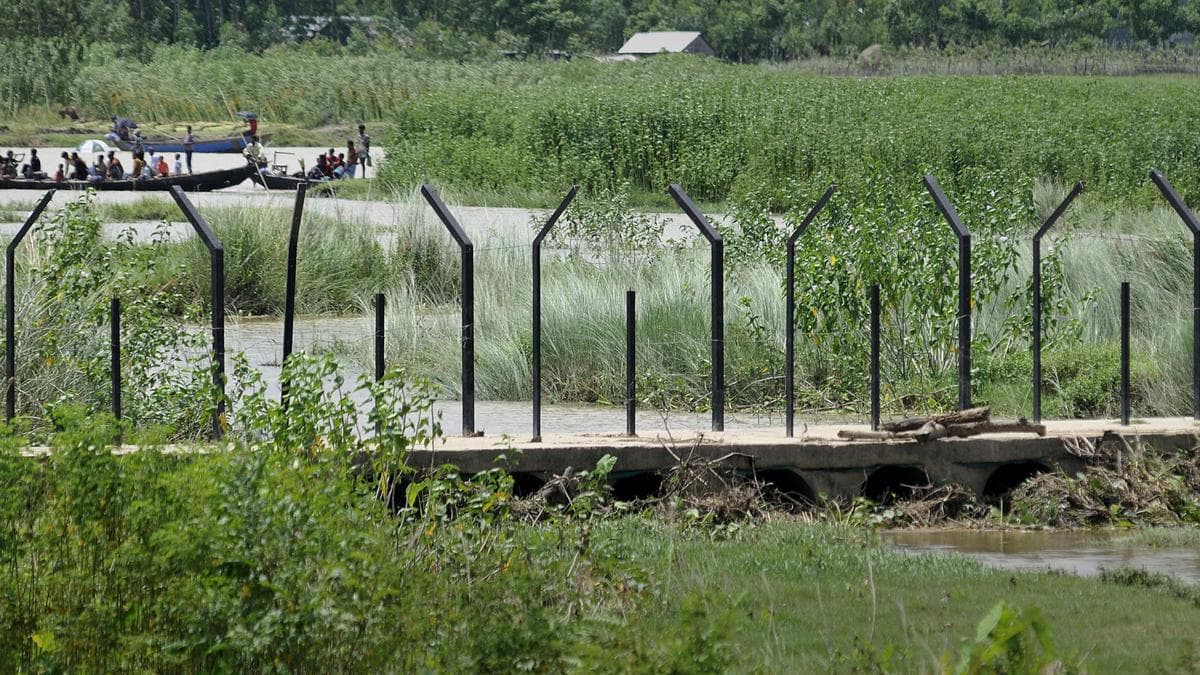
Residents of a village perched on the zero line in East Khasi Hills demand a rethink of border security plans to avoid being cut off from Indian territory.
The residents of Lyngkhong, a remote village tucked away in Meghalaya’s East Khasi Hills, are living in the shadow of a mounting crisis. On Sunday, June 7, 2026, the community staged a vocal demonstration to protest the current alignment of the ongoing India-Bangladesh border fencing project. The villagers argue that the proposed security barrier—which adheres to the international convention of remaining 150 yards from the zero line—will effectively sever their connection to the rest of India, leaving their homes stranded on the wrong side of the divide.
A Village at the Threshold
Lyngkhong sits in a unique and precarious position, with houses standing only meters away from settlements across the border in Bangladesh. For years, the village has relied on makeshift bamboo barriers, first erected during the COVID-19 pandemic, to define its boundaries. Now, with formal border fencing work pushing forward as part of a national effort to secure the 444 km Meghalaya-Bangladesh frontier, the villagers are caught in a logistical nightmare.
"We are not against border fencing, but we want the fence to be erected at the zero line so that our village remains inside India and within the fenced area," said Ramu, the village head, during the protest. His sentiments were echoed by other locals, such as Rima Khongsdir, who expressed deep anxiety regarding the future of their settlement, citing concerns over long-term access, security, and integration with the mainland.
Security vs. Livelihood
The Border Security Force (BSF) maintains that the area is not being left unprotected. A senior official stated that an outpost has already been established in Lyngkhong to provide immediate assistance and security to the residents. While the BSF asserts that all necessary measures are being taken to ensure the safety of the populace, the villagers argue that a fence separating them from their own country is a hurdle that no amount of patrol presence can fully mitigate.
The challenge highlights the complex realities of border management in India. With less than 80 km of the Meghalaya-Bangladesh border still unfenced due to difficult terrain and local opposition, the state is under pressure to complete the project. However, the human cost of these barriers remains a point of contention.
The Diplomatic Hurdle
Government officials acknowledge that the situation is far from settled. A representative from the Home Department revealed that India has already initiated high-level talks with Dhaka to explore the possibility of a single-row fence directly along the zero line in sensitive areas where human settlements are at risk of being isolated.
Despite these diplomatic overtures, a definitive solution remains elusive. The new government in Bangladesh has yet to issue a formal decision on the single-line fence proposal. For now, the people of Lyngkhong remain in a state of uncertainty, waiting for the State government to bridge the gap between national security requirements and the fundamental right of a village to stay within its own country.
The PoliticalPedia Editorial Desk brings verified, sourced political news and analysis from across India.