Madras High Court allows withdrawal of case challenging the order of Tamil Thai Vazhthu during CM Vijay’s swearing-in
Case against relegating Tamil Thai Vazhthu to third place during T.N. CM Vijay’s swearing-in ceremony withdrawn
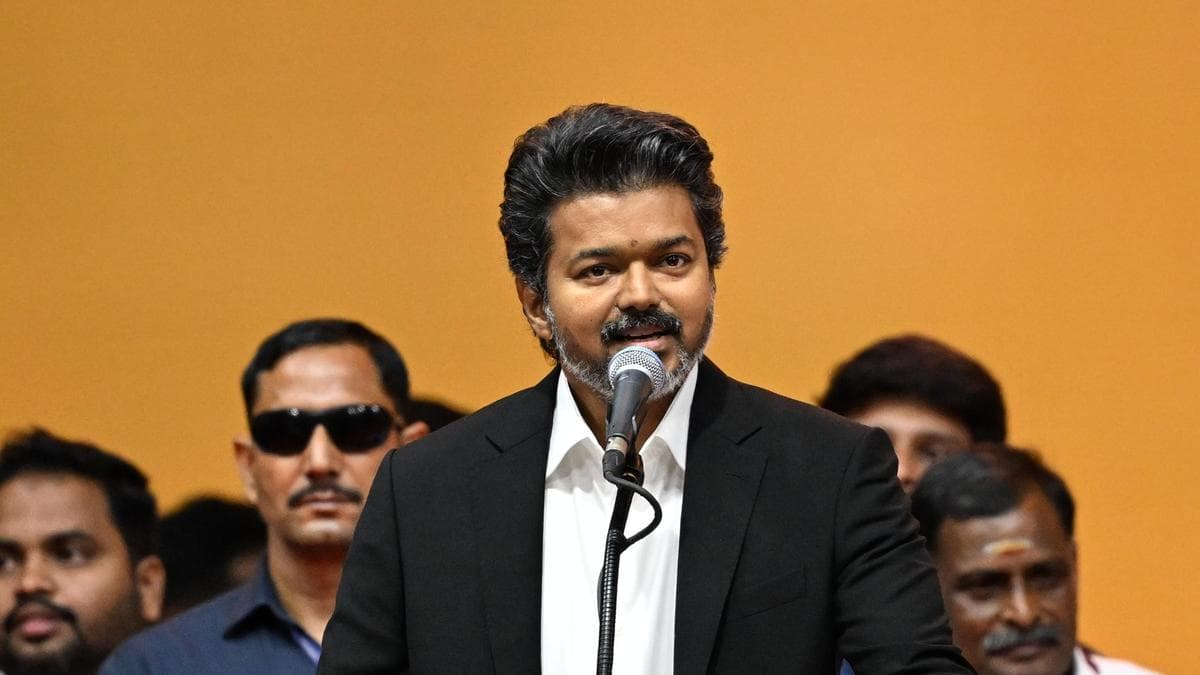
The legal challenge regarding the placement of the state song at the Chief Minister's oath-taking ceremony has been dropped, with the court granting liberty to file a better-structured petition.
The Madras High Court on Friday permitted the withdrawal of a Public Interest Litigation (PIL) that had sparked a significant debate over the protocol followed during the May 10, 2026, swearing-in ceremony of Chief Minister C. Joseph Vijay. The petitioner, Ananya Radhakrishnan, had sought to challenge the decision to relegate the Tamil Thai Vazhthu—the official state song of Tamil Nadu—to the third position, following the national song and the national anthem.
A bench led by Chief Justice Sushrut Arvind Dharmadhikari and Justice G. Arul Murugan dismissed the petition as withdrawn but granted the petitioner the legal freedom to file a fresh case with more comprehensive particulars. The issue had drawn public attention after the ceremony in Chennai, where the deviation from the traditional ceremonial order caused widespread concern among citizens who view the state song as a symbol of cultural identity.
The Conflict of Protocols
At the heart of the dispute is a Union Home Ministry circular issued on January 28, 2026. This directive mandates that the national song, Vande Mataram, must be played upon the arrival and departure of the Governor at formal state functions. Furthermore, it stipulates that when both the national song and the national anthem are performed at such events, the national song must precede the anthem.
During the hearing, the High Court bench questioned the viability of the case, noting that the petitioner had not formally challenged the central government’s January circular. The judges suggested that without a direct challenge to the source of the protocol, the court could not effectively adjudicate on the inter se order of the performances.
A Legal Grey Area
The petitioner argued that the Union Ministry’s circular is entirely silent regarding officially recognized state songs, such as the Tamil Thai Vazhthu, which was declared the state song in December 2021. Ms. Radhakrishnan contended in her affidavit that the absence of explicit instructions regarding state songs should not be interpreted as a mandate to relegate them behind national compositions.
While the central government’s stance focuses on a standardized national protocol, the petitioner’s argument highlights the tension between federal guidelines and regional ceremonial traditions. The case has underscored the need for clearer executive clarity regarding where state-level cultural anthems fit into the hierarchy of formal government events, particularly when national anthems are involved.
As the legal proceedings conclude for now, the incident remains a flashpoint for discussions on balancing federal mandates with state-specific protocols. By allowing the petitioner to re-file, the court has left the door open for a more detailed examination of whether the playing of the Tamil Thai Vazhthu during official state government events requires a protected, primary position in the sequence of ceremonies.
The PoliticalPedia Editorial Desk brings verified, sourced political news and analysis from across India.