London High Court Deal Blow to Prince Harry in Privacy Battle Against Daily Mail
UK court dismisses Prince Harry's privacy lawsuit against tabloid
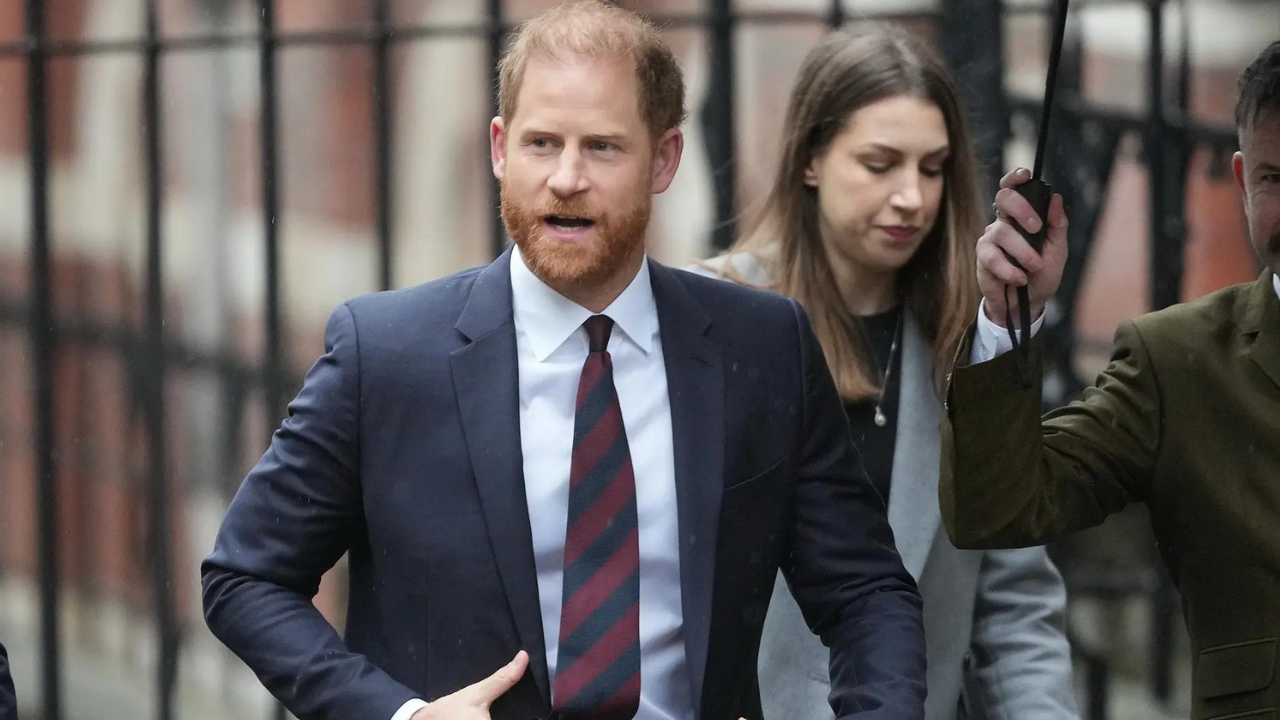
A landmark legal defeat for the Duke of Sussex and high-profile co-claimants as a judge rejects allegations of unlawful information gathering by the publisher.
The legal shadow hanging over Britain’s Fleet Street has shifted, at least for now. On Tuesday, London’s High Court handed a significant setback to Prince Harry and a cohort of high-profile figures, including Elton John and Elizabeth Hurley, by dismissing their privacy lawsuit against Associated Newspapers. The case, which centered on allegations of phone hacking and the use of private investigators to source stories for the Daily Mail and Mail on Sunday between the 1990s and 2011, has been a centerpiece of the prince’s ongoing campaign against the British tabloid press.
Justice Matthew Nicklin’s judgment was precise and unforgiving. He ruled that the claimants failed to demonstrate that the information published by the Daily Mail publisher was obtained through illegal means. The court specifically rejected the premise that an inability by the publisher to explain exactly how they sourced a piece of private information is, in itself, proof of wrongdoing. As the judge noted, suspicion alone is not a substitute for evidence in a court of law.
The Courtroom Calculus
For Associated Newspapers, the ruling is being framed as an "overwhelming victory." The publisher had consistently denied the allegations, labeling them as baseless from the outset of the litigation. Tuesday’s verdict clears a major hurdle for them, reinforcing the difficulty plaintiffs face when trying to prove historical misconduct in a digital age where the provenance of information is often obscured by time and editorial privilege.
While this specific case has been dismissed, the legal landscape remains volatile. Reports suggest that while these claims against the Daily Mail publisher have been shut down, other legal battles involving the prince—specifically those regarding information gathering by The Sun—are still slated to go to trial, even as certain phone hacking counts in that separate matter have been dismissed.
Why it matters: The bigger picture
This ruling serves as a vital reality check on the limits of high-stakes privacy litigation. For years, the Duke of Sussex has positioned himself as a crusader against the excesses of the tabloid industry, seeking to hold powerful media houses accountable for methods he claims were invasive and unethical. However, the court’s insistence on the burden of proof highlights a fundamental barrier: in the eyes of the law, the "feel" of an invasion of privacy does not equate to a provable breach of the law.
The implication here is clear: while public sentiment regarding media ethics continues to evolve, the judiciary requires hard evidence of unlawful acts, not just a pattern of perceived intrusion. This outcome likely emboldens publishers to contest similar claims more aggressively, setting a precedent that transparency in newsrooms is preferred, but the absence of a "paper trail" for a source does not automatically render a story illegal. As the prince continues his frequent visits to London, the courtroom remains the primary theater for his confrontation with the British press, but today’s decision proves that the scales of justice are not always tilted in favor of the celebrity claimant.
Arjun Mehta reports on government, policy and Parliament for PoliticalPedia, in English and Hindi.