K Annamalai’s Exit from BJP: A Calculated Gamble or Political Necessity?
Annamalai joined BJP because Rajinikanth didn't form party: Congress leader
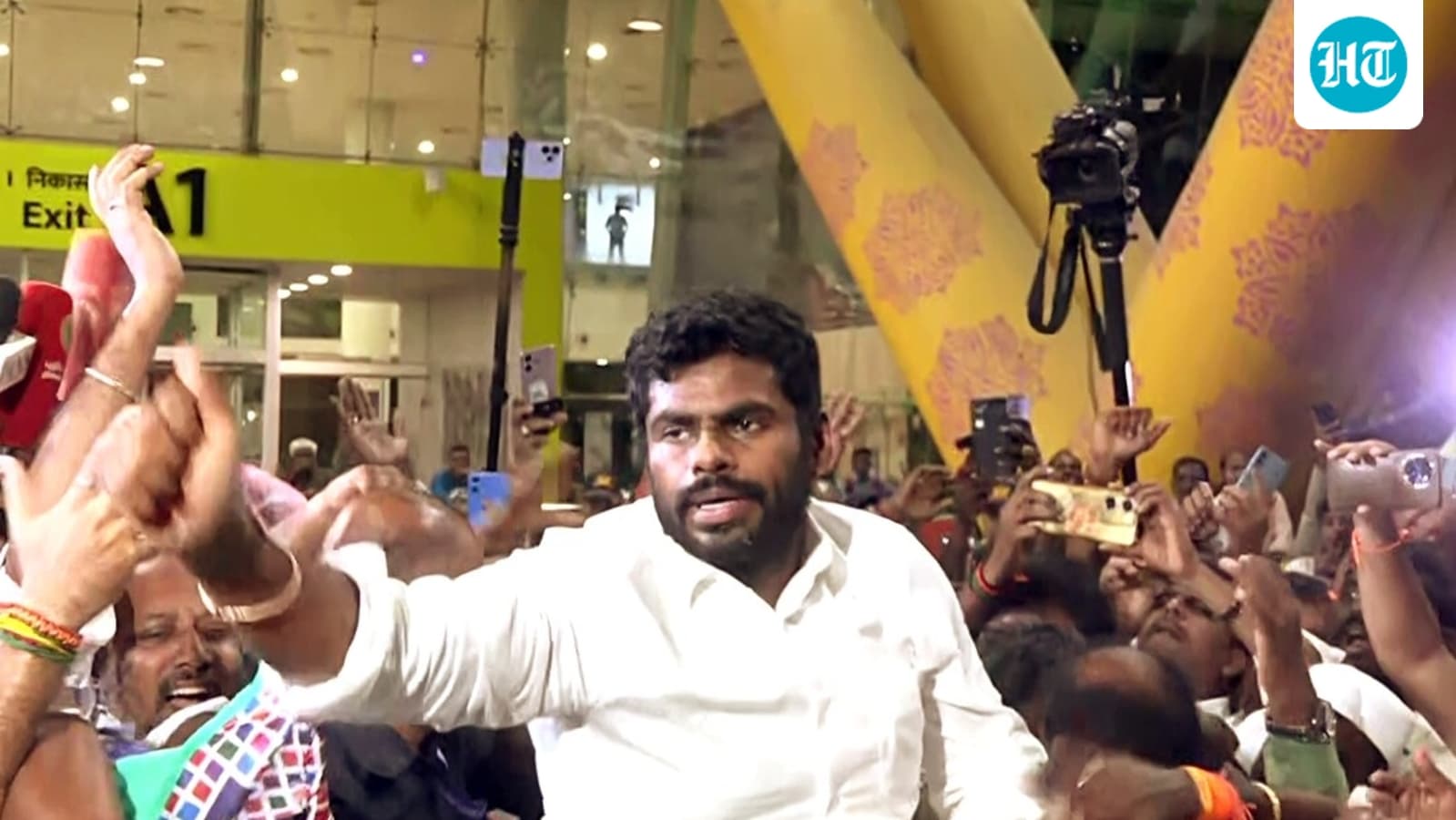
After stepping down from the BJP, former Tamil Nadu president K Annamalai has launched a new political movement, sparking debate over his ideological roots and the future of the saffron party in the state.
The political landscape in Tamil Nadu has shifted significantly this week following the resignation of K Annamalai from the BJP. The former IPS officer, who once helmed the state unit, has announced the formation of a new political movement explicitly aimed at challenging "cult politics." While the move has been framed by Annamalai as a long-gestating decision to provide a fresh alternative for the state, it has drawn sharp analysis from political opponents, including Congress MP Karthi Chidambaram.
The Rajinikanth Factor
The timing of Annamalai’s departure has invited intense speculation regarding his original motivations for joining the saffron fold. According to Karthi Chidambaram, Annamalai’s initial entry into the BJP was likely a fallback option rather than a deeply held ideological alignment. Chidambaram suggested that Annamalai had originally hoped to align himself with superstar Rajinikanth, whose teased entry into electoral politics never materialized.
"I think he joined the BJP only because Mr. Rajinikanth did not form a party," Chidambaram remarked, noting that as a lateral entrant without a traditional RSS background, Annamalai was never a typical Hindutva ideologue. This assessment highlights a broader narrative: that Annamalai found himself in a party with limited electoral "purchase" in a state where regional identity often dictates political success.
A Conflict of Identity
Annamalai’s exit follows a period of internal deliberation that he says began as early as December 2025. He revealed that he had expressed his intent to resign to the central leadership months ago, but was urged to remain in his post to see the party through the April-May 2026 assembly elections. Describing the period as a "great conflict" between his identity as a Tamilian and his position within the BJP, he framed his departure as a necessary step to offer a new vision to voters.
The former state chief claims his new movement is designed to evolve into a full-fledged party by the next assembly cycle. By positioning his future platform as a departure from the personality-driven dynamics that have long dominated Tamil Nadu politics, he aims to capture a segment of the electorate that remains disillusioned with traditional major parties.
The Road Ahead
For the BJP, the resignation marks a notable loss of a high-profile, aggressive campaigner who worked to elevate the party's visibility. However, critics like Chidambaram argue that the move validates the assessment that the BJP has failed to find deep-rooted acceptance in the southern state. Whether Annamalai’s "gutsy" gamble to launch an independent movement can overcome the state's entrenched political duopoly remains the central question for the next five years. For now, the focus in Delhi and Chennai remains on how effectively this new movement can organize before the next round of elections.
The PoliticalPedia Editorial Desk brings verified, sourced political news and analysis from across India.