India’s fleeting chance: Why the CEA says the window to capture global manufacturing is closing
Very short window for India amid China supply-chain shift, says CEA V Anantha Nageswaran
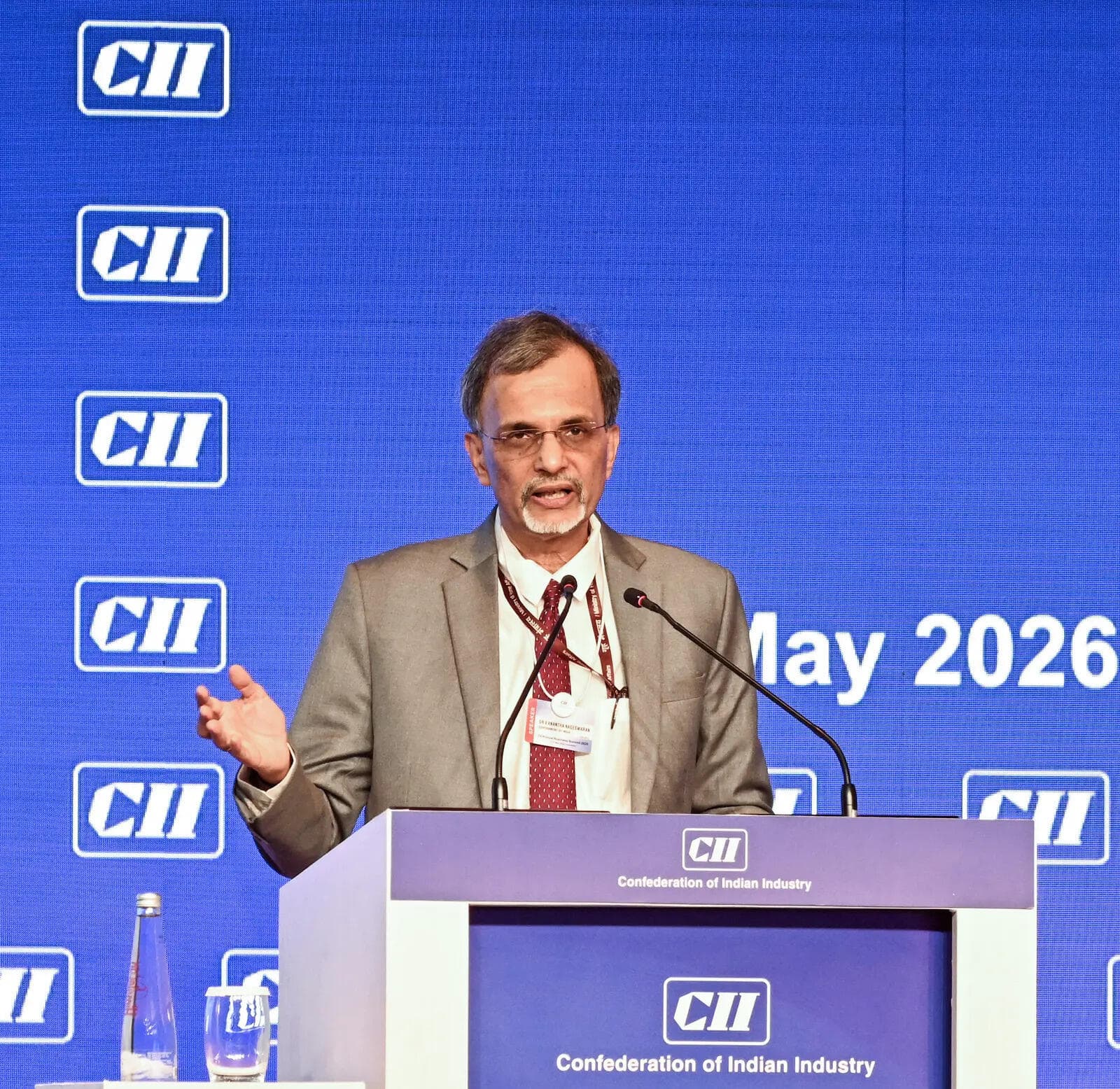
Chief Economic Adviser V Anantha Nageswaran has warned that the global supply-chain shift offers a narrow opening for India to capitalize on China’s manufacturing dominance.
The clock is ticking on India’s aspirations to become a global factory. During a recent presentation before the Parliamentary Standing Committee on Finance, Chief Economic Adviser (CEA) V Anantha Nageswaran delivered a sobering reality check to lawmakers: the window for India to attract companies fleeing China is "very short," and the country must act with urgency to seize this geopolitical opportunity.
Sources present at the meeting held last week, chaired by BJP MP Bhartruhari Mahtab, indicated that the CEA mapped out a volatile global landscape. The presentation highlighted three primary forces currently reshaping the world: intense great-power competition, the fracturing of traditional Western alliances, and the overwhelming scale of China's manufacturing supremacy.
The China challenge
The scale of the hurdle is immense. The CEA pointed out that Beijing’s trade surplus surged past a record $1.2 trillion in 2025, a figure that underscores China’s deep-rooted hold on global trade. More importantly, sources said the presentation warned that China is actively creating bottlenecks for firms attempting to diversify their operations. These hurdles are complicating the very supply-chain shifts that India hopes to benefit from, making it harder for global corporations to pivot their production bases.
While the domestic economy has shown resilience, with high-frequency indicators through April 2026 pointing to stable demand, the government is not ignoring the risks. The CEA flagged concerns over supply-side price pressures and the ever-present uncertainty of the monsoon, which remain critical variables for India's macroeconomic stability.
Why it matters
The broader context here is a transition from an era of "comparative advantage" to one of "strategic interest." For decades, global trade relied on economic efficiency, but the current reality is being dictated by technology, security, and geopolitics. As the US and Europe increasingly diverge on trade and defense policies, India finds itself in a unique position to build new coalitions. However, as the CEA’s presentation suggests, this strategic space is finite. If New Delhi does not implement a more agile and proactive policy framework immediately, the opportunity to absorb these global supply chains could evaporate, leaving India to contend with a status quo that heavily favors Beijing.
Beyond the macro strategy, the stakes are tangible for the Indian workforce. The potential gains go beyond mere trade statistics; investments from global giants—like Apple’s plans for two mega-factories in India—represent the kind of industrial scale needed to generate the one lakh jobs that would transform local manufacturing ecosystems. For India, the message from the North Block is clear: the opportunity is real, but the window is narrow.
World Desk at PoliticalPedia covers global affairs for an Indian audience in English and Hindi.