How Vedant Shrivastava, Nisarga Adhikary, and Sarthak Sidhant Challenged the CBSE Over Evaluation Glitches
Vedant Shrivastava, Nisarga Adhikary and Sarthak Sidhant | The Gen Z trio that took on the CBSE
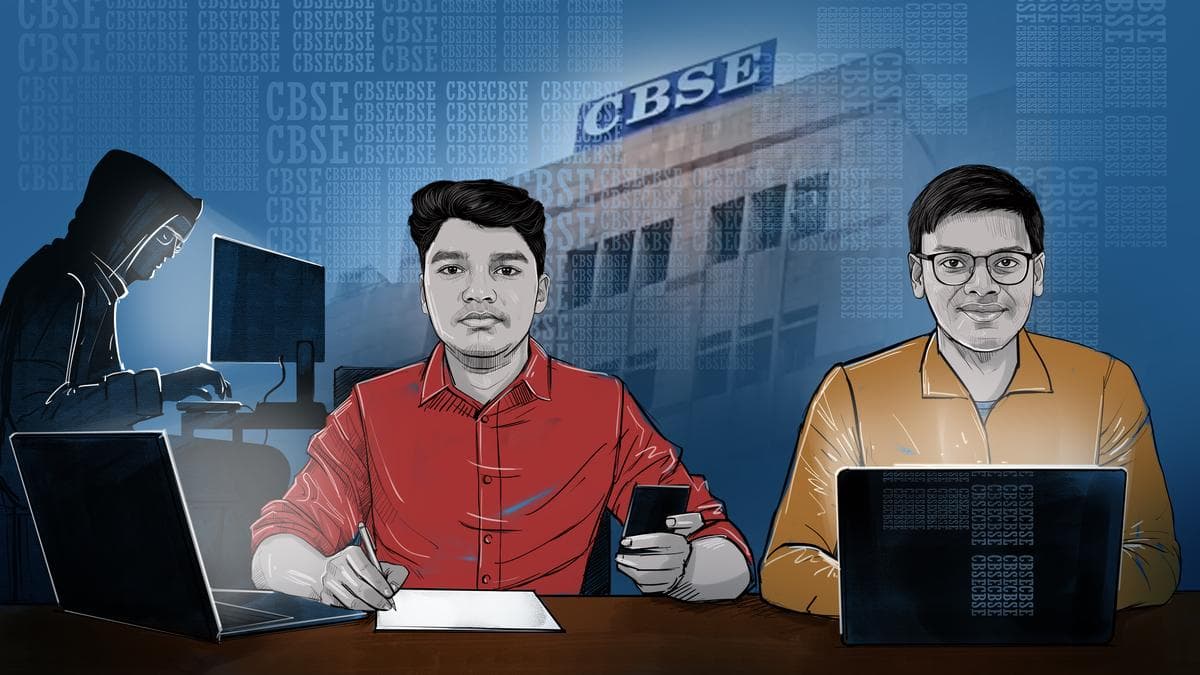
The Gen Z trio successfully pressured the national education board to admit to systemic failures in its new digital marking process.
For weeks, the Central Board of Secondary Education (CBSE) faced mounting scrutiny as students across the country reported significant discrepancies in their board results. At the heart of this confrontation were Vedant Shrivastava, Nisarga Adhikary, and Sarthak Sidhant, three teenagers who transformed their personal grievances into a public call for accountability. By leveraging digital platforms, they exposed the flaws within the Board’s On-Screen Marking (OSM) system, forcing a rare admission of error from one of India's most powerful educational bodies.
The movement gained momentum after Vedant, a 17-year-old student from East Delhi, discovered that the answer sheet he received via the board’s portal did not belong to him. When his initial attempts to contact the CBSE through official channels yielded no response, he took his concerns to X. What followed was an exhausting two-week period of "chaos." As the primary whistleblower, Vedant faced a barrage of vitriol, including xenophobic trolling and attacks on his personal appearance, simply for questioning the integrity of the evaluation process.
The ordeal highlights a widening gap between the Board’s technological ambitions and its ground-level execution. Critics argue that the CBSE implemented the OSM system with undue haste. Vedant notes that many veteran educators, who are tasked with operating this complex digital interface, have not been provided with the requisite training to handle the software effectively. For these students, the issue is not merely one of clerical error but of a systemic failure to prepare for the transition to digital assessment, which they believe should not be fully operationalized until at least 2027.
The Cost of Accountability
The pressure exerted by the trio—Vedant, Nisarga, and Sarthak—was instrumental in compelling the CBSE to acknowledge the errors. Following the public outcry, officials traced Vedant’s original physics paper, vindicating the students who had maintained that their marks did not reflect their actual performance. Despite the toll that the controversy took on his personal life, Vedant remains focused on his future, currently preparing for the National Defence Academy entrance exams with the goal of serving as a fighter pilot.
The situation serves as a stark reminder of the influence of the Gen Z demographic in holding large institutions accountable. While traditional protests—such as those seen recently in Delhi involving the Youth Congress—often face physical interventions, this digital-first approach allowed the students to bypass bureaucratic stonewalling. By documenting their struggles on social media, they successfully shifted the narrative from individual student complaints to a national debate on institutional transparency.
As the dust settles, the CBSE has opened its portal for re-evaluation, a move that directly stems from the sustained pressure applied by the trio. Vedant’s experience of having to seek re-evaluation for multiple subjects—including Mathematics, English, and Computer Science—reflects a broader anxiety among students regarding the accuracy of their academic transcripts. For now, the three teenagers remain symbols of a student body that is increasingly unwilling to accept systemic flaws in silence.
The PoliticalPedia Editorial Desk brings verified, sourced political news and analysis from across India.