Every Friday, BKC’s 2 Lakh Office-Goers Are Being Asked To Ditch Cars: What That Means For You
Every Friday, BKC's 2 Lakh Office-Goers Are Being Asked To Ditch Cars | What That Means For You
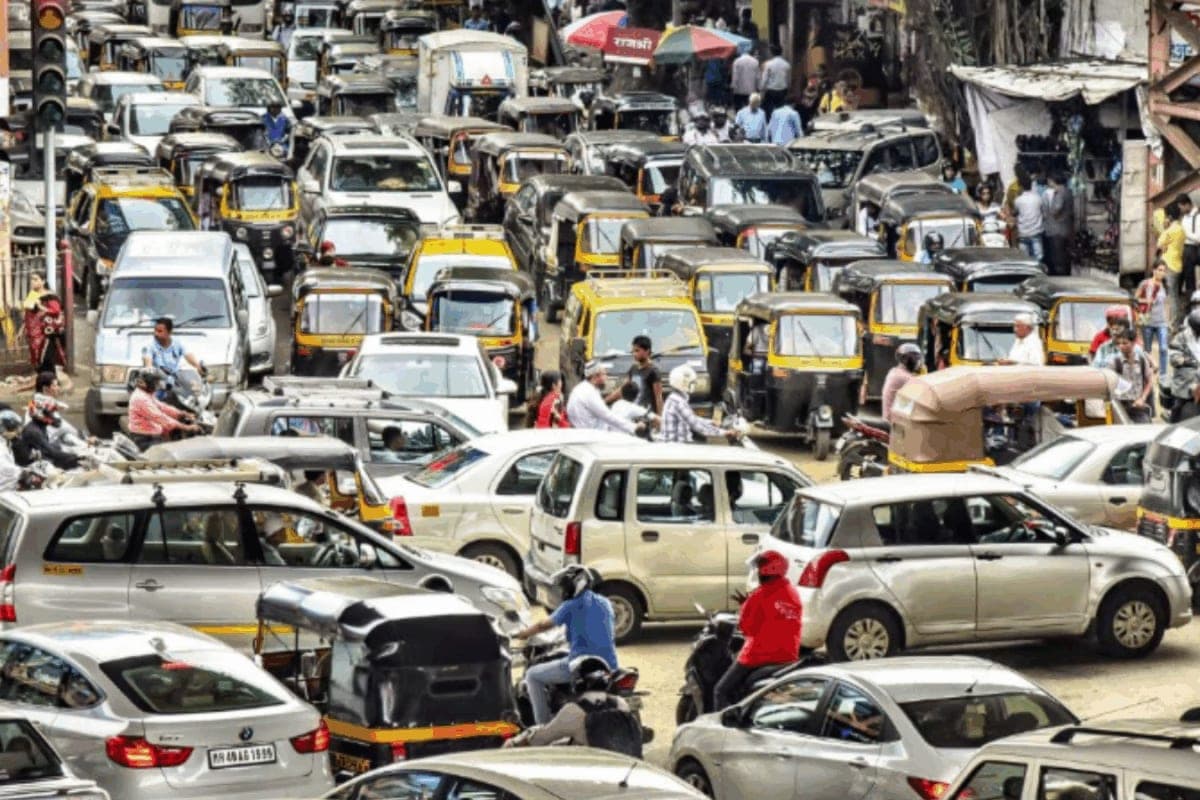
As Mumbai’s premier business district fights gridlock, the MMRDA is betting on a weekly experiment to shift commuter habits away from private vehicles.
If your Friday evening in Bandra Kurla Complex typically involves staring at the brake lights of a stationary cab for forty minutes, the Mumbai Metropolitan Region Development Authority (MMRDA) has a different plan for you. Starting this week, the district is launching a first-of-its-kind "Public Transport Day" every Friday. The goal is simple but ambitious: persuade the 2,00,000 professionals who fuel this corporate hub to leave their cars at home and opt for the Metro, BEST buses, or suburban trains instead.
The initiative isn't just a suggestion; it carries significant institutional weight. With the backing of 90 major companies operating within the district and a mandate for the MMRDA’s own 2,000 employees to lead by example, the project is moving beyond a mere awareness campaign. Authorities, in collaboration with the Traffic Police, the Mumbai Metro Rail Corporation (MMRCL), and WRI India, have spent months auditing why commuters choose private transport. The data was clear: people want to switch, but only if the last-mile connectivity is reliable and the transit infrastructure is actually user-friendly.
Why Friday?
The choice of day is calculated. Unlike the high-pressure start of the week, where Monday’s back-to-back meetings and rigid deadlines make employees risk-averse, Friday schedules are notoriously more fluid. Officials believe this flexibility makes it the perfect "lab" to test whether commuters are willing to trade the comfort of a private car for the predictability of the Aqua Line (Metro 3) or the expanded feeder bus network. The programme will be monitored closely over the next three to four months, with the possibility of introducing employee incentives, such as travel reimbursements, if the shift takes hold.
The Infrastructure Reality
For this to succeed, the "last-mile" hurdle must be cleared. Currently, the district relies heavily on a mix of auto-rickshaws and foot-over-bridges to connect to Bandra and Kurla stations, which have become notorious bottlenecks. While the recent opening of Metro Line 3 has provided a vital artery, the sheer density of office workers means that existing pedestrian pathways and bus frequencies are often stretched thin. The authorities are now looking at improving walking corridors and dedicated bus turning facilities to make the transition less of a chore and more of a viable daily habit.
Why it matters
This experiment is a litmus test for urban planning in Indian metros. BKC is essentially a modern-day "chakravyuh"—a high-value economic zone that has historically been designed for cars rather than people. If the authorities can successfully nudge a significant percentage of 2 lakh workers toward public transport, it offers a template for other congested hubs like Cyber City in Gurugram or HITEC City in Hyderabad. However, the real test won’t be the first Friday, but the third or fourth. If the infrastructure fails to remain consistent, commuters will inevitably slide back into the driver’s seat. For now, the shift signals a broader, much-needed transition in how Mumbai manages its most valuable commercial real estate—by prioritizing the movement of people over the movement of machines.
Business Desk at PoliticalPedia covers economy & markets for an Indian audience in English and Hindi.