Drying Waters: How Asia’s Largest Oxbow Lake is Vanishing from Bihar’s Map
How Asia’s largest oxbow lake is losing its fish, water, and future | HT Ground Report from a Ramsar Site in Bihar
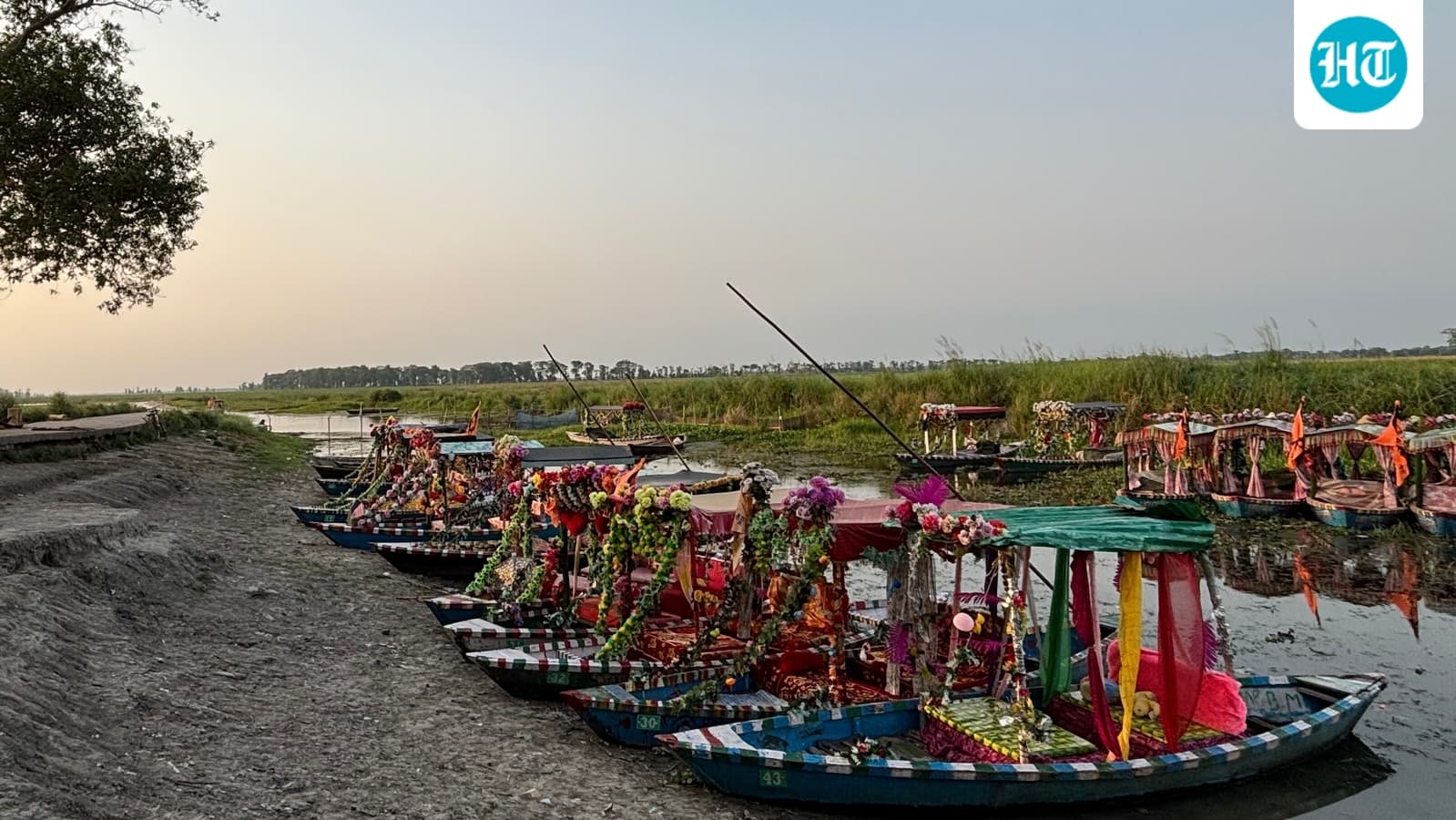
Once a thriving sanctuary for biodiversity, the Kabartal Wetland faces an existential crisis as encroachment and environmental neglect threaten its Ramsar-protected status.
In the village of Cheriya Bariyarpur, located 20 kilometres from Begusarai in Bihar, the daily routine of 40-year-old fisherman Naresh Sahni has undergone a desperate transformation. Where he once cast nets for a rich variety of native fish—including singhi and garah—he now spends his days scouting for tourists near the Jai Mangla Garh Temple. His livelihood, like the water levels of the Kanwar Lake itself, has receded to a fraction of its former potential. This transition from a traditional fishing economy to a reliance on erratic tourism is a grim barometer of the health of Asia’s largest oxbow lake.
A Fragmented Ecosystem
Kanwar Lake, designated a Ramsar site in 2020, was once a sprawling 63,000-hectare expanse. Formed by the shifting meanders of the Burhi Gandak river, this crescent-shaped wetland served as a critical ecological buffer. Today, the geography of the lake has been irrevocably altered. It has fragmented into isolated, shallower water bodies—locally distinguished as the 'bada jheel' (big lake) and 'chhota jheel' (small lake)—as receding water levels expose large swathes of dry land. For the local fishing community, the impact is quantifiable: roughly 75% of fish varieties that once populated the lake have vanished, with species like the climbing perch and walking catfish no longer sighted.
The Conflict of Conservation
The designation of the lake as a Ramsar site—a recognition of its international importance under the 1971 Convention—was intended to bolster its preservation. However, reports from the South Asia Network on Dams, Rivers and People (SANDRP) indicate a recurring trend: the legal status of a wetland often fails to translate into effective ground-level protection. Across North and East India, many such sites suffer from a combination of administrative apathy, encroachment, and conflicting community interests. In Bihar, the gap between the official Ramsar tag and the reality of the lake’s degradation remains wide.
Climate and Encroachment
The decline of the lake is not merely a matter of rainfall or climate change, though these play a role. Experts point to a history of systematic misuse. The encroachment of the lake’s buffer zones for agricultural and settlement expansion has accelerated the loss of the wetland’s natural catchment area. While the judiciary has historically shown interest in wetland protection, systemic enforcement remains inconsistent. As the water recedes, the land reclaimed from the lake creates immediate, short-term incentives for local communities to prioritize land use over ecological restoration, further sealing the lake's fate.
The Future of a Wetland
For families like the Sahnis, the lake is more than a conservation project; it is a hereditary occupation currently hanging by a thread. The HT ground report highlights a community caught in the crosshairs of environmental collapse. Without a cohesive strategy to manage the competing interests of local stakeholders and the urgent need for habitat restoration, Asia’s largest oxbow lake risks becoming a mere memory. The Ramsar designation, while a prestige milestone, serves as a stark reminder that international status is no substitute for local, actionable governance.
The PoliticalPedia Editorial Desk brings verified, sourced political news and analysis from across India.