Dragged from his home in a lungi: Allahabad High Court orders compensation for illegal police detention
Dragged out in his ‘lungi’: Allahabad High Court orders UP government to pay Rs 25,000 for 24-hour illegal detention
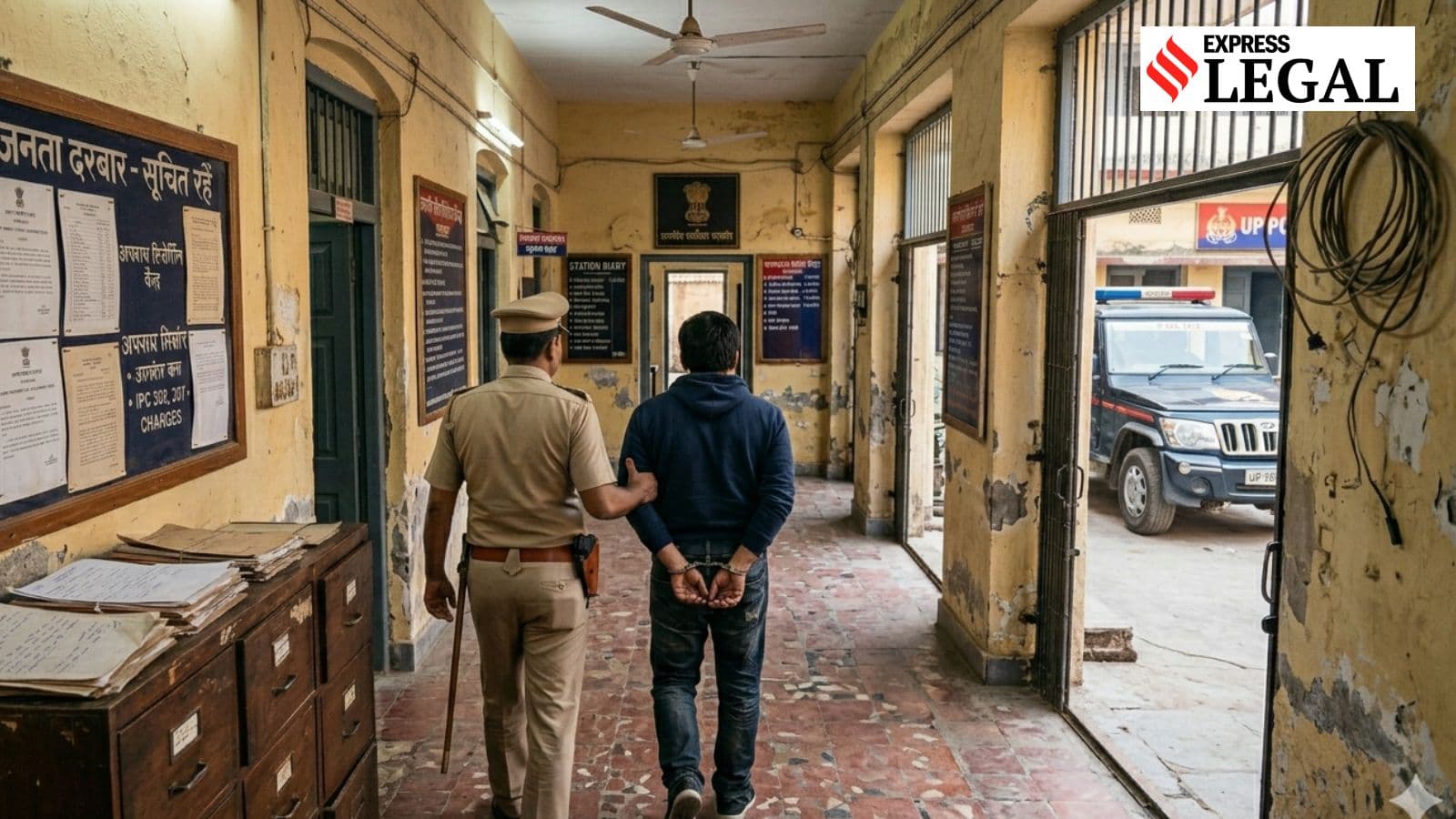
The court has penalised the state for a 24-hour illegal custody case, highlighting the systemic abuse of power in domestic dispute interventions.
The scene inside the petitioner’s home on November 26, 2022, was far from a standard police procedure. According to court filings, an officer named Dubey walked into the man’s house and forcibly dragged him out while he was dressed only in a lungi and kurta. What followed was a 24-hour ordeal that would eventually land the Uttar Pradesh government in the dock before the Allahabad High Court.
The petitioner had traveled to his native village to manage his agricultural property when the incident occurred. Following a domestic dispute complaint lodged by a relative, the police allegedly hauled him to an outpost and subsequently to the Handia police station. Beyond the physical removal, the petitioner claimed the officer demanded a bribe of Rs 20,000 for his release, a demand that went ignored even after his son frantically reached out to the Chief Minister, the DGP, and the Prayagraj Commissioner of Police.
A breach of liberty
When the matter finally reached the Allahabad High Court, a bench comprising Justices J.J. Munir and Sanjiv Kumar took a dim view of the state's conduct. The bench noted that the police failed to categorically deny the allegations of forced detention, effectively admitting that the petitioner had been held without legal cause. The court bluntly dismissed the police’s defense—which claimed the parties had voluntarily arrived at the station to settle a dispute—as entirely implausible.
In their order dated May 29, the judges held that the officer had "recklessly violated" the petitioner’s fundamental right to personal liberty. Ruling that the police had no jurisdiction to intervene in what was essentially a private matter without a cognisable offence, the court directed the state to pay Rs 25,000 as compensation, along with Rs 10,000 in litigation costs.
Why it matters
This judgment serves as a sharp reminder of the power imbalance between the state and the individual. While the compensation amount is modest, the court's willingness to hold the state accountable for the "colour of exercise of authority" is a significant check on arbitrary police detentions.
The case underscores a recurring pattern where civil domestic disputes are treated as opportunities for custodial overreach. By awarding costs, the judiciary is signaling that the badge is not a shield against accountability. For many citizens, these incidents are not just isolated administrative errors but a systemic abuse of power that goes unnoticed until a court intervenes. The directive acts as a warning: when the police skip the due process of law, the state treasury—and the department's reputation—will pay the price.
Politics Desk at PoliticalPedia covers parties & elections for an Indian audience in English and Hindi.