Cockroach Janta Party Holds Protest at Delhi’s Jantar Mantar, Demands Action on NEET and CBSE
Cockroach Janta Party Holds Protest At Delhi’s Jantar Mantar, Demands Action On NEET, CBSE
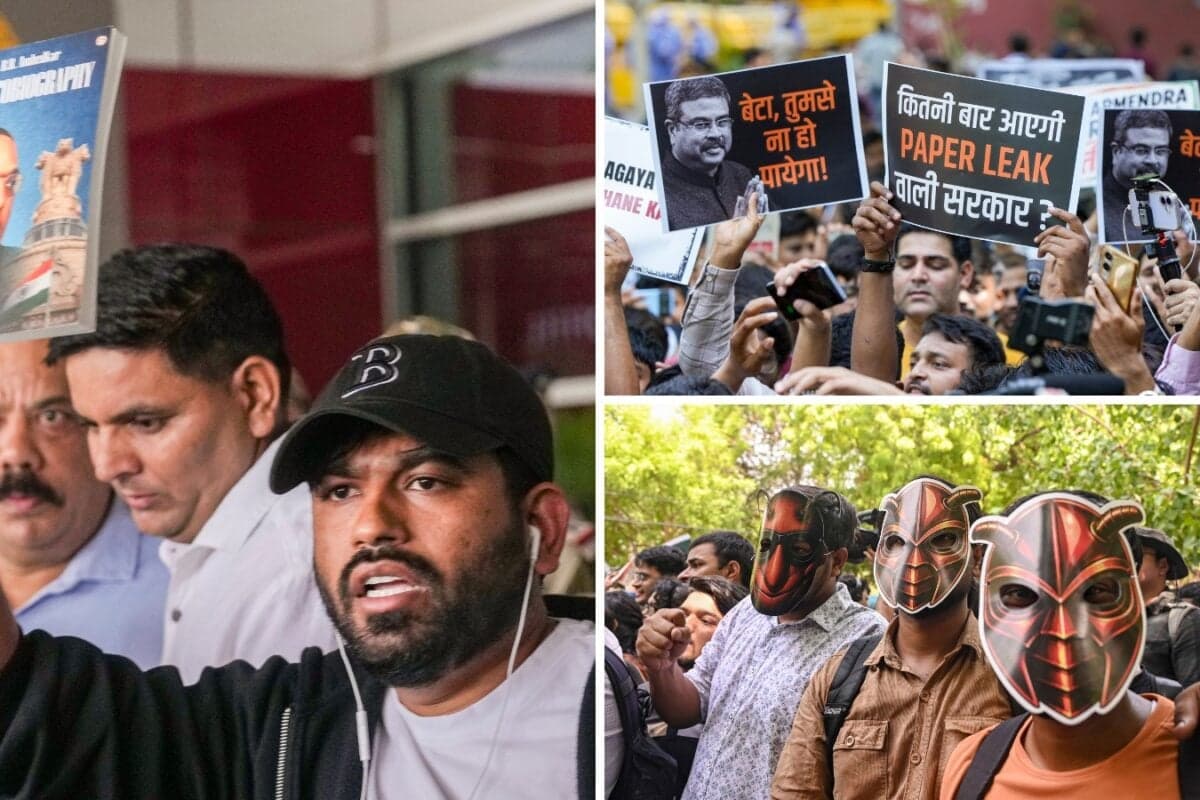
Youth-led movement gains momentum at the capital’s historic protest site as calls for the Union Education Minister’s resignation grow louder over examination transparency.
The heart of the national capital turned into a focal point for student unrest today as the Cockroach Janta Party (CJP) held a massive protest at Delhi’s Jantar Mantar. What began as a social media-driven campaign has now transformed into a physical demonstration, with thousands of supporters gathering to demand accountability for systemic failures in national examinations. The primary grievances of the party center on the recent NEET-UG 2026 paper leak allegations and widespread concerns regarding irregularities within the CBSE’s on-screen marking (OSM) system for Class 12 board evaluations.
A Call for Accountability
The protest comes after weeks of building tension, with the CJP asserting that the current leadership of the Ministry of Education has failed to safeguard the future of millions of students. During a recent press conference, the organization—led by founder Abhijeet Dipke—made their stance clear: they are seeking the immediate resignation of Union Education Minister Dharmendra Pradhan. The party argues that cosmetic transfers within the CBSE are insufficient and that structural reform is required to restore faith in India’s competitive examination process.
Wangchuk Joins the Frontline
Adding significant weight to the agitation is the presence of prominent education reformer and activist Sonam Wangchuk. Having pledged to join the movement if government authorities failed to address the exam mess by June 5, Wangchuk arrived at the site, framing the protest as part of a much larger struggle. "For the past four decades, I have tried to improve education in government schools in remote areas," Wangchuk stated. "When I don’t see anything changing, I feel disappointed and I feel the need to do something." For him, the NEET and CBSE controversies are symptoms of a deeper, long-standing neglect of the national education framework.
Security and Logistics at Jantar Mantar
The scale of the gathering prompted a massive administrative response. Delhi Police deployed over 1,000 personnel to manage the perimeter, following a period of legal uncertainty that saw the Delhi High Court refuse to preemptively halt the demonstration. Ahead of the event, the CJP issued a detailed advisory to its supporters, urging them to carry the national flag, stay hydrated, and remain peaceful under the heat. The logistical precision of the protest, including its funding strategy and communication plan, reflects a new generation of digital-first activism attempting to convert online virality into tangible street power.
Why the Protests Matter
The movement has attracted attention beyond just the CJP, with various political figures and student groups expressing solidarity. As the youth-led collective pushes for systemic changes, the protest at Jantar Mantar serves as a barometer for growing frustration among students nationwide. With the future of competitive testing hanging in the balance, the CJP’s ability to sustain this pressure will likely determine whether the Ministry of Education concedes to the calls for a high-level overhaul or remains steadfast in its current policies.
The PoliticalPedia Editorial Desk brings verified, sourced political news and analysis from across India.