Breaking the Himalayan Barrier: Strategic Zojila Tunnel Nears Milestone
Strategic, all-weather Zojila Tunnel between Kashmir and Kargil to see final breakthrough
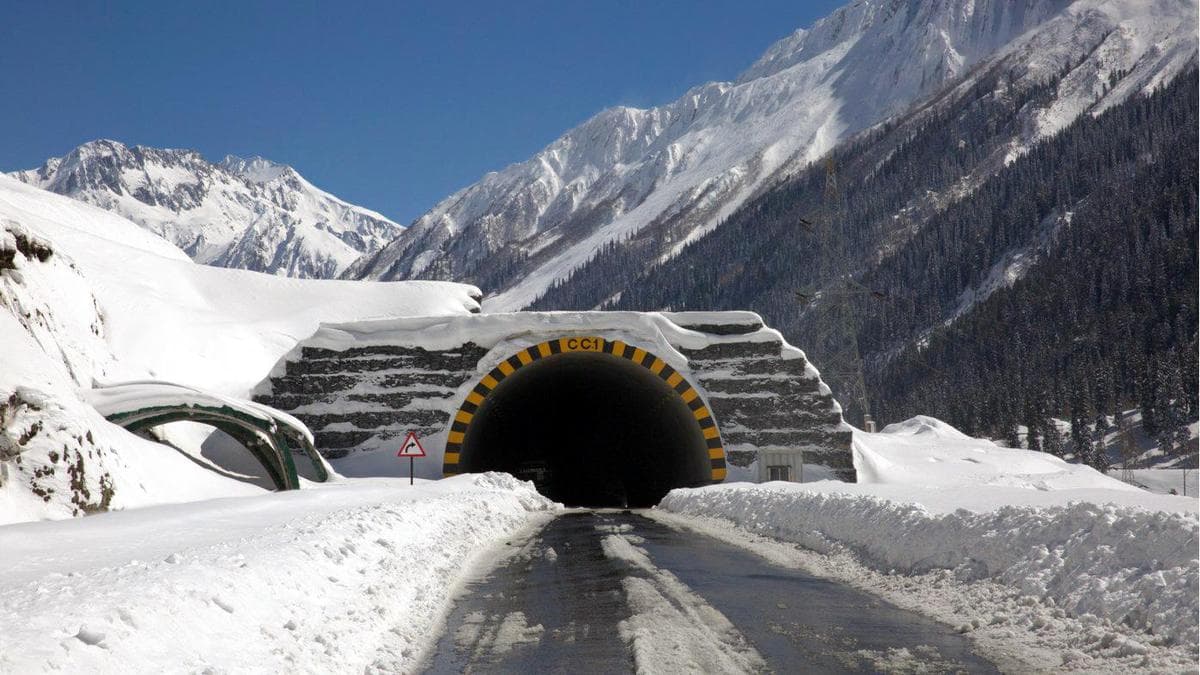
Union Minister Nitin Gadkari is set to trigger the final blast on June 9, clearing the path for year-round connectivity between Kashmir and Ladakh.
The biting cold of the Himalayas, where temperatures regularly plummet to minus 30 degrees Celsius, has long dictated the rhythm of life in Ladakh. For decades, the Zojila Pass—the only vital artery connecting the Kashmir valley to Kargil—has effectively shuttered for nearly half the year, buried under heavy snow and plagued by the constant threat of avalanches. On June 9, that seasonal isolation is set to face a definitive challenge as Union Road Transport and Highways Minister Nitin Gadkari oversees the final breakthrough blast, formally linking the two ends of the 13.15-km Zojila Tunnel.
Constructed by Megha Engineering and Infrastructures Ltd (MEIL) since 2020, this horseshoe-shaped, single-tube bi-directional road tunnel is an engineering feat of the highest order. Situated at an altitude of 11,578 feet, it bypasses the treacherous, weather-beaten Zojila Pass. Once the final barrier is cleared, the arduous three-hour journey between Ganderbal in Kashmir and the Drass-Kargil region of Ladakh will be slashed to a mere 20-minute drive.
A Strategic Necessity
The project, sanctioned at a cost exceeding ₹6,800 crore, is far more than a convenience for civilians. For the security establishment, this tunnel represents a transformative shift in logistical capability. Currently, the military relies on stockpiling massive quantities of rations, fuel, and machinery during the autumn months to sustain troops along the Line of Actual Control (LAC) throughout the harsh winter. With the tunnel, the ability to ferry supplies and move equipment on demand during peak winter months will fundamentally alter the strategic resilience of India’s high-altitude border bases.
Building in such a volatile seismic zone has been a brutal test of endurance. Over the past five years, the project site has been hit by five major avalanches, some of which severely damaged heavy machinery and halted progress. Despite these hazards, the excavation teams have pushed forward, relying on the New Austrian Tunnelling Method (NATM) to carve through the heart of the mountains.
The Bigger Picture: Why It Matters
This breakthrough is not just about finishing a tunnel; it is about ending the "seasonal imprisonment" of Ladakh’s economy. Beyond the immediate strategic benefits, the completion of this link will provide a massive fillip to regional tourism and trade. Residents in remote areas who have historically been cut off from essential healthcare and educational services during the winter months will soon have reliable, year-round access to the valley.
However, the event on June 9 is a milestone, not a finish line. While the breakthrough marks the completion of the most critical excavation phase, significant work remains before the tunnel is ready for public traffic. The project, which includes approach roads, bridges, and snow-protection galleries, continues to be a work in progress. Nevertheless, the final blast signifies that the most formidable geographical obstacle to connectivity has been overcome.
National Affairs Desk at PoliticalPedia covers government & policy for an Indian audience in English and Hindi.