'Borders Shut, China Unhappy': Fazl-ur-Rehman Targets Pakistan's Security and Foreign Policies
'Borders Shut, China Unhappy': Fazl-Ur-Rehman Targets Pakistan's Security, Foreign Policies | Exclusive
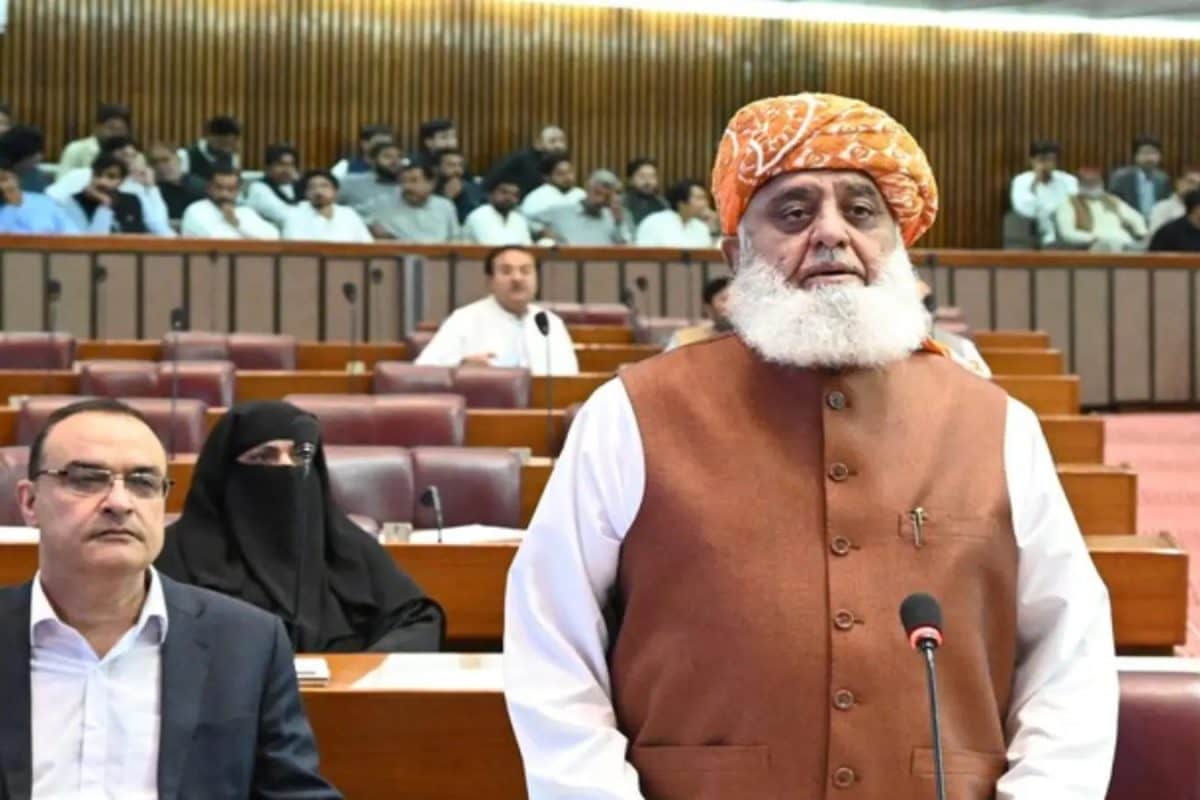
The JUI-F leader has launched a scathing critique of the establishment, arguing that the nation’s hybrid governance is fueling diplomatic isolation and systemic instability.
Maulana Fazl-ur-Rehman, the veteran chief of Jamiat Ulema-e-Islam (JUI-F), has ignited a fierce political debate by publicly questioning the efficacy of Pakistan's current security and foreign policies. Speaking at a gathering in Pishin, Balochistan, the seasoned cleric alleged that the state’s “hybrid civil-military regime” has failed to protect citizens, pointing to a persistent rise in terrorism that has remained unchecked despite years of extensive military campaigns across regions ranging from Swat to Balochistan.
A Security Apparatus Under Fire
For Fazl, the state’s inability to secure its western frontiers is a hallmark of administrative failure. He offered a bleak assessment of the current environment, asserting that security infrastructure—including police stations, military checkpoints, and Frontier Corps forts in Khyber Pakhtunkhwa and Balochistan—is no longer effective against the surge in militant activity. His remarks reflect growing domestic frustration with a security strategy that has failed to suppress insurgent attacks, even as the government maintains a posture of rigorous border management and tactical coercion.
The criticism highlights the volatility of the Durand Line, where structural disputes over fencing and trade checkpoints have frequently spiraled into state-on-state friction. By emphasizing that these borders shut frequently, Fazl has drawn attention to how trade disruptions and transit restrictions are used as tools of domestic political signaling, often at the expense of regional stability and local economic interests.
Diplomatic Strains and the 'China' Factor
The fallout from these policies appears to be reaching beyond internal borders. According to Fazl, China is unhappy with the current state of security, particularly regarding the protection of projects linked to the China-Pakistan Economic Corridor (CPEC). This observation stands in contrast to the official rhetoric from Islamabad, where Prime Minister Shehbaz Sharif recently reaffirmed the "unbreakable" ties between the two nations during his visit to Beijing. While the Prime Minister and President Xi Jinping exchange pleasantries about an “all-weather” partnership, the JUI-F leader’s critique suggests that the reality on the ground—characterized by militant attacks and frequent border volatility—is creating friction with Beijing’s strategic interests.
Policy Contradictions and Global Stance
The JUI-F chief’s broader critique extends to how Pakistan navigates its foreign policy. Beyond regional neighbors, he has been vocal regarding global conflicts, specifically the humanitarian crisis in Palestine. Fazl has consistently slammed Western policies, accusing the United Nations and global powers of hypocrisy for ignoring the plight of Palestinians while enforcing unilateral, "extremist" political agendas elsewhere. By positioning himself as a critic of both the domestic hybrid regime and international power dynamics, Fazl-ur-Rehman is signaling a push for a more assertive, independent political path for his party.
As Pakistan faces mounting pressure to mediate in Middle Eastern conflicts—with Army Chief Asim Munir actively participating in diplomatic efforts—the internal discord highlighted by Fazl underscores a growing divide. His call to action suggests that until the state addresses its internal security failures and recalibrates its regional outlook, the perception of diplomatic and economic isolation will likely persist.
The PoliticalPedia Editorial Desk brings verified, sourced political news and analysis from across India.