Beyond the Numbers: Kerala’s White Paper Calls for Urgent Dialogue on Fiscal Federalism
Start serious discussions with Union government on worsening Centre-State fiscal relations, urges White Paper on Kerala’s fiscal health
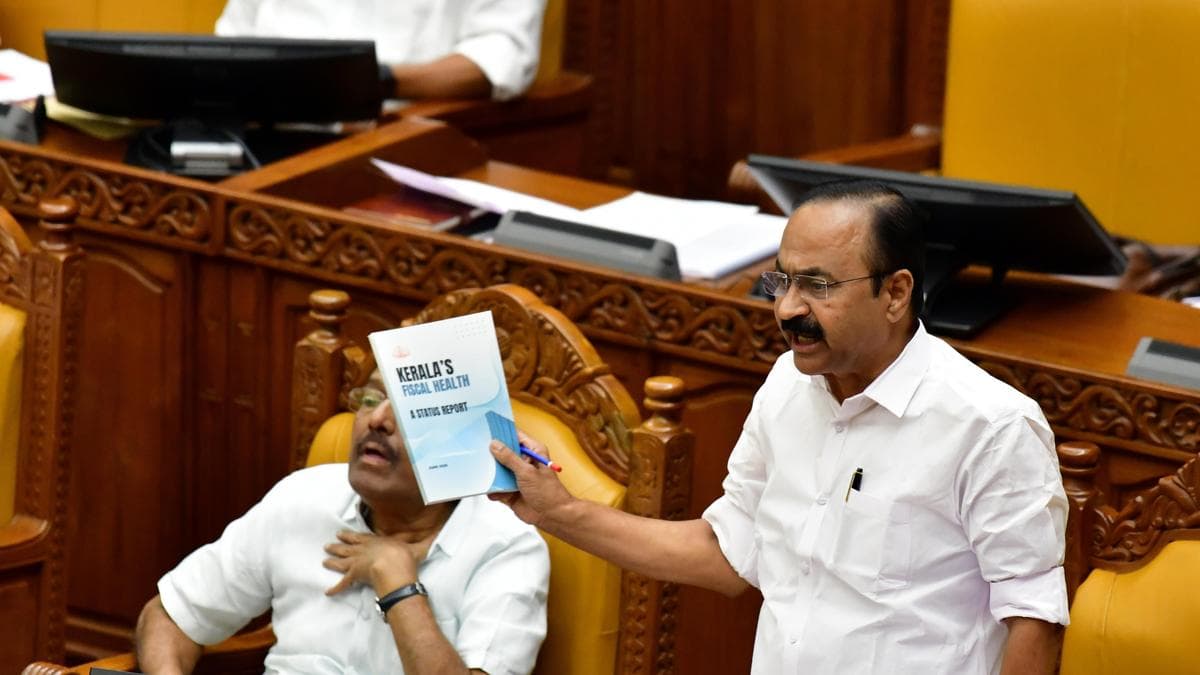
A newly released diagnostic document on the state’s economy warns that the dismantling of traditional grant structures threatens Kerala’s long-term financial stability.
The fiscal relationship between the Union government and the states is nearing a breaking point, according to a sobering White Paper tabled in the Kerala Assembly on Thursday. Drafted by a panel led by former Union Cabinet Secretary K.M. Chandrasekhar, the document argues that the state is facing a narrowing window of fiscal autonomy, exacerbated by the recent transition to the 16th Finance Commission’s regime. The report’s primary takeaway is a call for Kerala to spearhead a collective initiative among similarly placed states to force a substantive, high-level conversation with the Centre to address these mounting pressures.
The Illusion of Revenue Gains
At the heart of the controversy is the 16th Finance Commission’s allocation, which saw Kerala’s share of the divisible tax pool rise from 1.92% to 2.38%. While this 0.457% increase might appear positive on paper, the White Paper characterises it as a "nominal" gain that fails to offset the aggressive removal of support mechanisms. During the 15th Finance Commission cycle, Kerala relied heavily on ₹37,814 crore in revenue deficit grants and an additional ₹2,412 crore in sector-specific assistance. With these fiscal lifelines eliminated for the 2026-31 period, the state finds itself in a precarious position.
The White Paper challenges the Commission's rationale that revenue deficit grants foster "fiscal complacency." The authors argue that this perspective ignores the reality of structural revenue constraints, where states are often burdened by obligations that are not the result of discretionary mismanagement. By abruptly withdrawing these funds, the report suggests the Centre is effectively forcing an immediate, and potentially damaging, adjustment burden onto states already struggling with the cessation of GST compensation and rigid borrowing limits.
A Shrinking Fiscal Space
Beyond the direct grant cuts, the report highlights the growing reliance of the Union government on cesses and surcharges. Because these revenue streams are not part of the divisible pool shared with states, they serve to further curtail the fiscal autonomy of local governments. This trend, combined with the difficulty of accessing Centrally-sponsored schemes, has led observers to warn that the state is losing its ability to chart an independent economic course.
While the document offers a stark diagnosis of the state’s health, it has also sparked debate among political analysts. Some observers suggest that while the White Paper provides a comprehensive critique of the current federal arrangement, it remains a diagnostic exercise rather than a roadmap for systemic alternatives. Whether the state government can successfully build the necessary political consensus to leverage these findings into a meaningful national dialogue remains the central question for Kerala’s policymakers as they navigate this challenging fiscal horizon.
The PoliticalPedia Editorial Desk brings verified, sourced political news and analysis from across India.