Beyond The Laboratory: How Physics is Being Redefined in the Age of AI
What Does It Take To Build A Career In Physics In The Age Of AI? TIFR Professor Explains
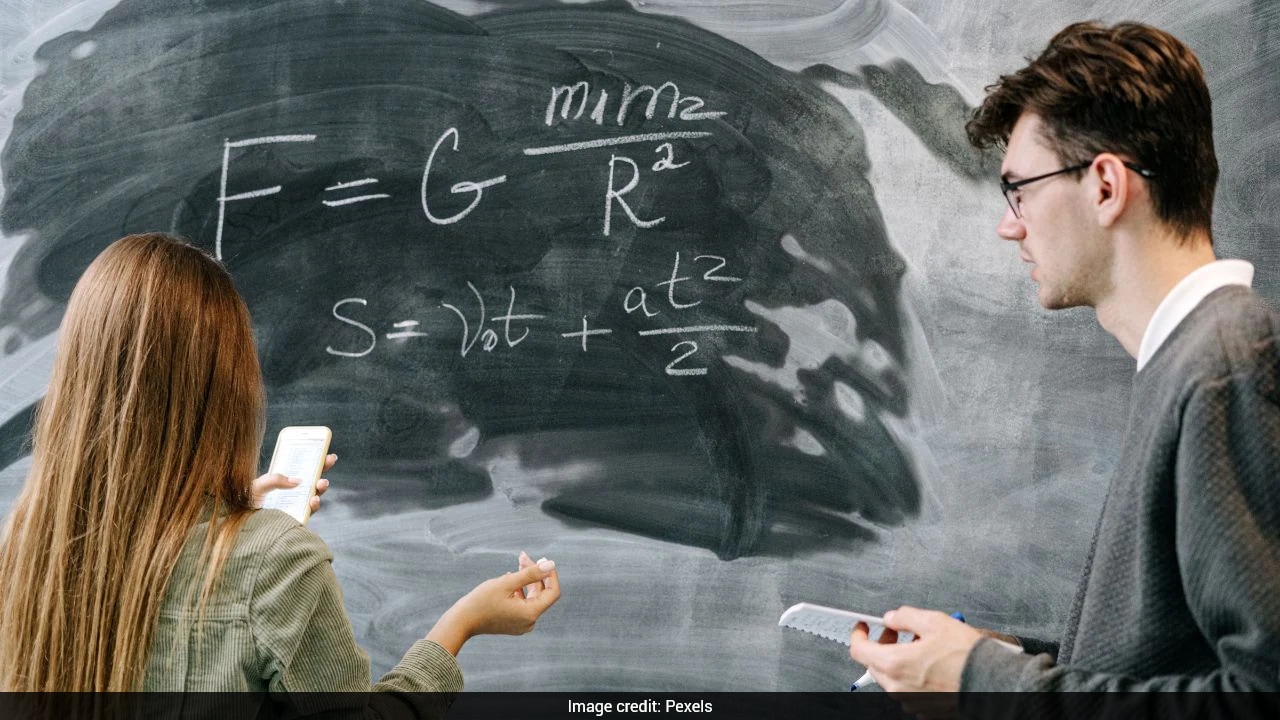
TIFR Distinguished Professor G Ravindra Kumar argues that emerging technology is an ally, not a threat, for the next generation of Indian scientists.
For students standing at the crossroads of a career in physics in the age of AI, the prevailing anxiety is simple: will algorithms render human intuition obsolete? At the Tata Institute of Fundamental Research (TIFR) in Mumbai, the perspective from the top suggests the exact opposite. Professor G Ravindra Kumar, a Distinguished Professor at the institute, recently sat down with IIT Madras Professor Mahesh Panchagnula to demystify this transition, arguing that the future of the discipline is not about competing with machines, but mastering them to unlock data at an unprecedented scale.
The New Frontier of Research
During the podcast, the TIFR professor explained that the current generation of students should move past the intimidation that often surrounds the subject. Instead, he emphasised that what does it take to build a career in physics in the age of AI is a return to strong fundamentals coupled with a curiosity for emerging tools.
Physics is currently facing a "data deluge," particularly in fields like particle physics and astronomy. Where human researchers were previously bottlenecked by the sheer volume of observational data, AI now acts as a force multiplier. Professor Kumar noted that these tools are actively optimizing sophisticated laboratory systems, allowing physicists to conduct research with greater precision than was possible even a decade ago.
A Practical Application: From Data to Cures
The impact of this shift is already moving from theoretical models into life-saving practice. The professor highlighted a compelling collaboration between TIFR and researchers in the UK, utilizing decades of historical data from Mumbai's Tata Memorial Hospital. By training models on cancer tissue patterns, scientists are now able to predict the trajectory of cancerous cells with high accuracy. This is the practical reality of modern physics: using computational power to identify and treat diseases long before they become unmanageable.
The Bigger Picture
This evolution in scientific methodology suggests a shift in the Indian academic landscape. For decades, the career in physics was defined by solitary work or purely experimental trial-and-error. Now, the curriculum is naturally gravitating toward interdisciplinary collaboration. If the TIFR model is any indication, the next generation of graduates will be as comfortable with data science as they are with quantum mechanics. For policymakers and educational institutions, the takeaway is clear: the focus must shift from traditional rote learning toward computational literacy, ensuring that India’s research output continues to lead in high-stakes fields like medicine and astrophysics.
What Does It Take?
Ultimately, the TIFR professor explained that the fundamental curiosity that drives a physicist remains unchanged. While the tools of the trade are shifting, the need for deep, rigorous thinking is more acute than ever. Students who focus on building a strong foundation will find that AI does not replace their role; it simply removes the drudgery, letting them focus on the breakthroughs that truly matter.
Arjun Mehta reports on government, policy and Parliament for PoliticalPedia, in English and Hindi.