Rocket vs Missile: Why the Battlefield Confusion Persists
Missile vs rocket: What really sets them apart?
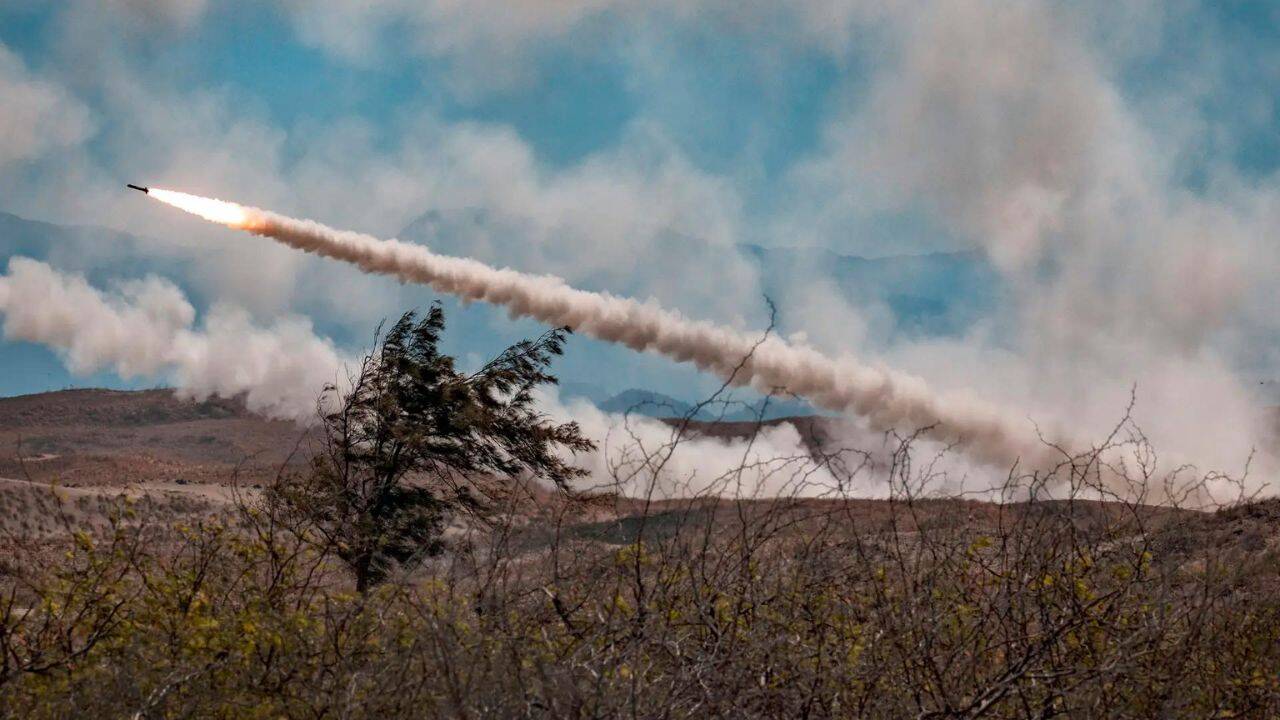
While modern defence jargon often treats these terms as synonyms, the strategic gap between a simple rocket and a sophisticated missile remains vast.
In the dusty corridors of South Block and across the shifting frontlines from Ukraine to the Middle East, the terms "rocket" and "missile" are tossed around with a careless frequency that would make a ballistics expert wince. We see it in the breathless headlines covering North Korea’s latest "monstrous" 600-mm launchers or reports on hypersonic arms races. Yet, the distinction isn't merely academic; it defines how a military commander approaches a target. At their core, both rely on rocket propulsion to generate thrust, but that is where the similarity ends.
Evolution of the Battlefield Workhorse
Rockets are ancient, tracing their lineage to 13th-century Chinese fire arrows. The technology underwent a critical transformation during the Anglo-Mysore Wars, where Hyder Ali and Tipu Sultan pioneered iron-cased rockets that outperformed the fragile bamboo versions used elsewhere. This evolution hit its zenith in the 20th century with the Soviet Katyusha, a system that didn't need to be precise because it relied on pure, overwhelming volume to saturate an area. Today, systems like the US HIMARS or Russia’s BM-21 Grad continue this legacy—they are area-effect weapons, designed to pulverize troop concentrations and logistics hubs.
The Guidance Paradigm Shift
The birth of the missile brought a fundamental change: the ability to change its mind mid-flight. A missile is, by definition, a guided weapon that uses sophisticated sensors and control surfaces to adjust its trajectory toward a specific, often moving target. Contrast this with traditional rockets, which follow a predictable ballistic arc once fired. The confusion in reporting stems from the fact that these lines are blurring. India’s Guided Pinaka, for instance, integrates satellite navigation and inertial guidance into a rocket platform, granting it a level of precision that makes it act like a missile while retaining the rapid-fire, high-volume advantages of a rocket system.
Why it matters
The blurring of these definitions matters because it obscures the strategic intent of a military force. When a news outlet fails to distinguish between a ballistic missile—meant for strategic, high-value strikes like an Astra Mk2 taking down an aircraft—and a rocket system, the public misses the tactical reality. A guided rocket is a force multiplier for ground troops, while a missile is a surgical instrument. The ongoing race for hypersonic capabilities, as seen in the S-500 vs S-400 debates or the development of long-range hypersonic missiles, is about speed and evasion. Rockets, no matter how advanced, remain the hammer of the battlefield, while missiles are the scalpel. Understanding this helps us cut through the noise of daily conflict reports to see the actual lethality of the hardware being deployed.
Arjun Mehta reports on government, policy and Parliament for PoliticalPedia, in English and Hindi.