Beyond the Four-Year Tenure: The Push to Rethink the Agneepath Scheme
UPSC Key: Agneepath Scheme, Direct Seeding of Rice and Informal Sector
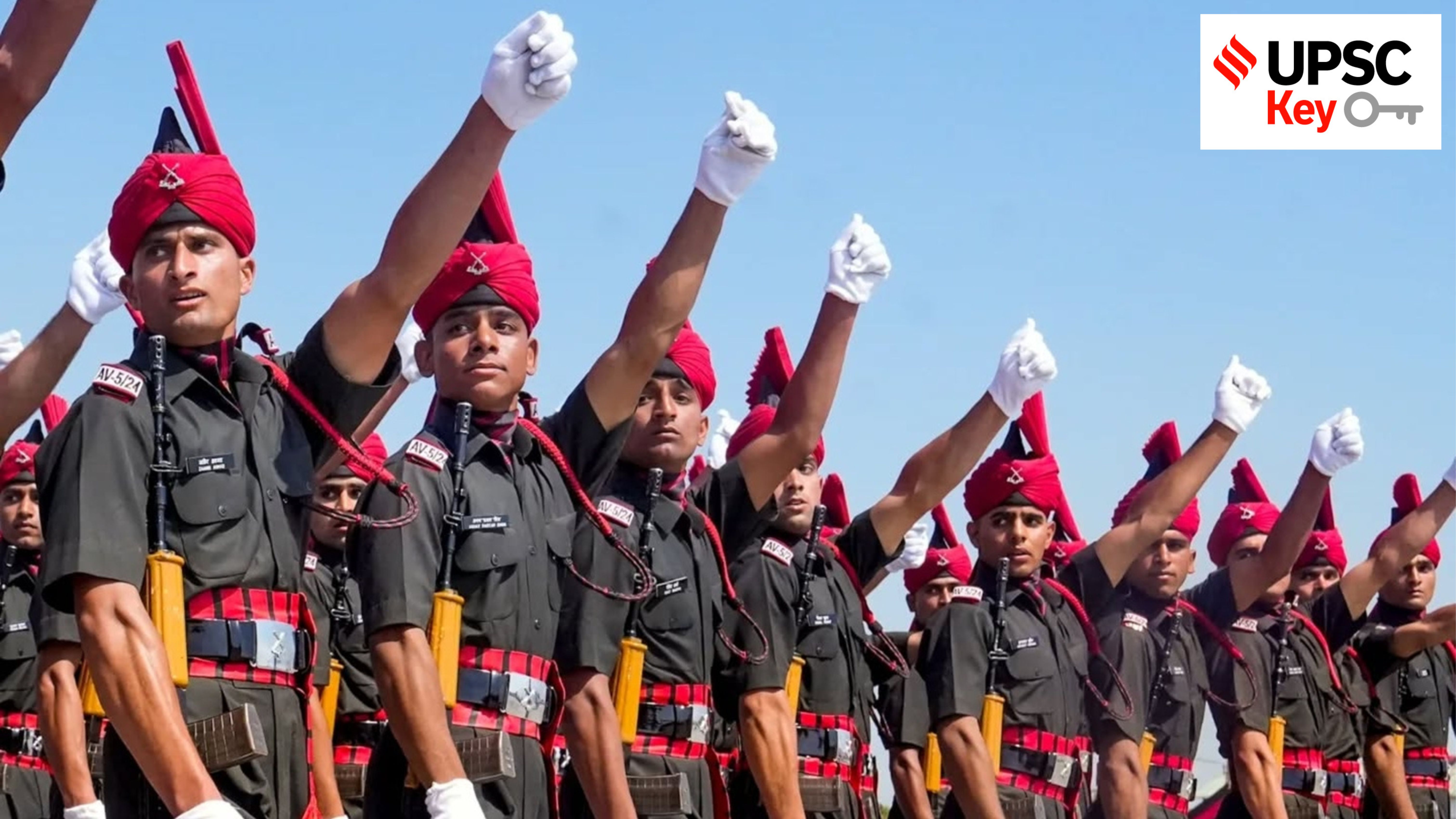
As the first batch of recruits nears the end of their service, the military’s search for a higher retention rate signals a significant shift in India’s defense recruitment policy.
The quiet corridors of South Block are buzzing with a debate that carries immense weight for India’s future defense posture. With the initial batches of recruits under the Agneepath scheme—who donned the uniform in early 2023—nearing the end of their four-year tenure, the Armed Forces are reportedly seeking to increase the retention percentage of Agniveers. While the current cap stands at 25 percent for the Navy, Army, and Air Force, the internal push for a larger intake suggests that the military establishment is recalibrating its expectations of this radical recruitment model.
The Agneepath scheme was originally designed to lower the age profile of the Indian military, moving toward a younger, leaner, and tech-savvy force. However, as the clock ticks toward the discharge of the first cohort, the conversation has moved beyond mere recruitment numbers. Questions of long-term institutional stability, the "casualisation" of government employment, and the operational readiness of a force with high turnover rates are now dominating the discourse, particularly for those tracking these developments for the UPSC key syllabus.
The Operational Reality
For aspirants preparing for the UPSC, understanding the Agneepath scheme requires looking past the headlines. It isn’t just about shorter service periods; it is about a fundamental shift in how the state views its primary security assets. The promise of the scheme rests on the "youthful profile" of the services, yet the current move to retain more soldiers hints at a realization that four years may not be sufficient for specialized roles that demand deep technical expertise and long-term institutional memory.
The critique of the scheme often circles back to the balance between political logic and institutional sanity. Critics argue that moving away from traditional, long-term service models risks diluting the professional core of the military. Simultaneously, the challenge of reintegrating these young men and women into the civilian workforce after their service—often termed the informal sector transition—remains a massive, unaddressed policy hurdle.
Why it matters
The ripple effects of this policy extend far beyond the border. When we track shifts in government policy—much like the emerging focus on sustainable farming practices such as the direct seeding of rice—we are essentially mapping how the Indian state allocates its human and fiscal capital. The Agneepath scheme is, at its heart, a massive administrative experiment. Its success depends on whether the government can provide a viable life-path for these Agniveers post-tenure, ensuring they don't become just another demographic statistic in an already strained job market.
The push for higher retention is a pragmatic acknowledgment that the current design might be too rigid for the complex, AI-driven warfare of the future. As the government weighs these adjustments, the final decision will set a precedent for how India treats its service personnel—not just as soldiers, but as future citizens entering a competitive, often uncertain, economy.
Ananya Iyer covers global affairs with an Indian lens for PoliticalPedia.