Beyond the Buzzer: Why Rui Hachimura’s Asian Dream is Just Getting Started
Not just Japan: Rui Hachimura wants Asia's basketball dream to grow bigger
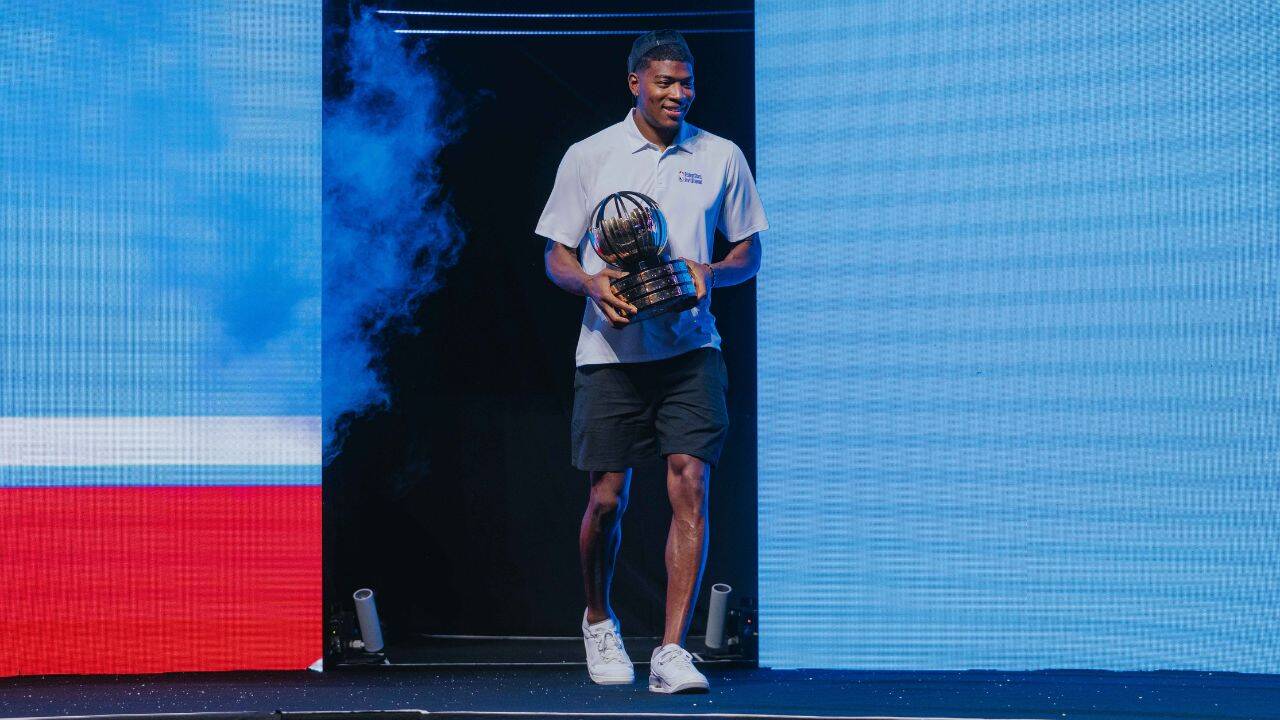
The NBA’s expansion into the continent is finally providing the infrastructure that stars like Rui Hachimura could only dream of during their own high school days.
The rhythmic thud of basketballs against the hardwood at Singapore’s OCBC Arena tells a story that is far bigger than a simple tournament. Under the bright lights of the Rising Stars Invitational, the air is thick with the ambition of teenagers from India, the Philippines, China, and South Korea. They are chasing a path that, until recently, felt like a closed loop. Watching them move through the drills with precision, one man stands on the sidelines not just as a spectator, but as a mirror: Rui Hachimura.
For Hachimura, the Los Angeles Lakers forward, this isn't just a promotional stop. It is a walk down a memory lane he wishes had been paved better. Back when he was in high school in Japan, the pathways to the NBA were fragmented. While he eventually made history as the first Japanese player selected in the first round of the 2019 NBA Draft, his journey was defined by isolated hurdles rather than a structured pipeline. Today, as he watches these young athletes compete under the official NBA banner, he sees a version of himself that finally has the support he lacked.
The Shrinking Map
The basketball landscape in Asia is shifting. For decades, players across the continent struggled with the "outsider" label—whether it was the cultural nuances of playing in Japan or the lack of exposure in South Asian systems. But the presence of these teenagers in Singapore signals a shift. The NBA is no longer treating the region as a distant market; it is treating it as an incubator. Hachimura himself admits that the opportunities afforded to these kids—access to high-level coaching and elite scouting—were not the standard when he was their age.
It is not just about Japan, and it is certainly not just about one player. The tournament features schools with vastly different basketball traditions, yet they are all converging on the same professional standard. From the imposing physicality of the South Korean squads to the evolving programs in Singapore and India, the gap between "local talent" and "global prospect" is narrowing.
Why it Matters
The significance here is structural. For years, Asian basketball was hindered by a lack of sustained, high-level competition that could bridge the gap to US colleges or professional leagues. By anchoring these invitational events in Southeast Asia, the NBA is creating a "sticky" infrastructure. It changes the psychology of the teenage athlete; they no longer think their ceiling is the national league. They now see a direct line to the draft. If this model holds, we should expect to see a surge in Asian representation in the G-League and the NCAA within the next five to seven years.
Hachimura’s role in all this is that of a trailblazer turned mentor. He carries the weight of being the only active NBA player from Asia, a position that demands he look back and pull others forward. He knows that his success is the exception; his goal, and the goal of these initiatives, is to turn that exception into a trend. As the tournament winds down and these players return to their respective homes, they take with them more than just game film—they take the belief that the distance between their home court and the NBA is shorter than it has ever been.
Kabir Sharma writes on culture, technology and everyday life for PoliticalPedia.