Beyond the Blue Booklet: Why the Govt says a Passport isn't definitive proof of citizenship
Passport has never been proof of citizenship, govt clarifies; cites 1967 Act, Bombay HC ruling
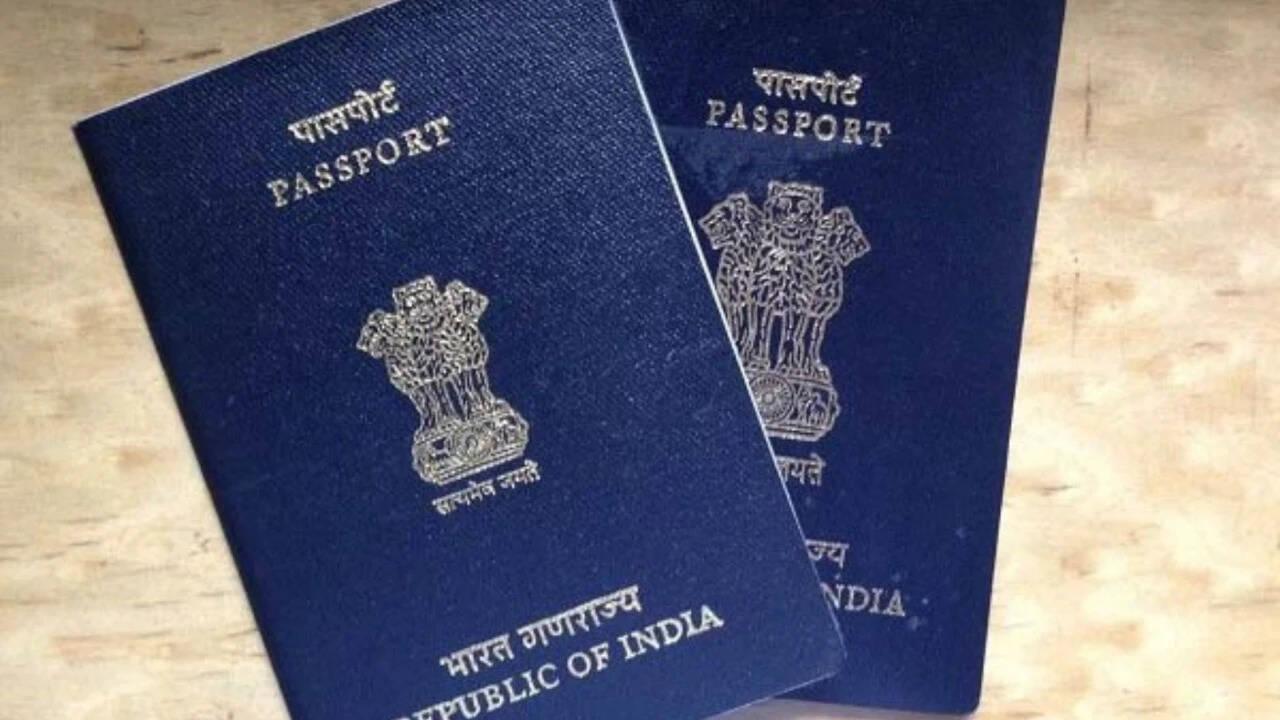
The Centre's assertion that a passport is merely a travel document has ignited a sharp political debate over what constitutes the ultimate evidence of being Indian.
For decades, the standard blue-covered Indian passport has been treated by most citizens as the gold standard of identity. However, a recent clarification from the Ministry of External Affairs (MEA) has punctured that assumption, asserting that a passport has never been, and was never intended to be, conclusive proof of citizenship. This position, while not new, has sparked a fresh round of political friction, with the opposition questioning the implications of such a stance on the broader architecture of Indian identity documentation.
The Legal Standing
The government’s position rests on the Passports Act, 1967. Specifically, Section 20 of the act provides the executive with the power to issue passports or travel documents to individuals who are not citizens of India, provided the government deems it in the "public interest." By citing this, the government argues that since the document can be legally issued to non-citizens, it cannot logically serve as absolute proof of citizenship.
This is not a sudden policy shift. The legal position has been tested in courtrooms, including a 2013 Bombay HC ruling which explicitly held that the possession of a passport does not, by itself, establish an individual's citizenship status. The government maintains that it is simply reiterating a long-settled legal reality.
The Political Firestorm
The discourse turned heated after Rajya Sabha MP Kapil Sibal took to social media to challenge the MEA’s framing. Sibal expressed concern that if the passport—a primary government-issued document—is demoted to a mere travel paper, it leaves the average citizen vulnerable to bureaucratic scrutiny by local officials. Lyricist Javed Akhtar joined the chorus, calling the stance "absurd" and questioning the circumstances under which the government would issue passports to non-citizens.
The BJP hit back, with party IT cell head Amit Malviya dismissing the outrage as performative. He argued that critics were misrepresenting a well-defined legal position to stir controversy. For the सरकार, the narrative is clear: there is no change in policy, only a refusal to allow public misconceptions to override statutory provisions.
Why it Matters
This debate highlights a deep-seated anxiety in India’s political climate regarding documentation and the state’s power to define belonging. When the definition of a "citizen" becomes tethered to legal nuances that clash with public perception, it creates a vacuum of trust.
The bigger picture is not about the passport itself, but about the lack of a single, universally accepted document that definitively settles a person's citizenship status in the eyes of the law. As long as this ambiguity persists, every clarification from the government is likely to be viewed through the lens of potential disenfranchisement, making the question of "what proves I am an Indian" a recurring fault line in our national discourse.
Arjun Mehta reports on government, policy and Parliament for PoliticalPedia, in English and Hindi.