Identity in Flux: Passport Validity Row Sparks Political Firestorm
‘No Greater Crisis’: Oppn Attacks Centre After MEA Says Passport Not A Proof of Citizenship
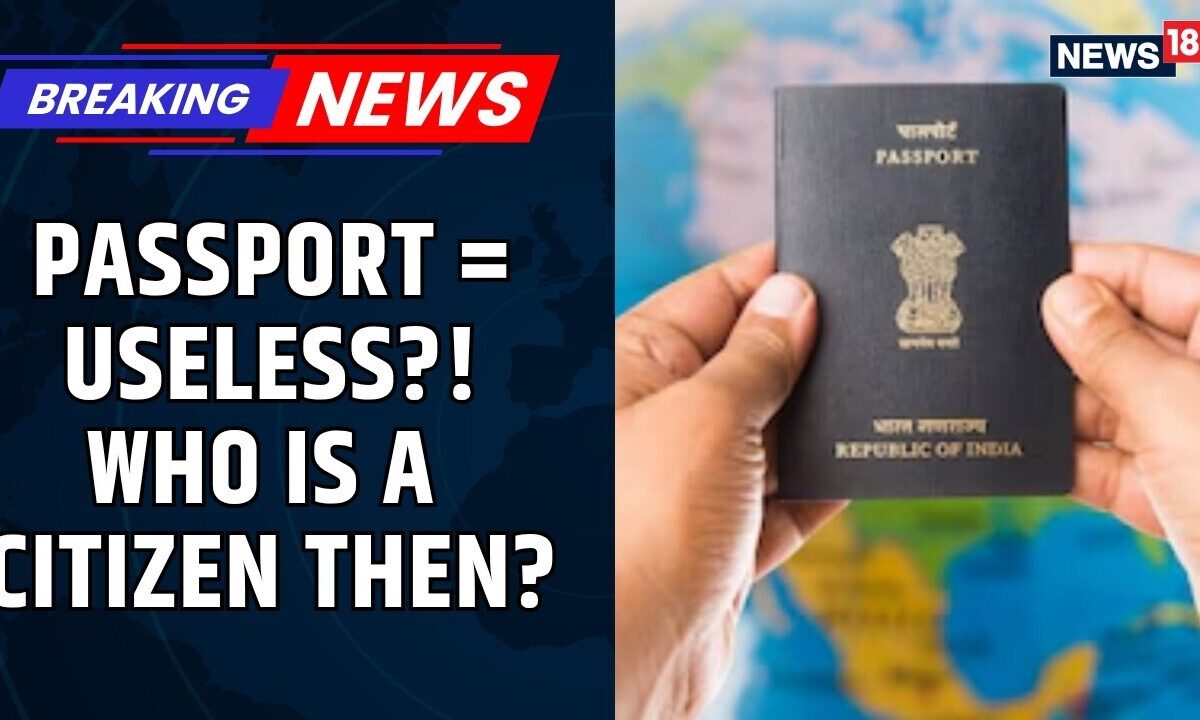
The opposition has cornered the government after the Ministry of External Affairs clarified the legal standing of travel documents in determining nationality.
The corridors of power in New Delhi are echoing with sharp exchanges today as the opposition launched a fierce offensive against the centre. The trigger: a clarification from the Ministry of External Affairs (MEA) stating that a passport does not constitute conclusive proof of citizenship. For the opposition, this is not merely a bureaucratic technicality but a "no greater crisis" moment, raising alarms over the fundamental rights of Indian citizens.
The government’s stance—that a passport is essentially a travel document rather than a definitive legal certificate of nationality—has set off a wave of apprehension across the political spectrum. Critics argue that such a distinction undermines the status of millions of Indians who rely on their passports as the primary document for international travel and domestic verification.
The Legal Tug-of-War
The debate underscores a growing tension regarding how the सरकार (government) defines the boundary between residency and citizenship. While the MEA maintains that citizenship is determined by the Citizenship Act and constitutional provisions rather than possession of a travel document, the opposition views this as a dangerous shift in goalposts.
Legal experts have long noted that while a passport is issued to citizens, the internal processes of verification have become increasingly layered. The opposition’s backlash is rooted in the fear that this stance could lead to arbitrary exclusions or heightened scrutiny for citizens who may lack ancestral documentation, even if they hold a valid passport.
Why it matters
This row is significant because it touches upon the sensitive intersection of administrative record-keeping and identity politics. If a passport—a document issued by the state itself after rigorous background checks—is deemed insufficient proof of citizenship, the burden of proof effectively shifts to the individual.
For the average citizen, this creates a layer of uncertainty. Historically, passports have been widely accepted for everything from banking to property registration. If the state now formally distances itself from the passport as a definitive identity marker, it signals a move toward more complex verification regimes. This pattern of questioning established documents often signals a broader, ongoing policy shift, leaving the public to wonder which document will be the next to face a restrictive interpretation.
The political fallout is expected to dominate the upcoming parliamentary sessions. As the opposition mobilizes, the government will likely face pressure to clarify its position in both the Lok Sabha and the Rajya Sabha, particularly regarding how this impacts the thousands of Indians who currently live and work abroad. The debate is no longer just about travel; it is about the sanctity of the documents that define an Indian’s relationship with their state.
Arjun Mehta reports on government, policy and Parliament for PoliticalPedia, in English and Hindi.