Beyond Russia and the Gulf: Why India is Redrawing its Oil Map and Looking to Venezuela Again
Beyond Russia & Gulf: Why India Is Redrawing Its Oil Map & Looking To Venezuela Again
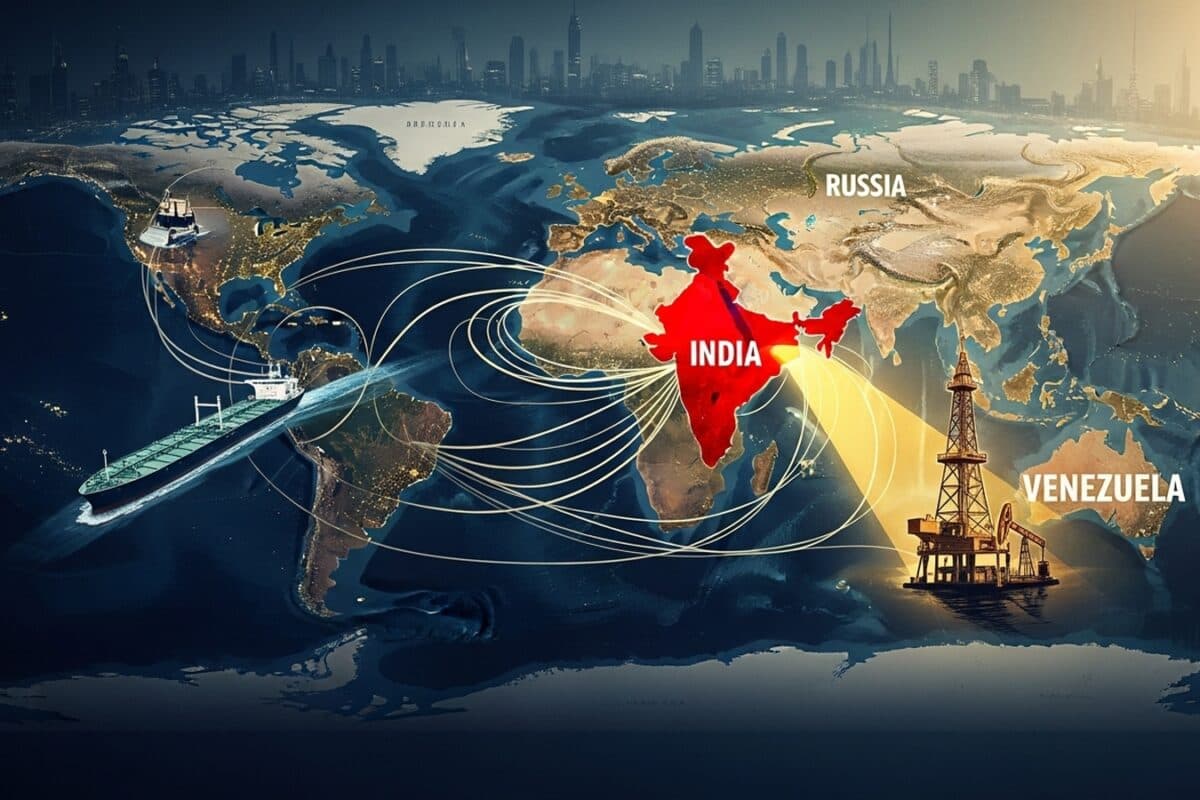
As global geopolitical volatility threatens traditional supply lines, New Delhi is pivoting toward Latin America to secure long-term energy stability.
For the past three years, the narrative of India’s energy sector has been dominated by a single story: the pivot to Russian crude. Following the onset of the conflict in Ukraine, Moscow quickly ascended to become India’s primary supplier, offering discounted barrels that shielded the domestic market from the worst of global price shocks. However, New Delhi is now signaling a significant tactical shift. With instability mounting in West Asia and lingering concerns over the vulnerability of maritime chokepoints like the Strait of Hormuz, the government is actively redrawing its oil map, with a renewed focus on Venezuela.
Diversifying Beyond the Traditional Heartland
India imports nearly 90 percent of its crude oil, a reality that keeps energy security at the center of the nation’s strategic planning. Historically, this demand was met almost exclusively by the Gulf—specifically Iraq, Saudi Arabia, and the UAE. While this relationship remains vital, the escalating conflict in the Middle East has introduced a new layer of risk for global energy markets, prompting the EU and other major importers to brace for supply chain disruptions. For India, these developments serve as a stark reminder that relying on a narrow geographic corridor is a strategic liability.
The renewed diplomatic engagement with Caracas follows a high-profile visit to India by Venezuelan acting President Delcy Rodríguez. While the visit carried notable cultural and spiritual undertones, the substance of the talks focused on long-term energy agreements. By looking to Venezuela again, New Delhi is not just seeking immediate supply relief; it is attempting to build a more resilient import basket that can withstand future geopolitical shocks, whether they stem from Western sanctions or regional instability in the Middle East.
The Cost of Geopolitical Realignment
The transition from a Russia-centric import strategy to a more diversified model is a complex balancing act. The post-2022 period proved that India could navigate Western price caps to its advantage, but the evolving landscape suggests that relying solely on discounted Russian oil may no longer be a sufficient long-term security strategy. India is now moving to institutionalize energy ties with Latin American producers, aiming to mitigate the risks associated with volatile shipping routes and the unpredictable nature of global energy politics.
This strategic recalibration is fundamentally about hedging. By securing crude from diverse regions, India aims to insulate its economy from the domino effects of any single conflict—be it the ongoing unrest in Ukraine or the multifaceted tensions within the Gulf. As officials in New Delhi assess the global landscape, the message is clear: energy security in the coming decade will depend less on securing the cheapest deal today and more on maintaining a wide and stable network of suppliers that are immune to localized geopolitical paralysis.
The PoliticalPedia Editorial Desk brings verified, sourced political news and analysis from across India.