Beijing’s New Pitch: Why China Wants India to See ‘Opportunity’ Over Rivalry
India, China should stick to ‘right strategic perception’ of being cooperative partners: Beijing
As Moscow signals a hands-off approach to New Delhi-Beijing friction, Chinese officials are recalibrating their public rhetoric on border stability and strategic partnership.
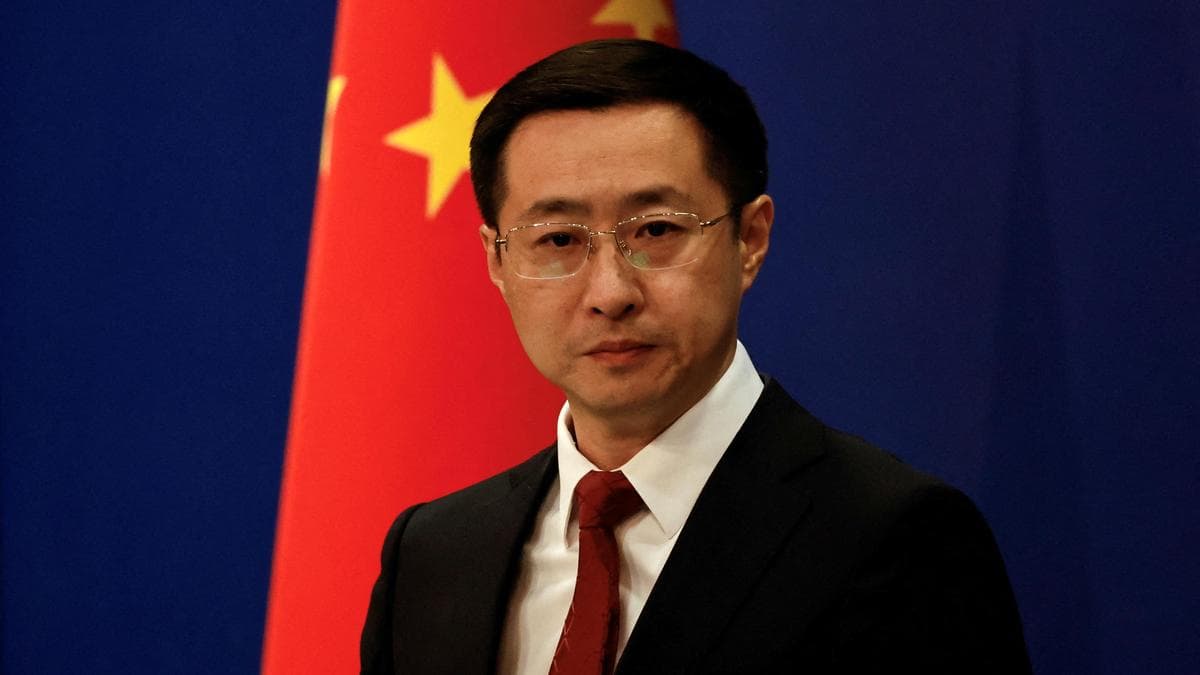
The diplomatic corridor between New Delhi and Beijing is witnessing a familiar, if carefully choreographed, shift in tone. Speaking from the Chinese capital this Monday, Foreign Ministry spokesperson Lin Jian urged India to move beyond the "rivalry" narrative, pushing for what he termed the "right strategic perception." The comments arrive in the wake of Russian President Vladimir Putin’s recent engagement with global media, where he praised the autonomy of his country’s ties with both India and China, pointedly steering clear of any arbitration in their bilateral complexities.
The View from Beijing
For years, the border situation has remained the primary friction point between the two Asian giants. However, Beijing’s latest messaging signals a desire to frame the status quo as "generally stable," with Lin emphasizing that communication channels remain open. The core of the Chinese argument is that both nations are, at their heart, growth engines for one another. "The two sides need to view and handle the bilateral relations from a strategic height," Lin noted, suggesting that the path forward requires a long-term perspective that prioritizes mutual development over the suspicion that has defined recent years.
The timing of this commentary suggests a broader interest in regional stability. When pressed on the sensitive issue of China’s deepening ties with Pakistan, Beijing maintained a practiced neutrality, advocating for dialogue between New Delhi and Islamabad to preserve peace. By positioning itself as a promoter of trilateral cooperation—linking Russia, India, and China—Beijing is clearly testing the waters to see if a broader economic and strategic alignment can supersede the deep-seated mistrust that currently colors the India-China relationship.
Why it matters
The reality on the ground remains far more nuanced than the diplomatic scripts suggest. While both countries express an interest in "sound and steady" relations, the fundamental challenge lies in the gap between high-level rhetoric and the practical, often tense, realities along the Line of Actual Control. Beijing’s push for a "right strategic perception" is a clear attempt to de-escalate the adversarial framing that has seen India pivot toward more robust security partnerships elsewhere.
Essentially, this is a strategic bid to encourage New Delhi to compartmentalize the border dispute and view China primarily as an economic partner. Whether India chooses to adopt this framing depends less on speeches and more on concrete actions regarding territorial integrity and regional security. For now, the "new level" of relations mentioned by Chinese envoy Xu Feihong remains a work in progress, waiting to see if these words translate into a genuine thaw.
World Desk at PoliticalPedia covers global affairs for an Indian audience in English and Hindi.