South Philippines reels: Death toll hits 32 as violent tremors spark landslide nightmare
Philippines quake toll climbs to 32 as people recall violent tremors: ‘I could hardly stand, shaking was very strong’
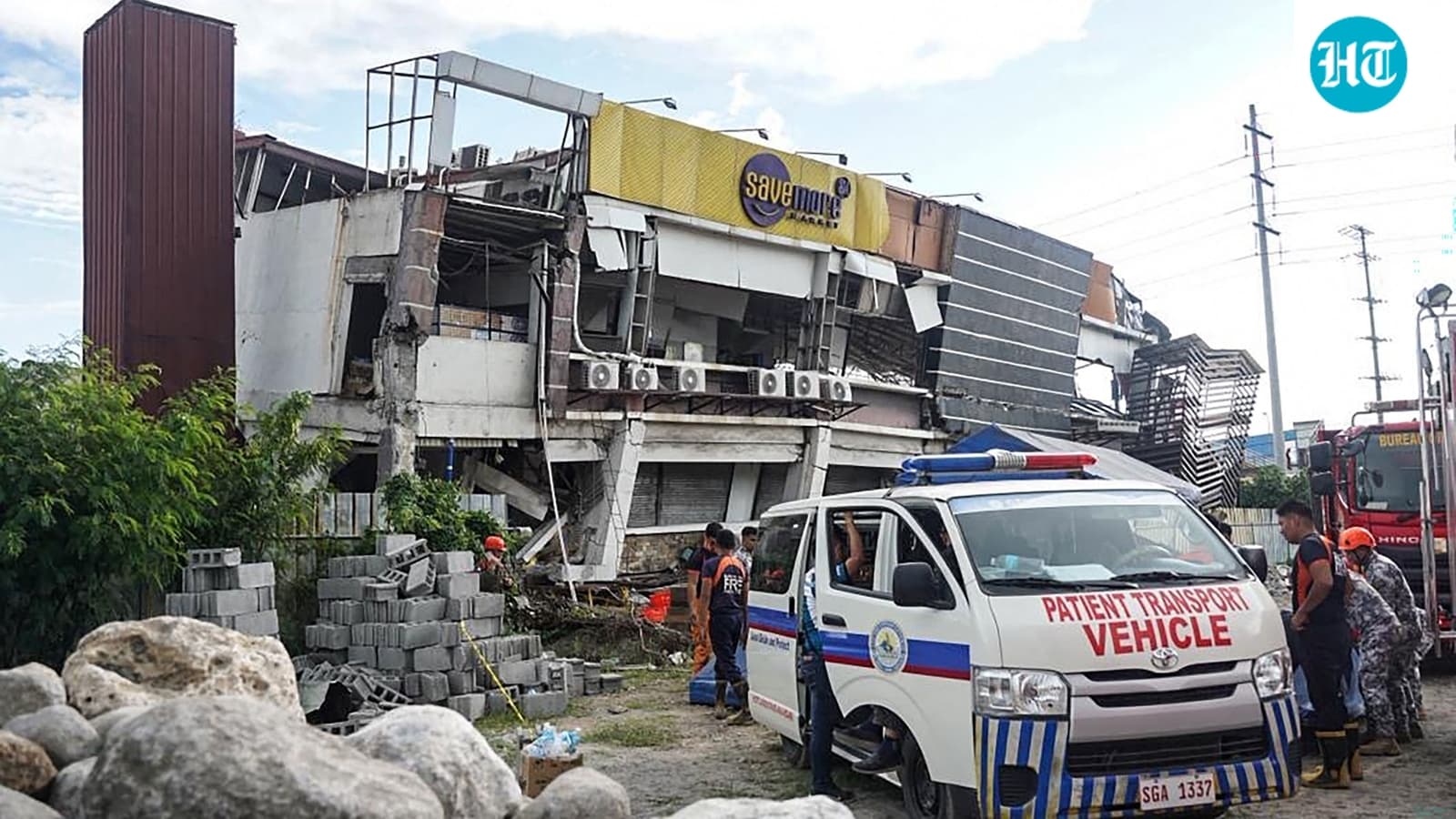
A massive 7.8 magnitude quake has left the southern Philippines in ruins, with survivors describing a terrifying inability to remain upright as infrastructure crumbled.
The ground in the southern Philippines gave way with such ferocity that seasoned officials thought they had hit a flat tire, only to realise the earth itself was splitting. A 7.8 magnitude earthquake—the most powerful to strike the region this year—has left at least 32 people dead. The surge in the death toll follows a devastating landslide in a southern province, an event that has compounded the tragedy as rescue teams scramble through the debris of collapsed shopping centres and residential blocks.
‘I could hardly stand’: A landscape of fear
In the port city of General Santos, a critical hub for the nation’s tuna export industry, the tremors were felt with visceral intensity. Rod Sosmeña, a regional director with the Office of Civil Defense, was mid-commute when the quake hit, noting that the sheer force of the shaking made the movement of a pickup truck feel like a mechanical failure. For others, the experience was far more disorienting. Ednar Dayanghirang, a disaster response official in Davao, recounted that he "could hardly stand and keep my balance" as he attempted to flee his home.
The visual evidence of the disaster is harrowing. Footage circulating in the aftermath shows a commercial centre, housing a Jollibee restaurant, reduced to a pile of twisted metal and concrete. With over 700,000 residents in the affected area, the sheer scale of the structural damage—coupled with reports of more than 200 injuries—has put local emergency services under immense strain.
Tsunami alerts and the regional ripple
The danger did not end with the shaking. The quake triggered a one-metre tsunami that struck nearby coasts, prompting international concern. Beyond the Philippines, authorities in Indonesia issued urgent alerts for parts of Kalimantan and Sulawesi, warning that waves reaching up to three metres could pose a lethal threat. The proximity of these coastal regions to the epicentre has kept disaster management teams in the wider region on high alert.
Why it matters
The Philippines sits squarely on the Pacific "Ring of Fire," a zone prone to intense seismic and volcanic activity. While the nation is accustomed to tremors, the intensity of this event highlights a recurring vulnerability: the gap between rapid urbanisation in hubs like General Santos and the enforcement of seismic-resistant building codes. As climate and geological volatility increase, the challenge for regional governments is no longer just disaster response, but the massive, costly task of retrofitting infrastructure to withstand such "major" events. The death toll climbing past 30 serves as a grim reminder that in a region built on shifting tectonic plates, the difference between a minor incident and a mass-casualty disaster often comes down to the integrity of a single building’s foundation.
Politics Desk at PoliticalPedia covers parties & elections for an Indian audience in English and Hindi.