As London Hosts Peace Talks, the Kremlin Calls the Strategy a Contradiction
Kremlin says Macron, Merz and Starmer talk of peace, but help Kyiv with new weapons to continue the war
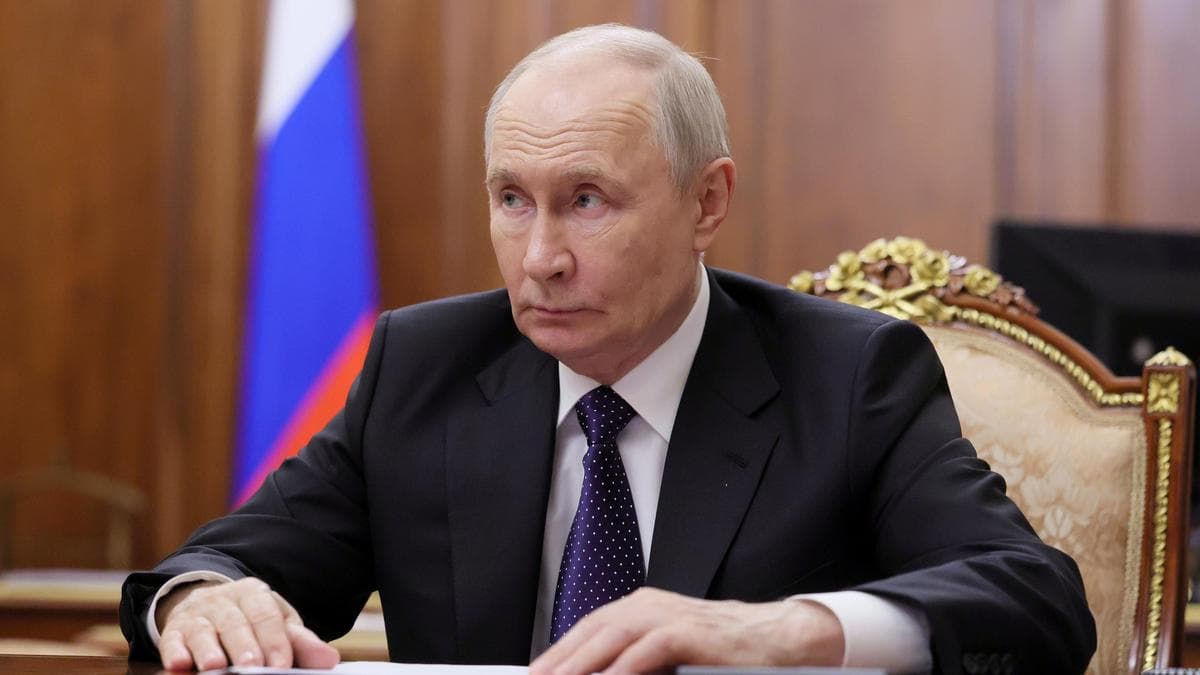
While Kyiv and European leaders push for a ceasefire, Moscow remains dismissive, accusing the West of fueling the conflict with new arms.
The atmosphere at 10 Downing Street this past Sunday was one of grim urgency. British Prime Minister Keir Starmer hosted Ukrainian President Volodymyr Zelenskyy, French President Emmanuel Macron, and German Chancellor Friedrich Merz for an "E3 plus Ukraine" summit. The meeting, intended to signal a unified European front, took place under the shadow of fresh Russian drone strikes that hit near the Chernobyl nuclear site and claimed civilian lives in the Zaporizhzhia region. Yet, even as the leaders sat down to outline five principles for a "just and sustainable" peace, the view from Moscow remained as rigid as ever.
The Kremlin dismissed the London gathering almost immediately, calling the rhetoric coming from the European leaders inconsistent. Spokespeople in Moscow pointedly noted that while Macron, Merz, and Starmer speak of peace, their commitment to supplying Kyiv with advanced weaponry effectively serves to continue the war. For the Russian leadership, the optics of the meeting—centered on bolstering Ukraine's air defenses against ballistic missiles like the Oreshnik—clash directly with the diplomatic overtures being discussed.
The Five-Point Peace Framework
The London summit produced a clear, albeit ambitious, roadmap. The leaders agreed that any future settlement must be based on the current front lines, rejecting the notion that international borders can be redrawn through force. Their proposal calls for an immediate, comprehensive ceasefire, backed by robust security guarantees—potentially including a multinational force within Ukraine—and the continued freezing of Russian assets as a leverage point for reparations.
This push for a central European role in negotiations comes at a volatile moment. With the U.S. presidential transition and the recent flare-up of conflict involving Iran, Ukraine is desperate to ensure that any "peace process" isn't settled over their heads. Zelenskyy has made it clear that Europe must be a strong, active participant, not a bystander to a deal brokered elsewhere.
Why It Matters: A Diplomatic Standoff
The pattern here is clear: we are witnessing a widening chasm between the language of diplomacy and the reality of the battlefield. By hosting this summit, Starmer, Macron, and Merz are attempting to project leadership, but they face a two-front challenge. They must navigate the internal pressures of a war-weary public while convincing Moscow that their "security guarantees" are not just empty promises but a viable path to de-escalation.
The Kremlin’s response—insisting that the battlefield will ultimately decide the conflict—suggests that Russia is not yet prepared to engage with the European-backed framework. As both sides prepare for the upcoming G7 summit and NATO discussions, the "peace" being discussed in London looks less like a near-term solution and more like a long-term strategy of containment. Until a middle ground is found between the Western demand for sovereignty and Russia’s insistence on military outcomes, the talks remain more of a high-stakes signal than a breakthrough.
Features Desk at PoliticalPedia covers culture, tech & life for an Indian audience in English and Hindi.