Allahabad HC Slams Uttar Pradesh Police Over Political Allegiance and Misuse of Gangsters Act
Allahabad HC raps U.P. police, says officers serve political bosses over the Constitution
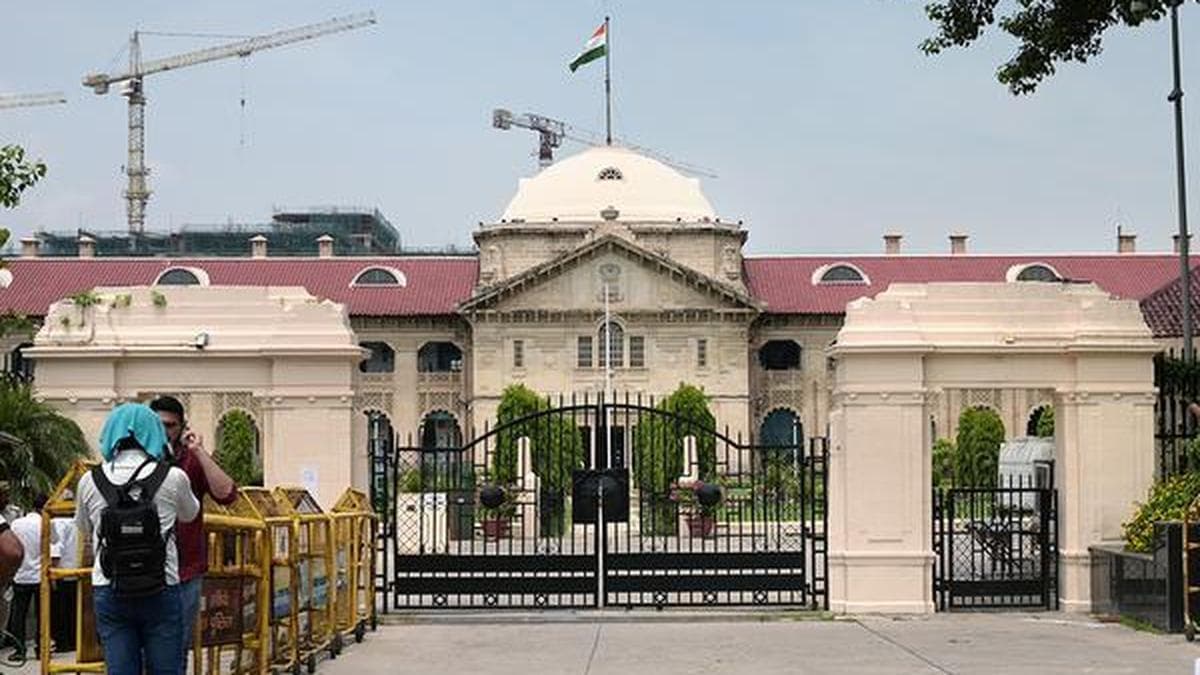
The High Court has questioned the constitutional integrity of the state police force, citing a culture of political subservience following the quashing of a wrongful case.
The Allahabad HC has delivered a stinging indictment of the Uttar Pradesh police force, observing that the loyalties of field officers appear to be tethered to political dispensations rather than the Constitution. The sharp remarks from Justice Vinod Diwakar came during the hearing of a case against Ghaziabad resident Rajendra Tyagi and his family, where the court scrutinized the systemic misuse of the Gangsters Act to settle personal and financial disputes.
A Case of Institutional Overreach
The court’s intervention was prompted by the plight of Lalita Tyagi, a homemaker who spent 80 days behind bars after being swept up in a Gangsters Act case that the bench ultimately found to be "patently illegal, arbitrary and wholly unwarranted." Upon reviewing the evidence, the court determined that the allegations stemmed from private land and financial disagreements, failing to meet the legal threshold for such a stringent law. By quashing the case, the court highlighted a worrying trend where criminal laws are weaponized to harass individuals rather than serve the interests of justice.
The 'Transfer-Posting' Culture
Justice Diwakar’s observations went beyond the specific incident, pointing to a deeply entrenched administrative culture. The court noted that officers, often driven by the pressures of the "transfer-posting economy," frequently calibrate their professional conduct to satisfy political superiors. This, the bench remarked, has reduced the police force from a constitutional entity into an instrument of individual convenience. When officers prioritize their vertical loyalty to the ruling party over their oath to the law, the foundational integrity of the state’s criminal justice system is compromised.
Systemic Failures and Judicial Scrutiny
During the proceedings, the court demanded transparency from the Uttar Pradesh Home Department regarding the state’s track record on convictions, acquittals, and internal disciplinary actions. The bench expressed profound dissatisfaction with the lack of accountability mechanisms, noting that arrests are frequently made without adherence to due process. The court cautioned that when FIRs are manipulated and preventive detention laws are invoked arbitrarily, judicial orders are often treated as mere formalities to be subverted in practice.
Restoring Constitutional Mandates
This judicial rebuke underscores a recurring friction between the judiciary and the executive in the state. By reiterating that the police must function as guardians of the Constitution, the court has signaled that the habitual use of "selective crackdowns" and encounter-style policing will continue to face rigorous scrutiny. For the victims of these procedural lapses, the ruling serves as a vital reminder that the rule of law must remain an administrative mandate rather than an obstacle to be bypassed for political ends.
The PoliticalPedia Editorial Desk brings verified, sourced political news and analysis from across India.