A Piece of Paper Isn't a Vow: Why the Gujarat HC Says Registration Alone Can't Make a Hindu Marriage
No wedding rituals, no valid Hindu marriage despite registration: Gujarat HC
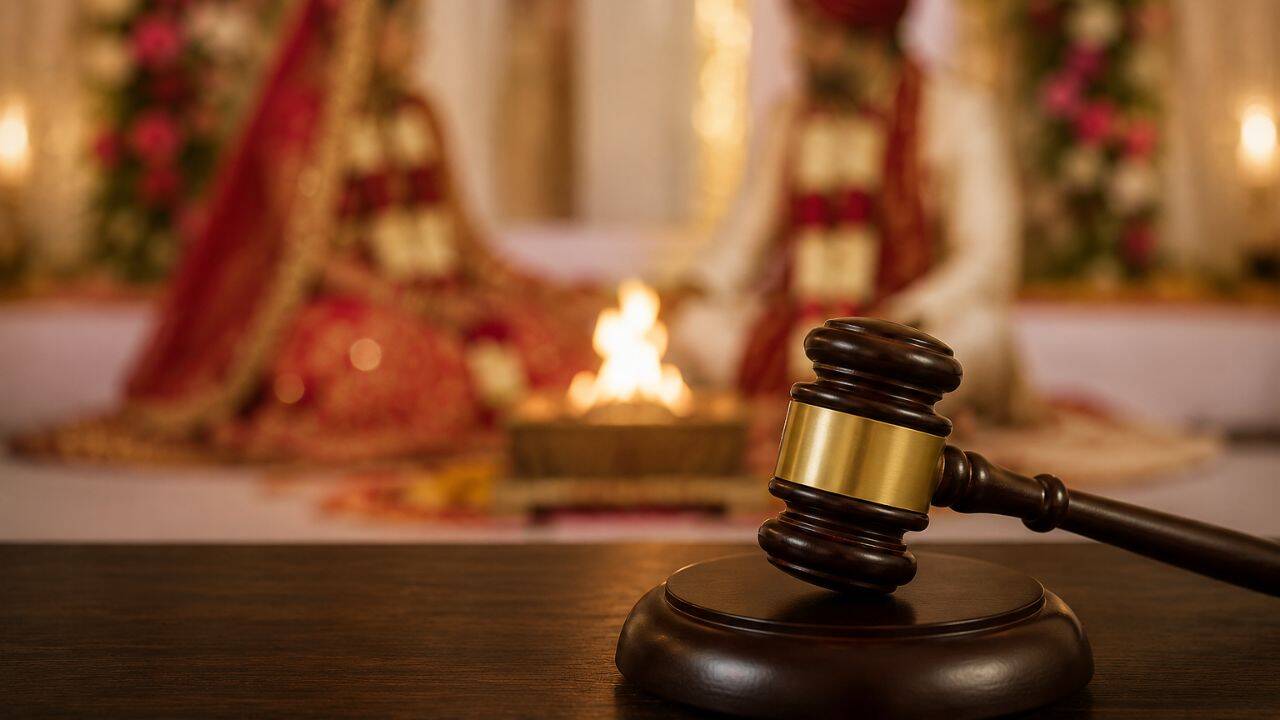
The Gujarat High Court has clarified that a marriage certificate is merely proof of a union, not a substitute for the mandatory religious ceremonies required under Hindu law.
For many, a marriage certificate is the final seal on a union, a bureaucratic safeguard for rights and status. But for a man working in the United Kingdom, that same document became the source of a legal nightmare. He found himself "married" to a woman he had never wed, after she produced a registration certificate to his parents. The catch? The woman later admitted before a family court that no rituals were ever performed, and no relationship as husband and wife ever existed. The man alleged his signature was obtained under duress while working for the woman’s father—a claim that forced the judiciary to revisit the sanctity of the wedding ceremony.
The Gujarat HC, led by a division bench of Justices Ilesh J. Vora and R.T. Vachhani, has now drawn a firm line in the sand. Ruling on the man’s plea to declare the alleged marriage null and void, the court held that a registration certificate does not possess the magical power to validate a marriage if the essential religious rites were missing. Under Section 7 of the Hindu Marriage Act, 1955, a marriage is only "solemnised" if it is performed in accordance with customary rites and ceremonies. Among these, the Saptapadi—the seven sacred steps around the fire—remains a non-negotiable cornerstone for a valid Hindu marriage.
The Limits of Bureaucracy
The legal confusion often stems from a misunderstanding of Section 8 of the Hindu Marriage Act. While registration is a procedural necessity designed to provide evidence of a marriage, it is not a constitutive act. The court’s logic is clear: registration proves that a wedding has taken place; it cannot serve as the event itself. By treating the certificate as mere evidence, the judiciary has effectively protected the institution of marriage from being weaponized through fraudulent paperwork.
This verdict is not an isolated incident. Courts across India, including the Supreme Court and the Allahabad High Court, have repeatedly emphasised that certificates issued by bodies like the Arya Samaj or local marriage registrars cannot bypass the requirement of customary ceremonies. When the core rituals are absent, the legal presumption of a valid marriage—usually triggered by a certificate—simply collapses.
The Bigger Picture: Why This Matters
For years, the rise of "paper marriages" has blurred the lines of domestic law, often complicating divorce proceedings and inheritance claims. By insisting on the performance of traditional rites, the judiciary is essentially curbing the misuse of administrative registration to force legal status upon individuals against their will.
This ruling serves as a vital reminder that in the eyes of the law, a Hindu marriage is fundamentally a sacrament defined by ancient custom, not just a contractual obligation registered on a government portal. It forces a return to the basics: if the ceremony didn't happen, the marriage doesn't exist. As the Gujarat HC noted, sending such cases for full, protracted trials when the lack of ritual is admitted only delays justice. It is a win for common sense, ensuring that the sanctity of the institution isn't reduced to a "song and dance" of paperwork.
Ananya Iyer covers global affairs with an Indian lens for PoliticalPedia.