A Desperate Manhunt and a Mounting Death Toll: The Grim Reality in PoK
Pak launches manhunt for four PoK protesters after crackdown killing 19 kids, 7 pregnant women
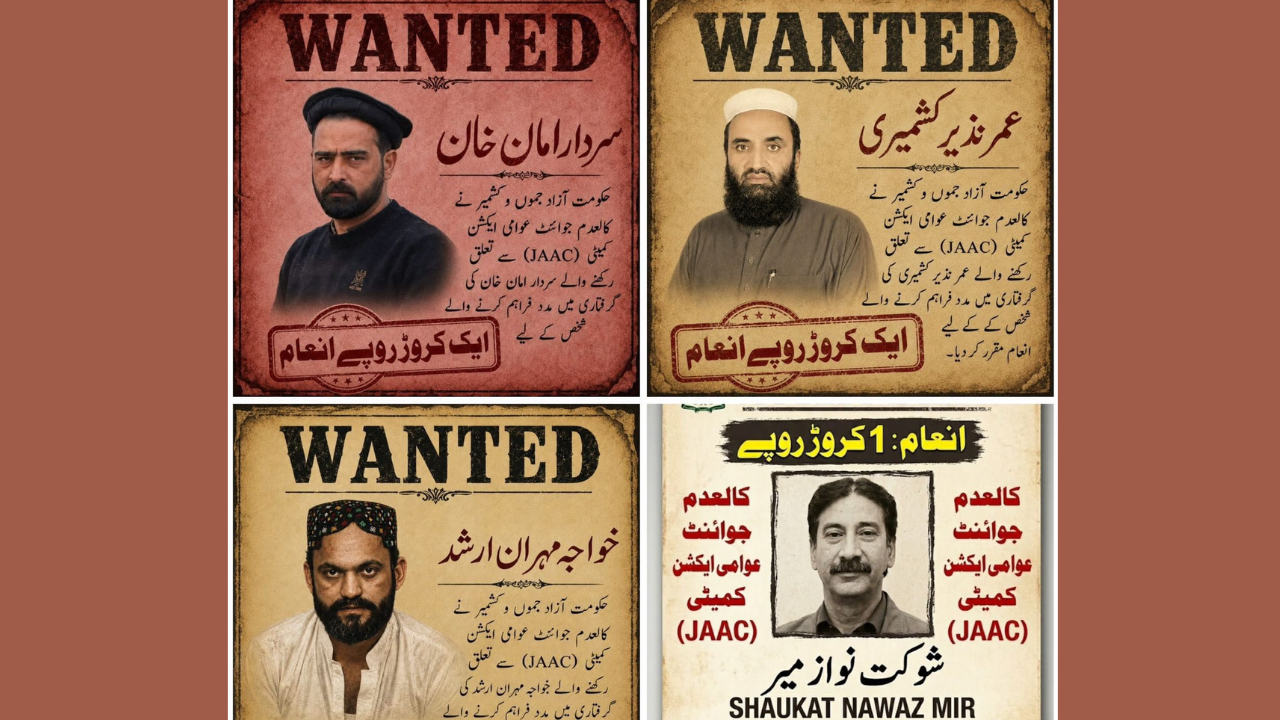
As the Pakistan administration intensifies its crackdown on local dissent, reports of civilian casualties and a massive troop deployment in Pakistan-occupied Kashmir signal a deepening humanitarian crisis.
The Barmang Bridge shooting in early June has acted as a flashpoint for what is quickly becoming an unprecedented cycle of violence in Pakistan-occupied Kashmir (PoK). What began as a series of demonstrations by the Joint Awami Action Committee (JAAC) seeking economic relief has devolved into a militarized zone. According to an intelligence dossier detailing the events between June 5 and June 9, the situation deteriorated rapidly after the death of JAAC leader Shahzaib Habib, with security forces allegedly employing live ammunition against civilian convoys and mourners.
While official statements from the administration acknowledge 11 deaths, the intelligence report paints a far more harrowing picture, claiming the toll includes 19 children and seven pregnant women. To quell the unrest, authorities have deployed roughly 14,000 troops from mainland Pakistan. This heavy-handed response, characterized by communication blackouts and the total shutdown of essential services like banks and medical supplies, has effectively isolated the region from the rest of the world.
The State’s Retaliation
The administration has now shifted from containment to active pursuit. PoK authorities have launched a systematic manhunt for four key protest leaders, attaching a bounty of Rs 1 crore for information leading to their capture. Furthermore, sedition proceedings have been formally initiated against two prominent JAAC figures. By banning the committee under anti-terrorism laws, the state is attempting to delegitimize a movement that was primarily focused on regional economic reforms.
The unrest, which initially centered in the Mirpur division, saw hundreds gather near the Quaid-i-Azam Stadium before attempting to march toward Muzaffarabad. This collective defiance across districts like Bhimber and Kotli has clearly rattled the establishment, leading to the current wave of arrests and legal intimidation aimed at dismantling the JAAC’s grassroots support structure.
Why it matters
The escalating violence in PoK is more than a local law-and-order issue; it is a manifestation of a long-standing disconnect between Islamabad and the region’s governance. The deployment of mainland troops suggests that the state views the economic protests not as a matter of public policy, but as an existential threat to its control. With at least 50 British MPs writing to the UK government to condemn these "barbaric" actions, the situation is increasingly becoming a point of international diplomatic friction. For New Delhi, which has formally condemned the violence, the developments highlight the volatile nature of the territory and the fragility of the status quo under the current administration’s iron-fisted approach.
Arjun Mehta reports on government, policy and Parliament for PoliticalPedia, in English and Hindi.