A 125-million-year-old 'pregnant' fossil reveals the secrets of ancient motherhood
125-million-year-old pregnant fossil reveals strange reproduction method
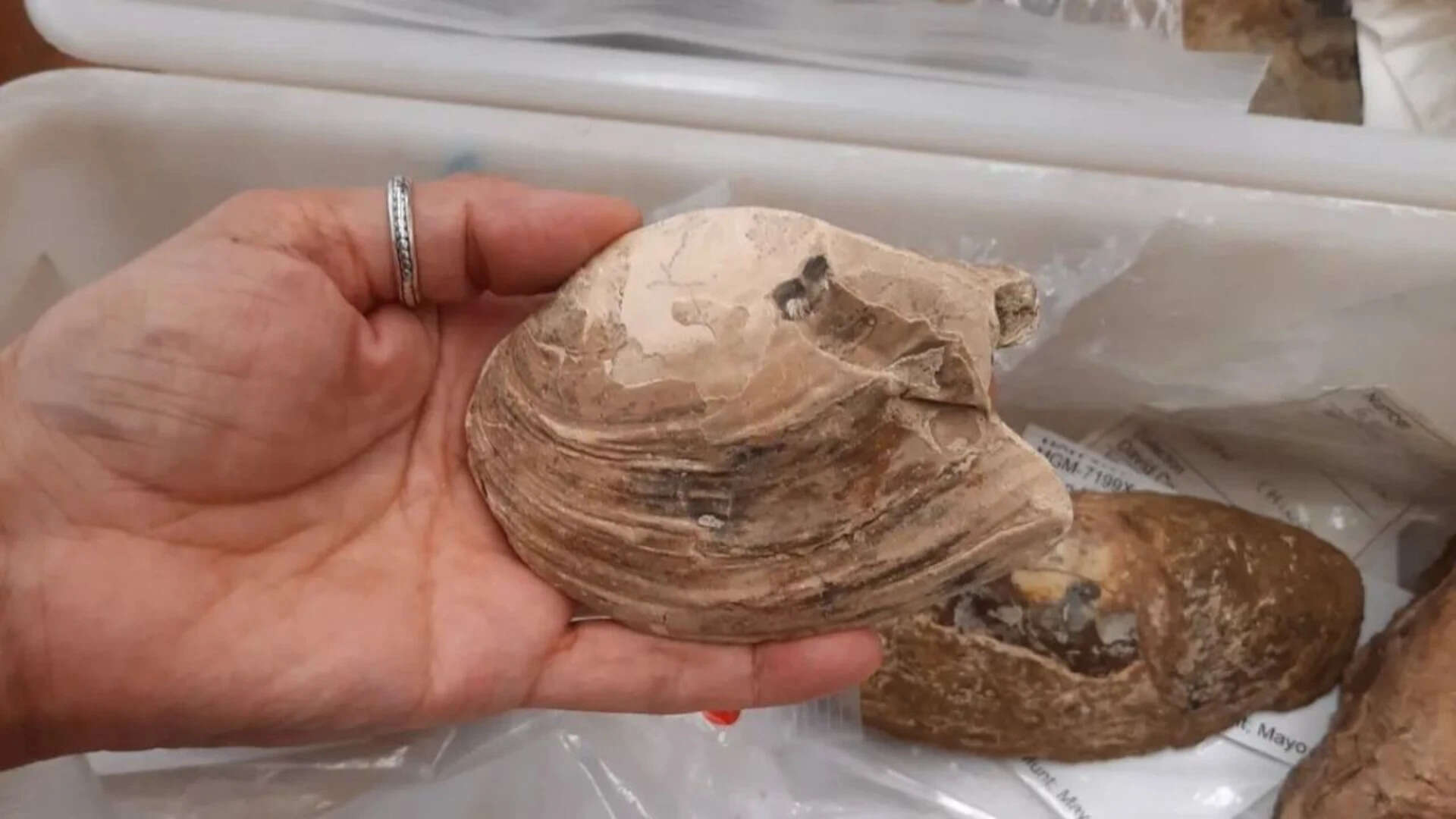
Researchers have unearthed a 125-million-year-old shellfish fossil containing preserved larvae, offering a rare look at maternal care in the Cretaceous period.
In the high-stakes world of evolutionary biology, soft tissue is usually the first casualty of time. When an organism dies, its delicate parts decay rapidly, leaving behind only the cold, hard calcified remains that paleontologists typically study. Yet, a remarkable find from the Isle of Wight, off the southern coast of England, has defied these odds. An international team of scientists has identified a 125-million-year-old fossilized shellfish that was essentially "pregnant" at the time of its death, with its internal gills still cradling a brood of babies in various stages of development.
The discovery, published in Scientific Reports, centers on Margaritifera valdensis, an ancient creature distantly related to the freshwater pearl mussels we recognize today. What has sent ripples through the scientific community is the level of detail preserved within the fossil. Researchers were able to identify both embryo-like cells and more advanced larvae tucked safely within the gills of the mollusk. This provides the earliest known evidence that these ancient animals practiced a form of maternal protection, ensuring their offspring had a better chance of survival in the river and lake environments of the Cretaceous era.
A window into ancient reproduction
For those tracking the history of reproduction, this find is more than just a curiosity; it is a vital data point. Martin Munt, a curator at the Dinosaur Isle Museum and a visiting researcher at the University of Portsmouth, notes that while maternal care is a known strategy in modern species, seeing it locked in a million-year-old specimen changes our understanding of how these creatures adapted. By safeguarding their young within their own bodies, these shellfish developed an evolutionary edge that allowed them to colonize freshwater habitats successfully.
It is a striking reminder that the biological ingenuity we see today—from sharks capable of "virgin births" to clownfish that switch sexes—has deep, mysterious roots. The maternal instinct, often viewed through a human lens, is clearly a diverse and ancient toolkit that nature has refined over eons.
The bigger picture: Why it matters
The discovery serves as a vital bridge between the past and the present. By proving that such complex reproductive behaviors were already established 125 million years ago, researchers can better map the survival strategies that allowed life to flourish during periods of environmental shift. This fossil isn't just an "alien-like" oddity; it is evidence of a stable, successful lineage. In the study of deep time, each such discovery chips away at the wall of the unknown, revealing that the "magic" of motherhood has been a cornerstone of survival far longer than we previously dared to confirm.
Priya Nair covers parties, elections and the business of power for PoliticalPedia.