The SpudCell: Could this synthetic blob be our generation’s ‘Sputnik’ moment?
The SpudCell: Could some 'blobs' in a dish spark the 'Sputnik' moment for synthetic life?
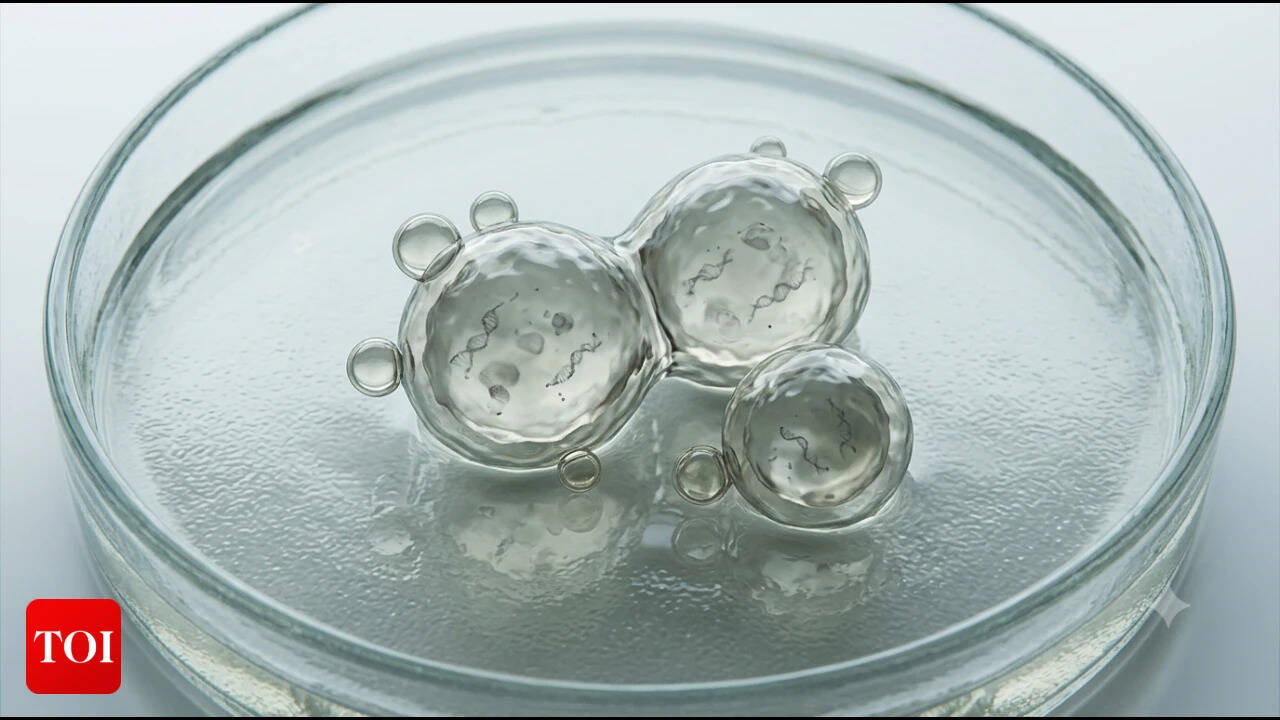
Researchers in Minnesota have engineered a life-like system from lifeless chemicals, pushing the boundaries of what we define as living.
It looks like a simple, quivering blob under the microscope, but the SpudCell represents a leap that has left the scientific community buzzing. Named for its peculiar, potato-like shape and a nod to the Sputnik satellite that once shattered our understanding of technological limits, this lab-grown construct is doing things we previously thought were reserved for biology. It eats, it grows, it copies its own genetic material, and eventually, it splits into daughter cells.
Building life from the bottom up
For years, the field of synthetic biology has been a fragmented puzzle. Labs across the globe have managed to create isolated components—a membrane here, a protein-making circuit there—but integrating them into a cohesive whole has been the ultimate hurdle. The team at the University of Minnesota took a different path. Rather than editing an existing living organism, they started with raw, lifeless chemicals—lipids, DNA, and proteins—and assembled them into a functioning structure from the bottom up.
The result is a system that mimics the hallmark behaviors of life. It isn’t "life" by the strictest biological definition, but it is the first synthetic system that successfully orchestrates these complex tasks in one place. In controlled lab tests, the team even observed these cells competing; mutant versions with a growth advantage were able to outcompete others, demonstrating a primitive form of selection and evolution.
Why it matters: The bigger picture
This is more than a technical curiosity. It is a proof of principle that challenges our fundamental understanding of existence. If we can assemble life-like behavior from dead ingredients, we are effectively testing the "minimum equipment" required for life. The implications are profound: we are moving toward a future where biology is treated with the same engineering precision we apply to machines. If we can build these systems, we gain unprecedented control over the machinery of life, opening doors to new medical therapies and technologies that were once confined to science fiction.
The SpudCell has forced a quiet, unsettling debate into the light. Have we reached a point where humanity can construct life as easily as we assemble hardware? While we are nowhere near creating complex organisms, the barrier between the organic and the synthetic is thinner than it has ever been. As researchers continue to refine these blobs, the "Sputnik moment" for synthetic biology may well be already behind us, unfolding in a quiet dish in a university lab.
Priya Nair covers parties, elections and the business of power for PoliticalPedia.