Why Patagonia’s 85-Foot Messi Monument Has Become a Viral Meme
Watch: Towering Lionel Messi Statue Sparks Global Internet Debate Over Design Flaws
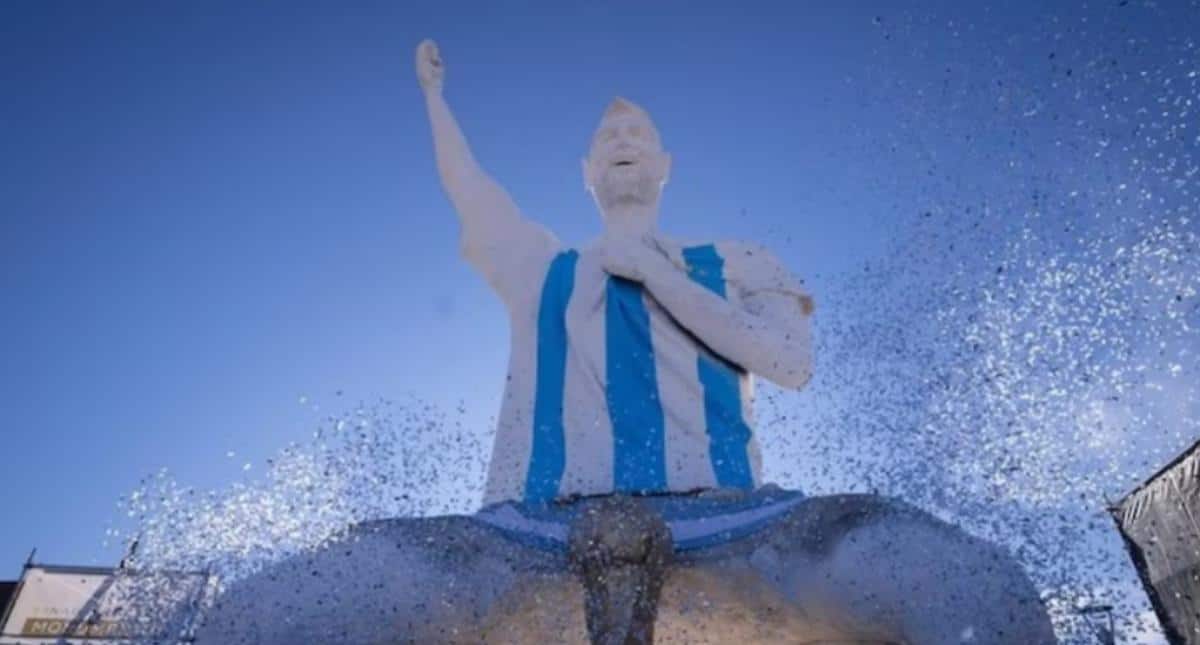
A massive tribute to the Argentina captain in Cutral Co is drawing more laughs than reverence due to some questionable artistic choices.
In the dusty, oil-rich plains of Cutral Co, Patagonia, motorists driving along Route 22 are being greeted by a sight that is hard to ignore: an 85-foot-tall Lionel Messi. Forged from 70 tonnes of iron and steel, the towering Lionel Messi statue was meant to be a crowning achievement, a permanent monument to Argentina’s greatest sporting icon. Instead, the structure has triggered a global internet debate over design flaws, turning a project intended for local pride into the latest target of digital ridicule.
The sheer scale of the installation is, by any measure, ambitious. Designed to face the highway, the metal giant depicts the football legend kneeling on a metallic pitch. While the authorities in Cutral Co hoped the landmark would serve as both a historic tribute and a strategic economic boost for the remote region, the execution has proven to be a masterclass in how not to craft public art.
Anatomy of a Digital Backlash
The internet, as it often does, moved quickly to pick apart the monument’s aesthetics. The criticism is primarily divided into two camps: the bizarrely abstract and the unintentionally suggestive. While the head and torso show a fair amount of detail, the lower legs are shockingly smooth, lacking any muscular definition or anatomical sense. It looks as if the artist simply gave up halfway through the carving process, leaving the bottom half of the football icon feeling unfinished.
The real firestorm, however, stems from the placement of the FIFA World Cup trophy. The artist chose to position the golden silverware directly between the statue’s thighs. From the vantage point of passing drivers, the composition is, to put it mildly, visually awkward. Within hours of the unveiling, social media platforms were flooded with zoomed-in screenshots and side-by-side comparisons, turning the tribute into an instant meme.
Why it matters: The Curse of the Public Icon
Public art is a high-stakes game. When a town erects a monument of this magnitude, it is rarely just about the athlete; it’s about the community’s identity. The reaction to the Cutral Co statue highlights a modern disconnect between grand architectural intent and the brutal, unfiltered lens of social media. In an era where every monument is just one photo-op away from becoming a global punchline, the "uncanny valley" effect—where a statue looks almost human but slightly off—is a fast track to viral mockery.
This project was clearly designed to capture the fervor surrounding the 2026 World Cup, yet it serves as a reminder that scale does not equate to quality. For the people of Patagonia, the statue might still hold symbolic value as a nod to their footballing hero. But for the rest of the world, the structure is currently nothing more than a cautionary tale on the importance of spatial awareness and artistic oversight.
Kabir Sharma writes on culture, technology and everyday life for PoliticalPedia.