When an Indian Passport Isn't Enough: The Growing Puzzle of Proving Who You Are
When An Indian Passport Isn't Enough, How Does An Indian Prove They Are Indian?
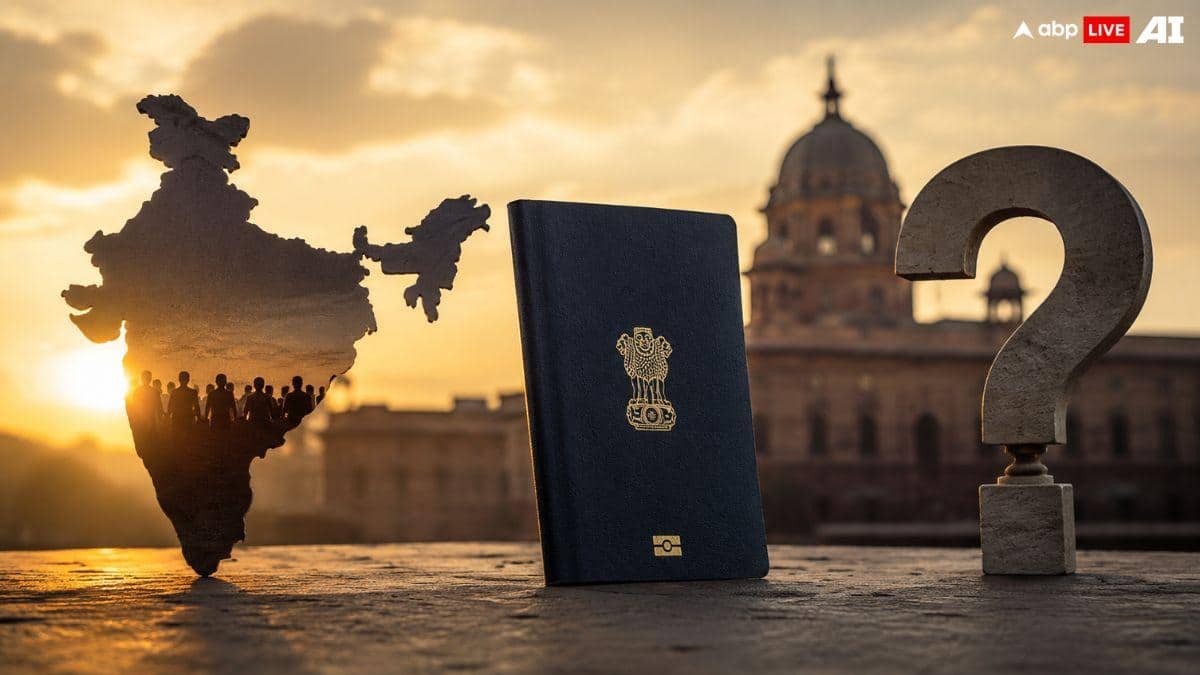
A recent government clarification has sparked a national conversation about why our most trusted identity documents might not be the final word on citizenship.
For decades, the navy-blue booklet bearing the Ashoka Chakra has been the ultimate gold standard for any Indian. If you held a passport, you were, by extension, an Indian. That assumption, however, has recently been punctured by a pointed clarification from the Ministry of External Affairs (MEA). The ministry has clarified that a passport is primarily a travel document, not a standalone certificate of citizenship. This assertion has left many wondering: when an Indian passport isn't enough, how does an Indian prove they are Indian?
The confusion isn't just bureaucratic hair-splitting; it hits at the heart of how citizens interact with the state. While the passport is issued after rigorous police verification, the legal reality is that it functions as a document of travel rather than a conclusive legal decree of nationality. This stance aligns with the Supreme Court’s long-standing position on Aadhaar, which has been explicitly defined as a tool for verifying identity, not citizenship or domicile. Even Voter IDs and PAN cards, while essential for daily life, fall into the same category—they confirm who you are, not where you belong in the eyes of citizenship law.
The Gap Between Identity and Citizenship
At the core of the issue lies a nuanced legal distinction that most of us rarely consider until we hit a wall. Identity is about proving you are the person claiming to be the account holder or the traveller. Citizenship, however, is a deeper, constitutional status governed by the Citizenship Act of 1955. Because these two concepts are often conflated in the public imagination, the news that a passport isn't absolute proof has caused widespread alarm.
The practical implications are already being felt in courtrooms and administrative offices. The Bombay High Court has previously observed that documents like Aadhaar or a Voter ID are not sufficient to establish citizenship, particularly when an individual’s status is contested in cases involving claims of illegal entry. For the average citizen, this creates a "documentation trap"—you possess multiple government-issued cards, yet none of them, in isolation, offer a legal shield that covers every possible contingency.
The Bigger Picture: Why It Matters
This is less about a change in the law and more about a clearer, albeit tougher, enforcement of existing definitions. The state is essentially signaling a move toward a more rigid verification framework. While officials maintain that these documents are standard for identification, the lack of a "master" document that serves as universal, unquestionable proof of citizenship leaves a void that creates significant anxiety.
For the economy and the individual, this means that administrative processes—ranging from visa applications to electoral roll revisions—are becoming increasingly complex. If the primary documents we rely on are merely pieces of a larger puzzle, the burden of proof is quietly shifting back onto the individual. As state agencies tighten their criteria, the "identity vs. citizenship" debate will likely become a recurring theme in both courtrooms and the corridors of power, forcing a rethink on what it actually means to hold an Indian identity in the 21st century.
Rohan Gupta covers the economy, markets and companies for PoliticalPedia.