Washing Machine Politics: DMK and TVK Trade Blows Over AIADMK Defectors
Who Has More Ex-AIADMK Leaders? DMK, TVK Spar Over 'Washing Machine' Remark
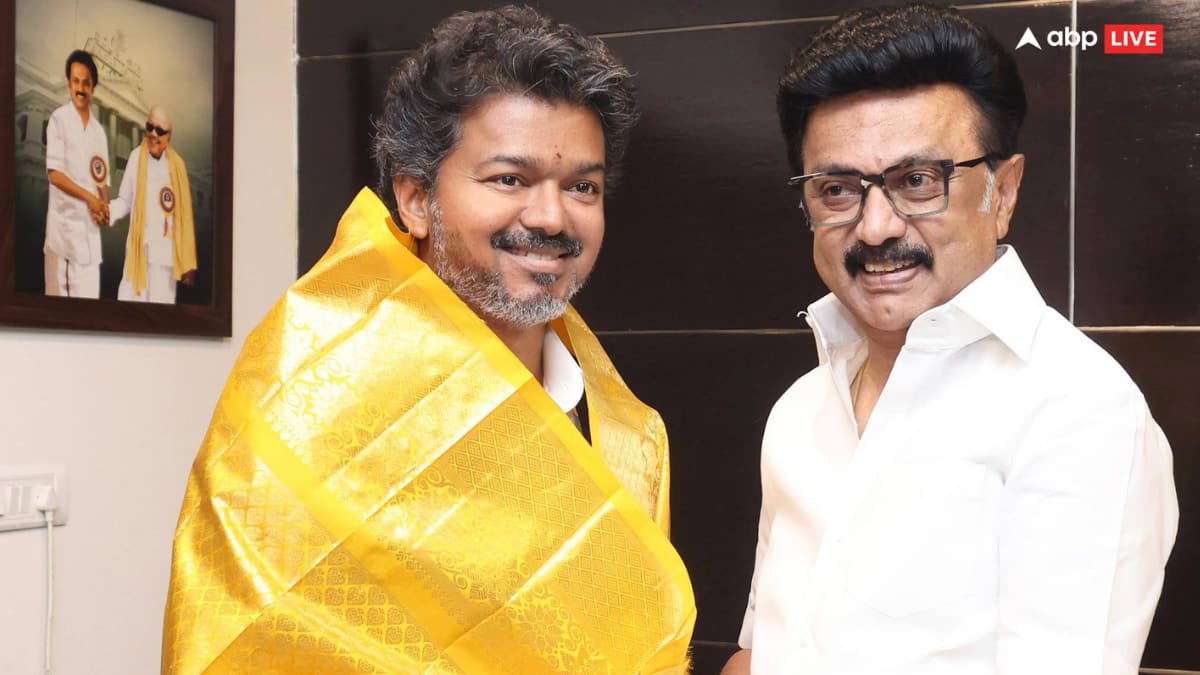
As political loyalties shift in Tamil Nadu, a fresh war of words erupts over the induction of former ministers, turning the state's traditional power structure on its head.
The quiet, corridor-huddled conversations of the Tamil Nadu secretariat have been replaced by a high-decibel war of words. As the political rivalry between the ruling Tamil Nadu Vetri Kazhagam (TVK) and the opposition DMK intensifies, the state’s electoral map is being redrawn by a familiar, if controversial, engine: the migration of veteran leaders. The latest friction point? The induction of former AIADMK stalwarts, an event that has triggered a fierce debate over ideological purity versus political expediency.
The tension peaked when C. Vijayabaskar and M.R. Vijayabaskar, both former AIADMK ministers, crossed the aisle to join the TVK. For a party that campaigned on a platform of anti-corruption and systemic change, the move has opened a flank for the DMK to exploit. DMK MP Kanimozhi led the charge, sarcastically invoking the "washing machine" trope—a term famously used in Northern Indian politics to describe how parties allegedly cleanse the reputations of leaders facing corruption cases once they switch to the ruling side.
Who Has More Ex-AIADMK Leaders?
The DMK, TVK spar over this very question, with both camps digging into the past to accuse the other of hypocrisy. While the DMK labels the TVK’s move a classic case of political rehabilitation for those under the scanner for alleged gutka scams and land fraud, the TVK has hit back. Their defense is simple: the DMK has historically been just as eager to absorb "challenged" leaders to bolster its own numbers.
For the TVK, these inductions are framed as a necessary expansion to consolidate power and strengthen the organization. They argue that the focus should be on the party’s broader governance agenda rather than personal histories of individual recruits. Yet, the optics remain messy. The public is left wondering if the promise of a "new Tamil Nadu model" is already buckling under the weight of the old-school political machinery that Vijay once vowed to dismantle.
The Bigger Picture: Why It Matters
This isn’t just about the recruitment of two or three leaders; it marks a structural shift in the state. The traditional DMK-versus-AIADMK binary is fading, replaced by a direct, often bitter, confrontation between the DMK and the rising TVK. By poaching from the AIADMK’s ranks, the TVK is signaling that it aims to inherit the opposition's base, effectively sidelining the original party.
For the voter, the implications are profound. If the "washing machine" phenomenon becomes a permanent fixture in Tamil Nadu politics, it suggests that the state’s ideological walls are thinning. As both parties continue to chase the same pool of experienced, albeit controversial, AIADMK leaders, the distinction between the "change-makers" and the "status quo" becomes increasingly blurred. We are witnessing the maturation of a new, more aggressive phase of Tamil Nadu’s political journey, where survival in the numbers game frequently overrides the reformist rhetoric of the campaign trail.
Arjun Mehta reports on government, policy and Parliament for PoliticalPedia, in English and Hindi.