Vladimir Putin Affirms Non-Interference in Delicate India-China Ties, Expresses Faith in Modi-Xi Dialogue
Vladimir Putin pledges non-interference in ‘delicate’ India-China ties; backs Modi, Xi to resolve border issues amicably
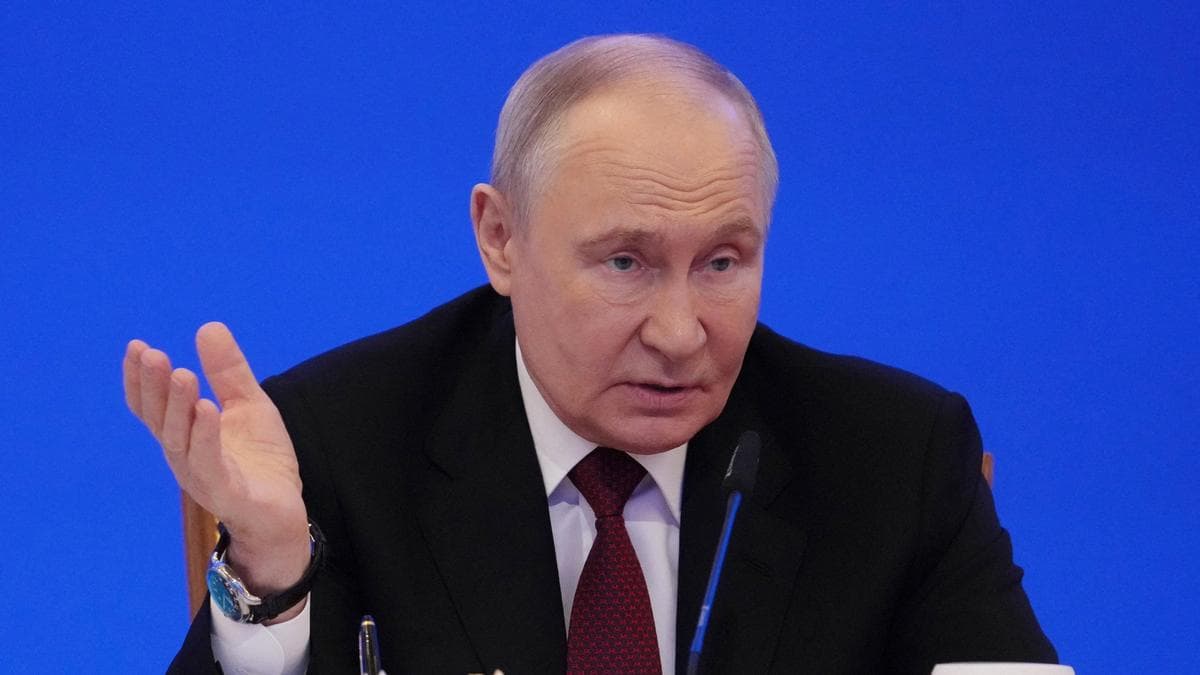
Russian President Vladimir Putin signals Moscow’s commitment to strategic autonomy in Asia, dismissing concerns that its partnerships with New Delhi and Beijing are mutually exclusive.
Russian President Vladimir Putin has underscored a policy of non-interference regarding the complex border situation between India and China, expressing confidence that both Prime Minister Narendra Modi and Chinese President Xi Jinping possess the resolve to settle their differences amicably. Speaking during a wide-ranging interaction with heads of global news agencies on Thursday, June 4, 2026, the Russian leader described the bilateral tensions between the two Asian giants as "delicate" and "multi-faceted," insisting that external intervention would be counterproductive.
The remarks were made in response to an inquiry from Vijay Joshi, CEO and Editor-in-Chief of PTI—the sole Indian journalist present at the gathering. Putin’s stance serves as a reaffirmation of Moscow’s long-standing diplomatic equilibrium, as it navigates deep-rooted, independent partnerships with both capitals. He explicitly rejected the notion that Russia’s synergy with one nation comes at the expense of the other, noting that these historic ties have evolved organically over decades without causing friction between the two Asian powers.
A Pivot Toward De-escalation
The border issue remains a focal point of regional stability following the severe strain caused by the 2020 Galwan Valley skirmishes. However, the diplomatic climate has shifted significantly over the past year. A pivotal moment occurred last August in Tianjin, where Prime Minister Modi and President Xi held high-level talks against the backdrop of shifting global trade policies. During that summit, both leaders recalibrated their approach, explicitly stating that their nations should act as development partners rather than rivals, and emphasizing that existing disagreements must not be allowed to escalate into full-blown disputes.
By advocating for a resolution led by New Delhi and Beijing, Putin is reinforcing a broader Russian geopolitical strategy that seeks to maintain its influence in Asia while avoiding entanglement in regional territorial rows. This approach is consistent with Moscow's view that friendly relations between India and China are vital for regional security. Furthermore, in broader discussions during the same event, the President also weighed in on regional power dynamics, explicitly rejecting the suggestion that Pakistan operates under Beijing’s direct control, further clarifying Russia's nuanced outlook on South Asian geopolitics.
Strategic Autonomy in a Shifting World
The importance of this diplomatic stance cannot be overstated. As global powers reposition themselves amid fluctuating trade policies—most notably the tariff-heavy approach of the U.S. administration—Russia’s insistence on "natural" and "independent" partnerships provides a stabilizing narrative. For New Delhi, this explicit backing of the Modi-Xi dialogue by a key strategic partner like Russia serves as a vote of confidence in India’s ability to manage its borders through bilateral diplomacy rather than reliance on third-party mediation.
As both India and China continue to implement measures to rebuild trust, the international community remains watchful. Putin’s comments effectively signal that while Moscow maintains strong ties with both sides, it has no intention of being drawn into the fray, preferring instead to watch the two Asian giants navigate their shared path toward a long-term, amicable resolution.
The PoliticalPedia Editorial Desk brings verified, sourced political news and analysis from across India.