Violent Squalls and Dust Storms: North India Reels Under Dramatic Weather Shift
Delhi Thunderstorm Alert: Gusty Winds, Lightning Likely As Dramatic Weather Shift Hits North India Today
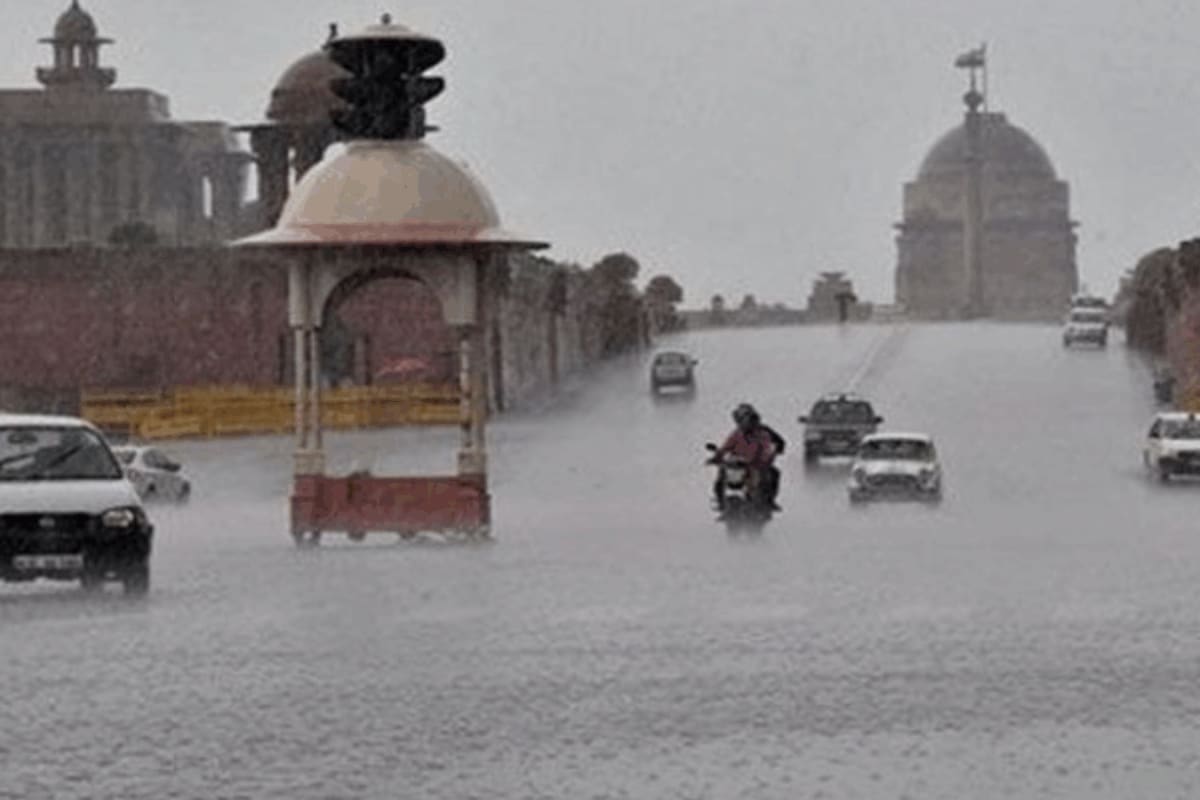
A powerful western disturbance has brought a volatile mix of high-speed winds and rain to the national capital, abruptly ending a brutal mid-week heatwave.
The Delhi skyline transformed within minutes yesterday as a violent dust storm, packing winds reported as high as 120 kmph in some pockets, swept through the National Capital Region. After a Wednesday that left residents sweltering under temperatures that felt like 50 degrees Celsius, the India Meteorological Department’s (IMD) delhi thunderstorm alert proved prescient. By evening, the gusty winds and lightning likely as dramatic atmospheric churn brought an end to the sweltering heat, though the sudden intensity of the weather shift hits north India with significant disruption to transport and aviation.
A System Born in the Mediterranean
This meteorological upheaval is the handiwork of a western disturbance—a weather system originating over the Mediterranean Sea. As these high-altitude winds travel across the globe, they absorb moisture, which then dumps as rain or snow upon hitting the high-altitude barrier of the Himalayas. While the plains often benefit from this moisture during the scorching summer months, the current iteration has arrived with unusual ferocity, triggering a string of red and orange alerts across the region.
The IMD’s forecast for the day remains critical. While Delhi and its surrounding suburbs have finally secured a breather from the heat, the storm's footprint is wide. Heavy rainfall is being reported across Punjab, Haryana, and parts of Uttar Pradesh, while states like Himachal Pradesh and Jammu and Kashmir are dealing with the secondary impact of hailstorms. Meanwhile, the today weather narrative remains starkly divided; while the north battles dust and squalls, the monsoon is in full swing across the northeast, with heavy showers hitting Assam, Meghalaya, and Sikkim.
The Bigger Picture: Why It Matters
This rapid oscillation between extreme heat and violent storms is becoming a defining feature of the Indian summer. The severity of these squalls—which caused over 400 flights to be delayed or diverted in the NCR—highlights the increasing vulnerability of our urban infrastructure to sudden, high-intensity climate events. When a heatwave that pushed mercury levels toward 42°C is replaced by winds of near-cyclonic speeds, the stress on city power grids, transport networks, and public safety systems is immense.
These events are no longer isolated anomalies but part of a shifting pattern. The sheer energy contained within these storms, capable of uprooting trees and grounding air traffic, serves as a sharp reminder of the need for better urban resilience. As the monsoon progresses, the challenge for policy planners and meteorologists will be to improve local-level forecasting to help citizens anticipate these "now-cast" events, where conditions change from stifling heat to dangerous squalls in less than an hour. For now, the IMD’s advice remains consistent: stay indoors, avoid large trees, and keep a close watch on the sky as the system continues to move across the plains.
Arjun Mehta reports on government, policy and Parliament for PoliticalPedia, in English and Hindi.