The Swarm at Jantar Mantar: When the 'Cockroach Janta Party' Refused to Fade Away
Cockroach Janta Party overnight protest: Abhijeet Dipke claims authorities cut off water, electricity at Jantar Mantar
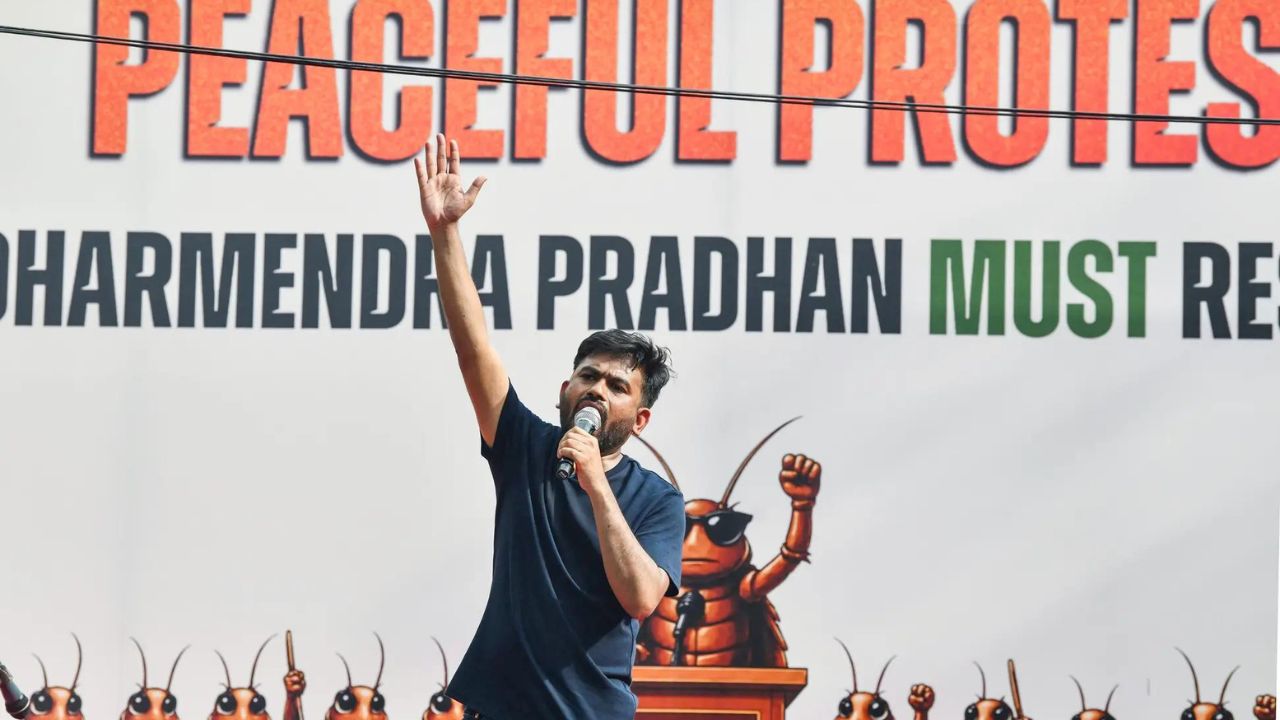
As thousands occupy the capital’s protest heartland, the Cockroach Janta Party’s overnight sit-in escalates into a standoff over basic amenities and political accountability.
The humid night air at Jantar Mantar grew heavy on Saturday, not just with the typical Delhi summer heat, but with a defiant, collective resolve. As the clock ticked past the permitted protest hours, the Cockroach Janta Party (CJP)—a movement that has quickly captured the imagination of Gen Z—refused to vacate the site. Led by founder Abhijeet Dipke, the demonstrators remained huddled in the capital, their chants of "Go Pradhan Go" echoing against the backdrop of an increasingly tense standoff with local authorities.
By Sunday morning, the protest had shifted from a policy demonstration to a struggle for basic dignity. Dipke took to social media to sound the alarm, claiming that the authorities had cut off water to the public restrooms at the protest site, alongside intermittent electricity disruptions. For those who had spent the night on the pavement, the message was clear: the administration was attempting to thin the crowd by making the environment untenable.
A Movement of "Cockroaches"
The name "Cockroach Janta Party" is as provocative as the protest itself. By adopting a moniker often used to dismiss or belittle dissenters, Dipke and his supporters have weaponized the term, reclaiming it as a badge of resilience. This isn't a traditional political rally; it is a sprawling, chaotic, and deeply modern expression of student and parental frustration directed at Union Education Minister Dharmendra Pradhan. The gathering, which started with formal police permission, has since spiralled into an indefinite sit-in that has caught the establishment off-guard.
While the Delhi Police initially granted the CJP nod to protest, the overnight extension pushed the limits of that agreement. Reports from the ground describe a scene that feels uniquely 2024: a blend of roses, raw rage, and a digital-native generation that knows how to broadcast their struggle to the world in real-time. Whether it is the lack of water or the refusal to leave, the narrative is being shaped as much by the smartphone cameras surrounding the site as it is by the physical protest itself.
The Bigger Picture: Why It Matters
This standoff represents a growing friction between institutional authority and a new, decentralized form of political activism. When protesters choose to "swarm" a public space and stay there despite the withdrawal of municipal services, they aren't just demanding a minister's resignation; they are challenging the traditional boundaries of how dissent is managed in India.
The authorities now face a delicate dilemma. A forceful eviction risks turning the Jantar Mantar site into a national flashpoint, potentially drawing even more supporters to the cause. Conversely, allowing the protest to continue indefinitely sets a precedent for how public spaces are occupied and maintained. For now, the CJP seems content to test that threshold, betting that the optics of a public health crisis at a protest site will prove more damaging to the government than the protesters themselves.
Kabir Sharma writes on culture, technology and everyday life for PoliticalPedia.