From the Northeast to the Navy: How Rajnath Singh and Top Military Chiefs Lead Yoga Day Events In Shillong, Tezpur and Kolkata
Rajnath Singh, Top Military Chiefs Lead Yoga Day Events In Shillong, Tezpur And Kolkata
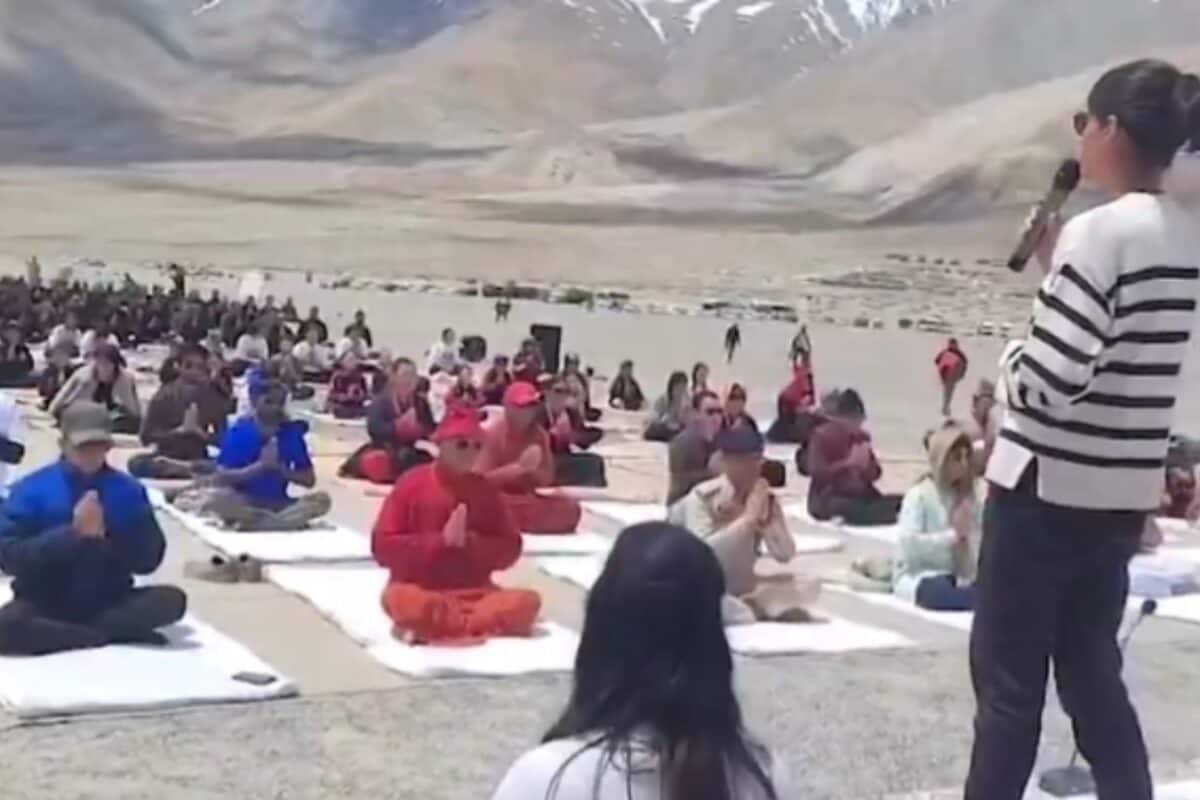
Across high-altitude outposts and naval bases, India’s armed forces synchronised their breathing today to mark the 12th International Day of Yoga, with the Defence Minister and service chiefs spearheading the outreach.
The mist over the Northeast didn't deter the morning drills. In Shillong, Defence Minister Rajnath Singh joined Air Chief Marshal Amar Preet Singh on the mat, setting the tone for a pan-India demonstration of discipline. While the Defence Minister focused his efforts in Meghalaya, the military leadership fanned out across the country: Army Chief General Upendra Dwivedi led the charge in Tezpur, Assam, and Navy Chief Admiral K Swaminathan participated in a major programme in Kolkata.
The scale of this year's observation is vast. From the remote bunkers of Tawang and the Walong War Memorial to the coastal stations at Car Nicobar, the military has turned the Common Yoga Protocol into an essential component of operational readiness. For the Indian Air Force, the message was clear: yoga isn't just a cultural ritual; it is a tool for building the mental resilience and physical agility required by air warriors.
A Force-Wide Commitment
In the rugged terrain of the Northeast, the Spear Corps has been particularly active, conducting sessions in sensitive and symbolic locations. Troops gathered at places like Helmet Top, Kibithu, and the Siang Valley, integrating the practice into the daily rhythm of soldiers stationed in some of India’s most challenging environments. It marks a shift where fitness regimes in the services now formalise yoga as a pillar of long-term health.
The theme for this year, "Yoga for Healthy Ageing," resonates deeply within the defence establishment. Beyond the ceremonial aspects, the focus is on mitigating the long-term physical toll of service life. By promoting sessions that include families and NCC cadets, the military is positioning the practice as a sustainable health habit rather than a one-day spectacle.
The Bigger Picture
Why does this matter? For a government pushing for the global institutionalisation of Yoga, the military’s involvement serves as a high-visibility endorsement. By having the Defence Minister and the top military brass lead these events in key strategic hubs like Shillong, Tezpur and Kolkata, the state is signalling that yoga is core to the "warrior ethos"—aligning traditional Indian practices with modern professional military standards.
This strategic deployment of Yoga Day serves two purposes. First, it reinforces national integration, with events stretching from Leh to Dwarka. Second, it serves as a soft-power projection, showcasing the Indian Armed Forces not just as a fighting unit, but as a disciplined collective invested in holistic wellness. As the Navy Chief wrapped up his session in Kolkata to join the Prime Minister for the commissioning of three new indigenous ships, the message was unambiguous: India is investing in both its maritime hardware and its human capital.
Arjun Mehta reports on government, policy and Parliament for PoliticalPedia, in English and Hindi.