The silence on the range: Remembering Jaspal Rana, the architect of India’s shooting resurgence
Jaspal Rana, legendary Indian shooter and coach of Olympics medallist Manu Bhaker, dies at age of 49, PM Narendra Modi expresses grief
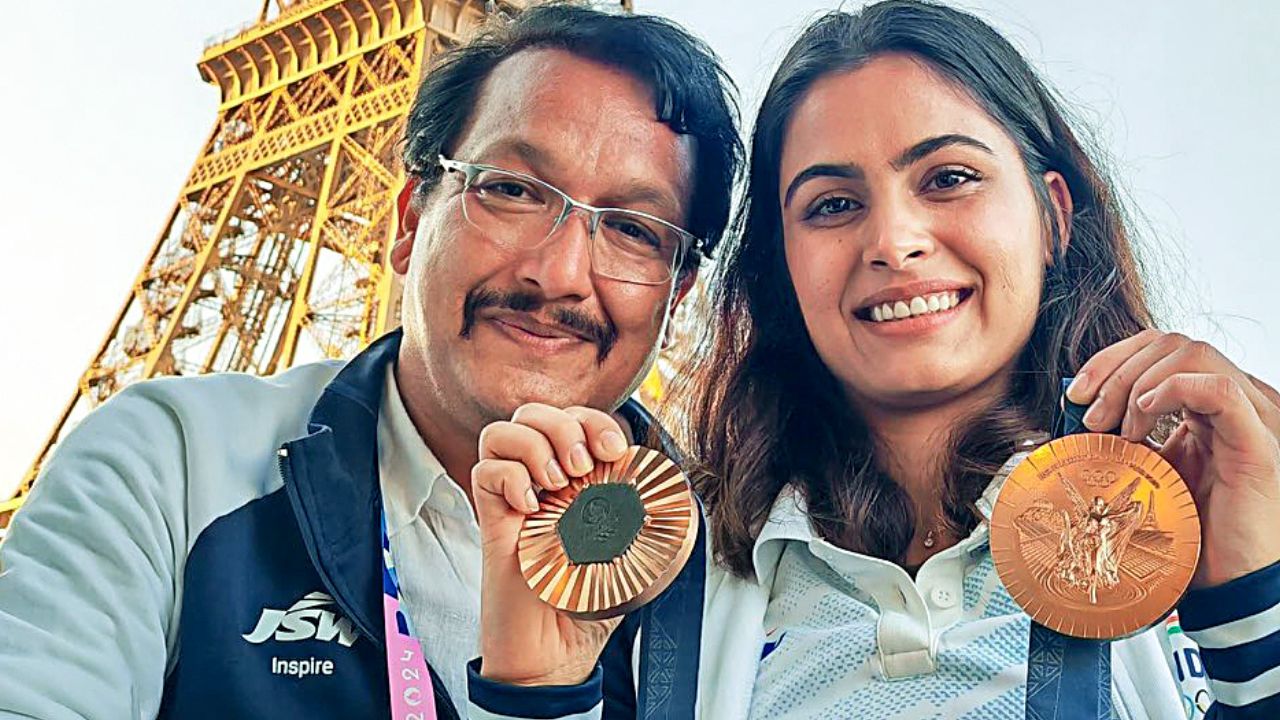
From the grit of the 1994 Asian Games to the podiums of Paris, the legendary shooter and mentor leaves behind a legacy that transformed the trajectory of Indian pistol shooting.
The corridors of the National Rifle Association of India (NRAI) are rarely this quiet. On Thursday night, the Indian sporting fraternity lost one of its most formidable figures, as Jaspal Rana passed away in a Delhi hospital at the age of 49. His death came with sudden, cruel swiftness; the ace shooter had been battling health complications following his return from the ISSF World Cup in Munich, ultimately undergoing a medical procedure to fix a cardiac stent that, tragically, could not save him.
For those who followed his journey, Rana was more than just a name in the record books. The son of a 1971 war veteran, he carried a disciplined, almost military resolve into his sport. While he made his mark as a competitor—most notably with his four gold medals at the Asian Games and his participation in the 1996 Atlanta Olympics—it was his second innings as a mentor that truly redefined the sport in this country.
The mentor behind the medals
Rana’s influence on the current generation of shooters is immeasurable. Since taking on the role of a junior pistol coach in 2012, he became the backbone of a pipeline that eventually produced stars like Saurabh Chaudhary, Anish Bhanwala, and Chinki Yadav. Perhaps his most visible success came in 2024, when he guided Manu Bhaker to a historic double bronze medal at the Paris Olympics.
His appointment as the High-Performance coach for the 25m pistol discipline in February 2025 was widely seen as the NRAI’s acknowledgment that the program needed his tactical acumen to maintain its upward trajectory. He didn't just teach technique; he instilled a temperament for the big stage, a trait he personally cultivated through decades of high-pressure international competition.
A void in the national consciousness
The outpouring of grief from the highest levels of the state reflects the scale of the loss. PM Narendra Modi led the tributes, acknowledging the profound impact Rana had on Indian sports. His demise is not merely a loss for the shooting range but for the entire ecosystem of Indian athletics, where he served as a bridge between the traditional grit of the past and the scientific, high-performance demands of the modern era.
Why it matters: The bigger picture
Rana’s passing leaves a vacuum that the NRAI will struggle to fill. His career trajectory—from a decorated Asian Games champion to a Dronacharya awardee—mirrors the evolution of Indian shooting itself: a transition from individual brilliance to a structured, institutionalized powerhouse. The "Rana model" of coaching, which emphasized early grooming and mental toughness, is the primary reason India moved from being a participant nation to a podium contender in pistol events. The challenge now for Indian sports administrators is to ensure that the rigorous systems he put in place for the junior and senior squads do not lose momentum in his absence.
He departs at 49, an age that feels far too young for a man who had already authored such a long and storied chapter in our national sporting history.
Ananya Iyer covers global affairs with an Indian lens for PoliticalPedia.