The New Frontier of Conflict: Why Tehran is Targeting Musk’s Middle East Assets
Iran Adds Elon Musk's SpaceX, Starlink To Target List In Middle East: Report
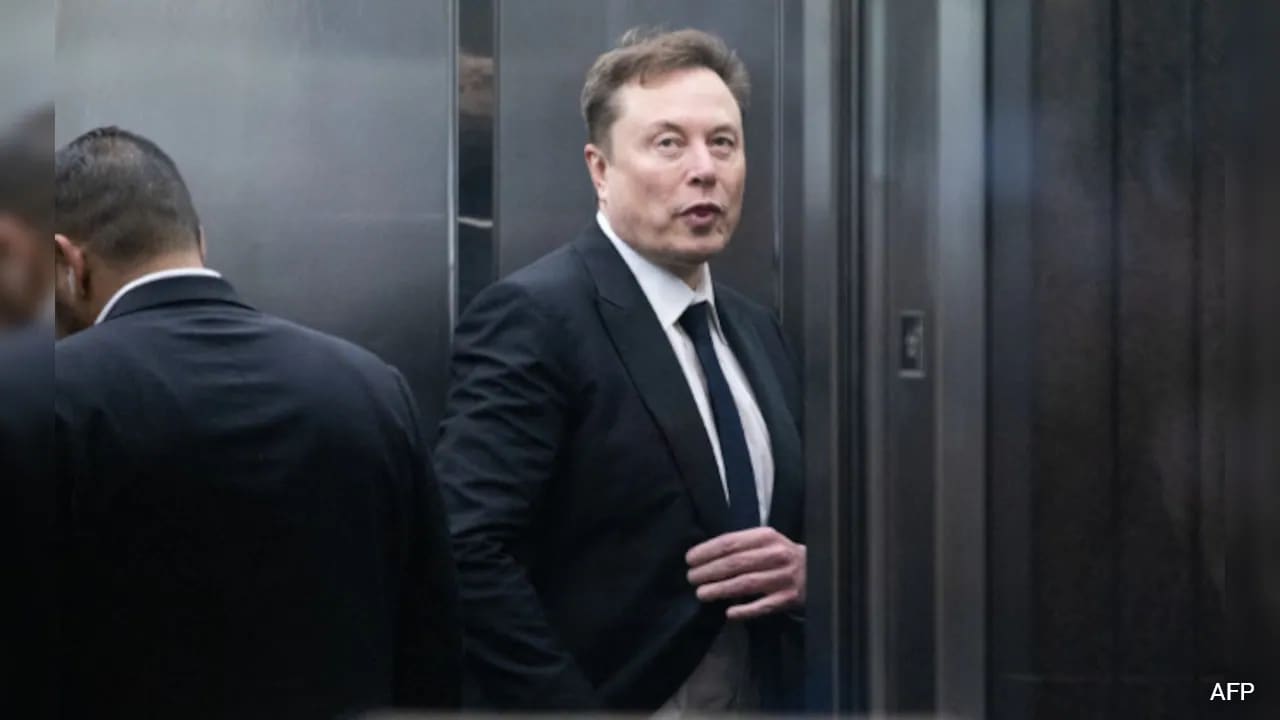
Iranian state-linked media has identified SpaceX and Starlink facilities across the region as potential military targets, escalating tensions in an already volatile landscape.
The lines between commercial technology and military infrastructure have blurred, and nowhere is this more evident than in the latest warning emanating from Tehran. Reports circulating through state-linked agencies, including Fars, indicate that Iran has officially added companies owned by Elon Musk—specifically SpaceX and the satellite internet service Starlink—to its list of potential military targets.
For years, Starlink has been a geopolitical wildcard, most notably providing crucial connectivity during the Russia-Ukraine conflict. Now, that same utility has made it a liability in the Middle East. Tehran alleges that Musk’s technology is being leveraged to facilitate US-Israel military operations. Consequently, the threat is not just limited to Israel; the "target bank" reportedly includes ground stations and associated interests across Jordan, Qatar, the United Arab Emirates, and Oman.
Beyond Borders: The Satellite Strategy
The move represents a significant shift in how regional powers view private space-tech entities. By designating these sites as legitimate military targets, Tehran is signaling that it no longer distinguishes between traditional state-backed infrastructure and the private sector assets that sustain modern military operations.
This development is particularly sensitive given the current climate. As SpaceX maintains a dominant position in global satellite communications, the company’s physical footprints—its ground stations—have become high-value nodes. Whether these threats manifest into kinetic action remains to be seen, but the rhetoric itself introduces a new layer of risk for investors and stakeholders, especially as talk of a potential SpaceX IPO continues to circulate in financial circles.
The Bigger Picture
Why does this matter? It marks a dangerous evolution in modern warfare. We are moving toward a reality where a private company’s global infrastructure is treated as an extension of a superpower's military apparatus. If Musk’s companies are indeed being integrated into the military-industrial complex of Western allies, then those companies lose their veneer of neutrality.
For the Middle East, this creates a precarious environment. If Iran proceeds with these threats, it could force a decoupling of commercial technology from regional security interests. It also serves as a stark reminder that in the age of hyper-connectivity, a tech startup’s hardware in the desert is just as much a "strategic asset" as an airbase. We are witnessing the birth of a new, high-stakes era where the satellite dish on the ground is as contentious as the missile in the silo.
Kabir Sharma writes on culture, technology and everyday life for PoliticalPedia.